India’s renewable energy sector is undergoing a structural shift, with Local vs. Imported solar panels becoming a central issue under evolving MNRE regulations.
In 2026, stricter enforcement of the Approved List of Models and Manufacturers (ALMM) is guiding procurement decisions, as policymakers seek to balance cost, quality, and national energy security.
Local vs. Imported Solar Panels: MNRE Approval Framework Explained
The Ministry of New and Renewable Energy (MNRE) mandates that solar modules used in many government and subsidised projects must come from the Approved List of Models and Manufacturers (ALMM). The framework includes:
- List-I: Solar modules.
- List-II: Solar cells (mandatory from 2026).
This policy ensures that installations meet quality standards and supports domestic manufacturing growth. Officials have stated that ALMM is critical for “ensuring reliability, traceability, and long-term performance of solar assets.”
Why India Is Moving Towards Domestic Solar Manufacturing
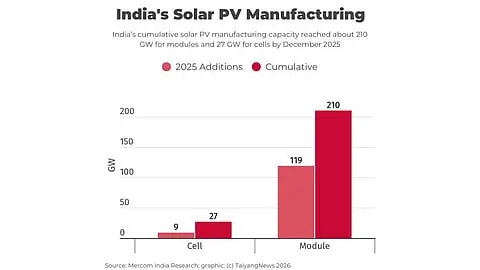
India has historically depended on imports, particularly from China, for solar modules and cells. However, recent geopolitical tensions and supply disruptions have highlighted vulnerabilities.
Key Drivers Behind Policy Shift:
- Reducing import dependence.
- Strengthening domestic industry.
- Ensuring consistent quality standards.
- Achieving long-term energy security.
Government-backed schemes such as the Production-Linked Incentive (PLI) programme are accelerating manufacturing capacity.
Comparing Local and Imported Solar Panels
Domestic Manufacturers (ALMM-Approved)
India’s leading manufacturers include Waaree Energies, Tata Power Solar, Vikram Solar, and Adani Solar.
Key Benefits
- Fully compliant with MNRE policies.
- Eligible for subsidies and government tenders.
- Better service support and warranty handling.
- Designed for Indian environmental conditions.
Imported Solar Panels
Imported modules, especially from East Asia, have historically dominated the market due to scale and cost advantages.
Key Benefits
- Lower upfront cost (in some cases).
- Access to advanced global technologies.
- High efficiency in specific segments.
However, their use is increasingly restricted under ALMM-linked projects.
Cost, Duties, and Financial Reality in 2026
The cost comparison has evolved significantly due to policy changes.
Import Duties
India imposes Basic Customs Duty (BCD) on imported solar modules:
- ~40% on modules.
- ~25% on cells.
This has reduced the price advantage of imported panels.
Financing Perspective
Banks and financial institutions now prefer ALMM-compliant projects due to:
- Lower regulatory risk.
- Easier loan approvals.
- Better long-term viability.
A senior banker in renewable financing noted that “projects using approved domestic modules are seen as more secure investments.”
Case Study: A Mid-Sized Solar Project in India
A 1 MW solar installation in Maharashtra illustrates the shift:
- Initial plan: Imported panels (lower base cost).
- Final decision: ALMM-approved domestic panels.
Why the Change?
- Imported panels became costlier after duties.
- Subsidy eligibility required ALMM compliance.
- Financing was approved faster with domestic panels.
Outcome
- Slightly higher upfront cost.
- Better long-term returns.
- Faster project execution.
Quality and Technology: Is the Gap Closing?
Domestic manufacturers have significantly improved technology.
Current Technologies in India
- Mono-PERC modules.
- TOPCon (Tunnel Oxide Passivated Contact).
- Early adoption of HJT (Heterojunction Technology).
Efficiency levels now approach global standards, with many modules exceeding 22%. Experts note that Indian panels are increasingly optimised for local conditions, including high temperatures and dust exposure.
Warranty and Service: A Practical Comparison
Domestic Panels
- Easier warranty claims.
- Local service teams.
- Faster resolution.
Imported Panels
- Warranty enforcement can be complex.
- Dependence on international suppliers.
- Delays in service or replacements.
Industry professionals emphasise that warranty reliability is often overlooked but critical for long-term performance.
Buyer Personas: What Should Different Buyers Choose?
Farmers (Agri-Solar / PM-KUSUM)
- Prefer local panels due to subsidy eligibility.
Residential Rooftop Users
- Local panels offer better service and compliance
MSMEs and Commercial Users
- Balanced approach: cost vs compliance.
Large EPC Contractors
- Increasing shift toward domestic panels due to policy requirements.
Risks in 2026 Solar Procurement
Policy Risk
Non-compliant imports may not qualify for government schemes or grid approvals.
Supply Chain Risk
Global disruptions can delay imported panel delivery.
Currency Risk
Exchange rate fluctuations impact import pricing.
Expert Perspectives
Energy experts highlight a long-term transition. “India is moving from import dependence to manufacturing leadership,” said a renewable energy policy analyst. However, some industry stakeholders caution that:
- Domestic capacity must scale further.
- Pricing must remain competitive.
- Innovation must continue.
This reflects a balanced view of both opportunities and challenges.
Verify MNRE-Approved Manufacturers
MNRE-Approved Solar Manufacturers ALMM Verification
- Visit MNRE official website.
- Access ALMM List-I (modules).
- Check manufacturer name and model number.
- Verify certification validity.
- Confirm supplier authenticity.
Experts recommend cross-checking with authorised distributors to avoid counterfeit products.
Related Links
Transparent Solar Windows: Turning Skyscrapers into Power Plants with BIPV Tech in 2026
Tandem Retrofits: Can You Upgrade Your Existing Silicon Panels with Perovskite Layers?
Future Outlook: Beyond 2026
India’s solar strategy is evolving toward full supply chain independence.
Upcoming Developments:
- Domestic production of wafers and ingots
- Expansion of ALMM coverage
- Increased global competitiveness
The government aims to achieve 500 GW non-fossil capacity by 2030, with solar playing a major role.
The debate between local and imported solar panels in 2026 reflects broader changes in India’s energy strategy. While imported modules once dominated due to cost advantages, regulatory frameworks, financial incentives, and quality considerations are now shifting preference toward MNRE-approved domestic manufacturers.
For buyers, the decision increasingly depends not just on price, but on compliance, reliability, and long-term value.