
Nike Japan has reached a major sustainability milestone by securing renewable electricity equivalent to 100 percent of its operational demand through an 18 megawatt solar agreement with Mitsui & Co., Ltd.
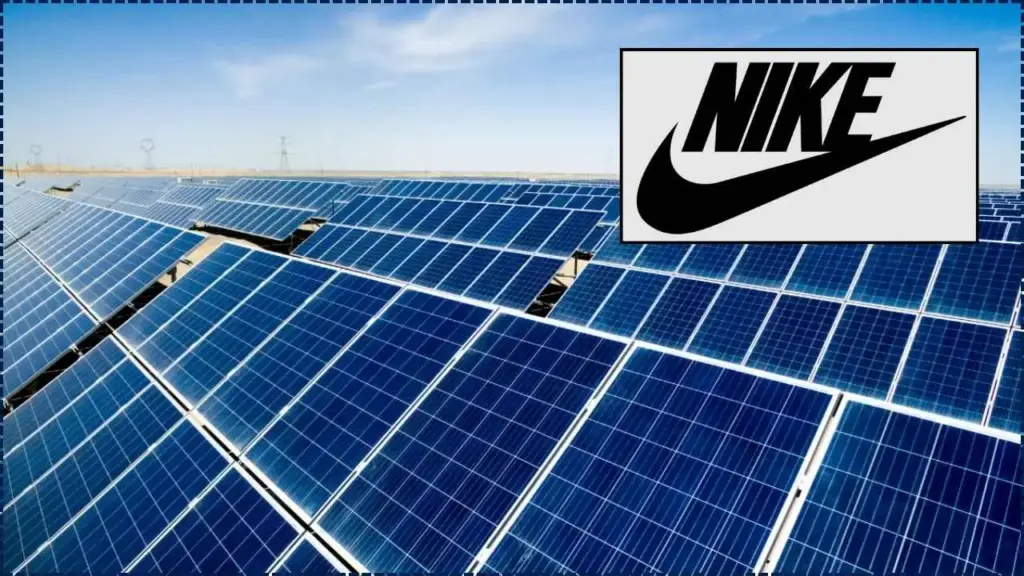
The long-term arrangement, structured as a virtual power purchase agreement (VPPA), enables Nike’s retail stores, offices and distribution centres across Japan to be matched entirely with solar-generated electricity.
The agreement reflects broader shifts in corporate renewable procurement and positions Nike Japan as a visible participant in Japan’s evolving clean energy market.
Nike Goes 100% Green Agreement: What the 18 MW Solar Deal Covers
Under the agreement, Mitsui & Co., Ltd., working through its wholly owned subsidiary Mitsui & Co. Project Solutions, Ltd. (MPS), will supply environmental attributes associated with electricity generated from 16 solar power plants located within the Tokyo Electric Power Company (TEPCO) grid area.
The total contracted capacity amounts to 18 megawatts, including approximately 3 MW from newly developed solar facilities and 15 MW from recently established operational plants. The electricity is injected into the grid, while Nike Japan receives Non-FIT Non-Fossil Certificates (NFCs), which represent the renewable environmental value of that generation.
According to Mitsui’s official disclosure, the volume of certificates corresponds to the full annual electricity consumption of Nike Japan’s owned and operated sites.
How Virtual Power Purchase Agreements Function
A VPPA is a financial contract rather than a direct supply of electricity. The renewable generator sells electricity into the wholesale market. The corporate buyer agrees to a fixed pricing structure and receives renewable certificates to offset its power usage.
Energy market specialists say VPPAs are especially useful in countries where direct physical power purchase agreements face regulatory or grid constraints.
“Japan’s power market has liberalised significantly, but corporate renewable procurement mechanisms are still evolving,” said an energy policy expert at the University of Tokyo. “VPPAs provide flexibility while maintaining compliance with existing grid structures.”
For Nike Japan, the arrangement allows renewable coverage without changing its physical electricity provider.
Nike’s Climate Strategy and RE100 Commitment
Nike is a member of RE100, a global initiative led by The Climate Group and CDP that encourages companies to commit to 100 percent renewable electricity.
The Japan agreement is Nike’s third major VPPA globally, following renewable contracts in North America and Europe. According to corporate disclosures, the company aims to reduce greenhouse gas emissions across its global operations in line with science-based targets.
The deal significantly reduces Nike Japan’s Scope 2 emissions — those arising from purchased electricity — strengthening its environmental performance reporting.
Japan’s Renewable Energy Landscape
Japan has committed to expanding renewable energy under its Strategic Energy Plan, with solar power playing a central role. Following the 2011 Fukushima nuclear accident, the country increased reliance on imported fossil fuels but has since accelerated renewable deployment.
Solar installations have grown steadily, supported by feed-in tariffs, competitive auctions, and corporate procurement mechanisms. However, grid congestion and land constraints remain ongoing challenges.
Corporate renewable agreements such as Nike’s are viewed as complementary to national policy, helping drive private investment in new generation capacity.
Retail Energy Demand and Operational Impact
Nike operates numerous retail outlets throughout Japan, including flagship stores in Tokyo and Osaka, as well as distribution facilities supporting logistics operations. Retail operations require substantial electricity for lighting, digital displays, climate control, and warehousing.
Covering these facilities with renewable certificates enhances operational sustainability while reinforcing brand messaging around environmental responsibility.
Retail analysts note that sustainability initiatives increasingly influence consumer perception, particularly among younger demographics.
Mitsui’s Role in Japan’s Energy Transition
For Mitsui & Co., Ltd., the agreement aligns with its broader strategy of expanding renewable generation and electricity trading capabilities.
Japanese trading houses have played a growing role in renewable project development, financing, and certificate structuring. Mitsui’s experience in energy trading allows it to structure contracts tailored to corporate clients seeking renewable credentials.
Industry observers suggest that partnerships between multinational corporations and established trading houses will become more common as demand for renewable procurement increases.
Financial and Risk Considerations
Although financial terms of the VPPA were not disclosed, such agreements typically offer long-term price certainty. They may also hedge against electricity price volatility in markets experiencing energy cost fluctuations.
However, analysts caution that renewable certificates alone do not eliminate all emissions linked to a company’s value chain.
“Corporate renewable procurement addresses electricity consumption, but supply chain emissions in apparel manufacturing remain a significant challenge,” said a sustainability analyst at a Singapore-based consultancy.
Nike has separately reported initiatives to reduce emissions in materials sourcing and product manufacturing.
Comparison with Other Corporate Renewable Deals
Across Asia, corporate renewable agreements are increasing. Technology firms, financial institutions, and manufacturing companies have entered into similar contracts to meet decarbonisation commitments.
Japan has seen a gradual rise in corporate VPPAs, particularly among multinational companies with global climate targets.

1 साल में 1000% रिटर्न देने वाली कंपनी अब दे रही है 17 बोनस शेयर! निवेशकों को बना दिया करोड़पति
Energy economists say corporate procurement sends long-term demand signals to renewable developers, potentially supporting further solar expansion.
Broader Implications for the Retail Sector
Nike’s agreement may influence other global retailers operating in Japan. Retail energy demand, while dispersed across numerous outlets, can collectively represent significant consumption.
If more retailers adopt similar renewable contracts, cumulative demand could meaningfully contribute to renewable capacity growth.
Environmental groups have welcomed increased corporate participation, though they emphasise the need for transparent reporting and continued expansion of domestic renewable infrastructure.

Potential Challenges Ahead
Despite positive momentum, renewable procurement in Japan faces obstacles:
- Limited land for new solar development
- Transmission grid constraints
- Certificate system reforms
- Electricity market volatility
Policy stability and continued infrastructure upgrades will be essential to sustain growth.
Related Links
Nike Japan’s 18 MW solar VPPA with Mitsui represents a significant corporate milestone within Japan’s clean energy transition. Through this agreement, Nike achieves renewable electricity coverage equivalent to 100 percent of its owned operations in Japan.
The partnership demonstrates how multinational retailers can leverage innovative procurement mechanisms to meet climate commitments.
While broader supply chain decarbonisation remains a challenge, corporate renewable contracts are emerging as a central feature of Asia’s evolving energy landscape.