
India’s PM Surya Ghar: Muft Bijli Yojana has recorded an impressive 250% growth in rooftop solar installations by February 2026, driving a shift toward clean energy solutions for millions of homes. The scheme, which was launched in 2024 by the Ministry of New and Renewable Energy (MNRE), has become a major catalyst in reducing household electricity bills.
With new subsidy rules introduced this year, more Indians can access affordable solar power, propelling the country closer to its renewable energy targets.
PM Surya Ghar Scheme: Empowering Households with Solar Energy
The PM Surya Ghar Scheme was introduced as part of India’s commitment to solarizing homes across the country and reducing dependence on fossil fuels. The program is designed to encourage residential consumers to adopt rooftop solar systems by offering financial subsidies, low-interest loans, and other incentives to lower the upfront costs of solar installations.
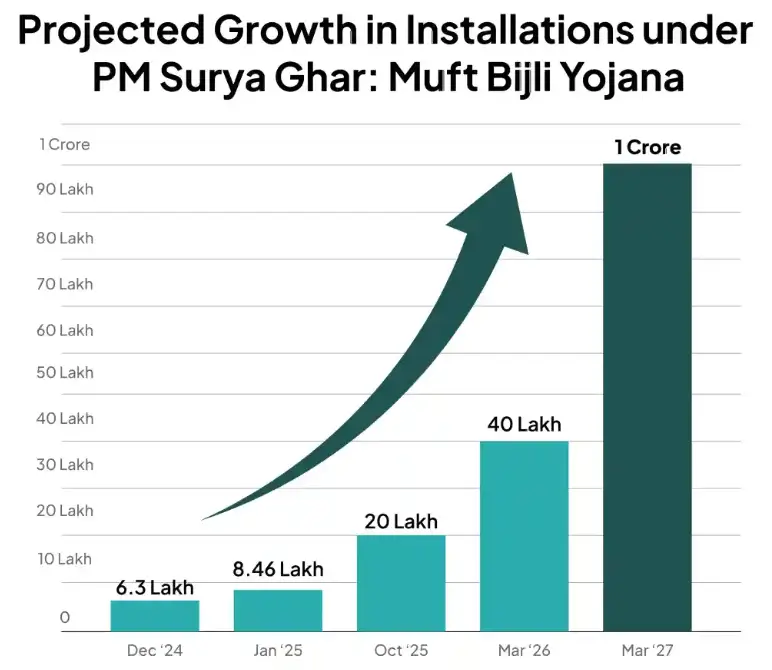
As of February 2026, the scheme has exceeded expectations, with over 3 million households already benefitting from solar installations.
This represents a significant leap toward the government’s ambitious target of installing 10 million rooftop solar systems by 2027, part of its broader initiative to achieve 500 GW of non-fossil fuel capacity by 2030. (mygov.in)
Subsidy Structure and Key Changes in 2026
The PM Surya Ghar Scheme has seen several key updates in its subsidy structure for 2026, aimed at making solar adoption more affordable and accessible for a wider range of consumers.
The government has introduced higher subsidy rates and streamlined loan processes to encourage faster installations and expand the reach of solar power.
Capital Subsidy Increases
In response to increasing demand, the government has raised the capital subsidies provided to consumers who install solar systems under the scheme:
- 1-2 kW systems are now eligible for ₹30,000 per kW as a subsidy.
- For larger 2-3 kW systems, the subsidy amount has been raised to ₹18,000 per kW.
- Systems larger than 3 kW can receive a maximum subsidy of ₹78,000, covering a significant portion of the cost of solar installations.
These new subsidy levels make rooftop solar more financially viable, helping homeowners reduce their upfront investment and achieve faster return on investment (ROI).
Collateral-Free Loans and Financing Accessibility
In addition to the capital subsidy, the PM Surya Ghar scheme also offers collateral-free loans at low-interest rates through priority sector lending by participating banks. This financing model allows low-income and middle-class households to access rooftop solar systems without needing to pledge assets or property as security.
According to Nitin Puri, an industry analyst at Solar Square, “The introduction of collateral-free loans has been a game-changer. It’s made the transition to solar energy much more feasible for middle-class and rural consumers.”
This financing model is backed by the Pradhan Mantri Awas Yojana (PMAY) and other government housing schemes, ensuring that rural households and urban poor families can access clean energy.
The 250% Surge in Solar Adoption
The 250% growth in rooftop solar adoption seen under the PM Surya Ghar Scheme is a direct result of the combined impact of increased subsidies, easier access to financing, and improved awareness campaigns.
As of February 2026, more than 2.8 million homes across India have switched to solar power, drastically reducing their reliance on the traditional electricity grid. Several factors have contributed to this growth:
Government-Backed Awareness Campaigns
The MNRE and other stakeholders have launched awareness programs across various media platforms and in local communities to educate people about the benefits of solar energy. These programs have helped people understand that rooftop solar is not just an eco-friendly choice but also a financially savvy decision.
In many states, the government has facilitated workshops, seminars, and informational campaigns about the long-term savings of switching to solar. This outreach has led to a wider acceptance of rooftop solar across urban and rural households.
Affordability and Financing Access
Solar equipment prices have been declining, driven by both the global supply chain and domestic manufacturing initiatives. In 2026, the cost of solar panels is at its lowest level in recent years, with prices falling nearly 25% compared to 2021.
This trend, combined with lower interest rates and government subsidies, has made rooftop solar systems more affordable for a larger section of the population.
Zero Electricity Bills: A Reality for Many Households
A major selling point of the PM Surya Ghar Scheme is its potential to bring zero electricity bills to households. With net metering policies now being actively implemented, homeowners can feed excess power generated by their solar panels back into the grid.
This excess energy is credited against their electricity consumption from the grid, leading to significant reductions in monthly bills.
- In some regions, households have successfully achieved zero electricity bills, especially in sunny states like Gujarat, Rajasthan, and Maharashtra, where solar production is high.
- Net metering and power bank schemes allow customers to accumulate credits for excess power, which can be used during months when energy generation is low, like the monsoon season.
According to Tata Power Solar, “In regions with high solar exposure, some consumers have reported savings up to 100%, reducing their bills to zero. This offers incredible relief to consumers, especially in areas with high energy costs.”
Regional Uptake and Emerging Patterns
While urban areas like Delhi, Mumbai, and Bangalore have led the way in rooftop solar adoption, emerging Tier-2 and Tier-3 cities are also seeing growing interest in the PM Surya Ghar Scheme. Areas like Nagpur, Indore, and Lucknow are now key regions for solar adoption.
In rural areas, the scheme is helping reduce reliance on traditional biomass fuels and kerosene lamps, which have long been used in households without grid access. According to government reports, over 200,000 rural homes in states like Bihar, Uttar Pradesh, and Odisha have now installed solar-powered lighting and pumps.
As of 2026, rural adoption rates have increased by 40%, thanks to enhanced awareness programs and targeted subsidies for low-income families.
Challenges and the Road Ahead
While the PM Surya Ghar Scheme has been successful in many ways, there are still several challenges to widespread adoption:

ये पैनी स्टॉक बना करोड़पति बनाने वाली मशीन! ₹35 से कम कीमत, 518% रिटर्न – क्या आपने भी लिया मौका?
- Grid Integration and Technical Challenges: Many rural areas lack the infrastructure to support solar systems. Challenges with net metering and grid connectivity remain obstacles in remote areas.
- Awareness Gaps in Rural Areas: Despite government efforts, rural households still face challenges in understanding the long-term financial and environmental benefits of solar energy.
- Financing Delays: Although financing is available, delays in loan processing and documentation are causing backlog issues, especially in Tier-2 cities and rural regions.
However, experts believe that these challenges will be addressed through continuous policy enhancements, greater integration with the Smart Grid Initiative, and scaling up solar-powered systems for rural irrigation pumps and household use.
Looking Ahead: Scaling Up the Scheme
The PM Surya Ghar Scheme is expected to continue its growth trajectory, with more homeowners switching to solar as subsidies increase and financing becomes easier. The government’s new target of 10 million solar homes by 2027 is an ambitious but achievable goal.
Furthermore, battery storage systems, which allow households to store excess energy, are expected to become more affordable, helping even more homes achieve energy independence.
The solar manufacturing industry in India is also expected to benefit, with homegrown companies playing a key role in meeting the growing demand for solar panels and inverters.
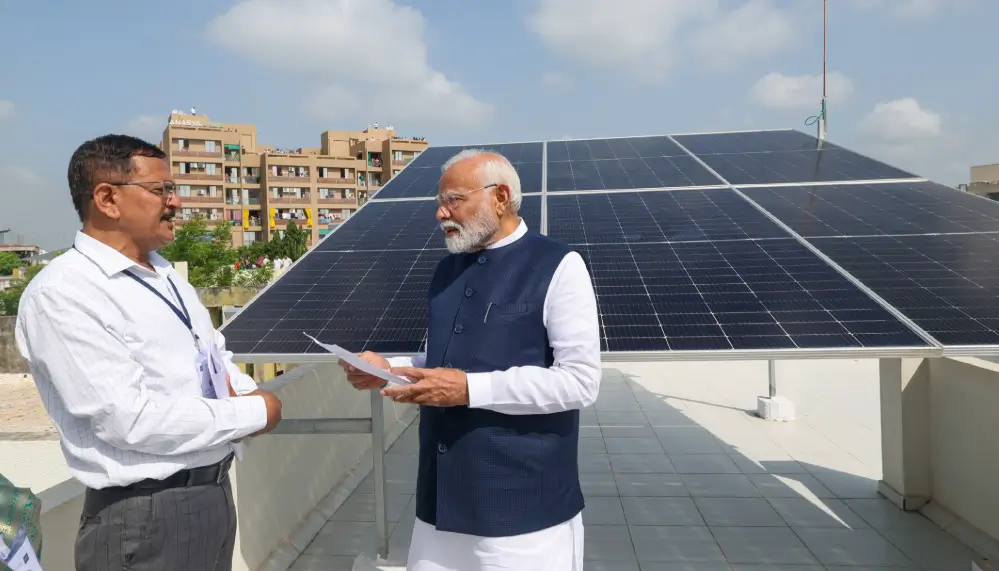
The government’s production-linked incentive (PLI) schemes for solar modules are expected to stimulate further growth in the domestic solar supply chain.
Related Links
Can Sunrun Weather the Policy Storm? Analysts Weigh Potential Solar ITC Cuts
The PM Surya Ghar Scheme has proven to be a transformational initiative, helping millions of Indian households adopt solar energy.
With 250% growth in rooftop solar installations by February 2026 and the promise of zero electricity bills, the scheme is not only addressing energy affordability but also contributing to India’s green energy transition.
As new subsidy rules and collateral-free loans ease financial barriers, more homes are set to benefit from India’s renewable energy revolution.