The US community solar subscriptions surge in 2026 is a landmark moment in the energy sector, particularly among renters. As electricity prices climb and climate concerns intensify, shared solar programs are offering an affordable and practical clean energy alternative for millions who cannot install rooftop solar panels.
This growing shift is revolutionizing energy access, allowing renters, apartment dwellers, and low-income families to benefit from solar without ownership or installation costs.
Is Shared Solar the Future
| Key Fact | Detail | Why It Matters |
|---|---|---|
| Renters in US | ~35% of households | Major untapped market for clean energy |
| Rooftop Access | ~80% cannot install solar | Community solar solves this access issue |
| Savings Potential | 5%–15% annually | Immediate and tangible financial relief |
| Policy Support | Federal & state incentives | Expanding clean energy accessibility |
The US community solar subscriptions surge in 2026 is helping renters save on energy bills and participate in the clean energy transition.
With growing demand, supportive policies, and increasing investment, shared solar is set to become a mainstream energy model that empowers renters, reduces carbon emissions, and fosters energy equity.
What Is Community Solar?
Community solar allows multiple households or businesses to share a single solar installation. Instead of individual rooftop systems, a solar farm generates electricity for a group of subscribers, who then receive credits on their electricity bills based on their share of energy produced.
This system removes key barriers traditionally associated with solar adoption:
- High upfront costs
- Roof ownership requirements
- Structural limitations (e.g., shaded roofs)
As of 2026, the model has become a mainstream solution for renters, who make up nearly 35% of U.S. households, and those in multifamily housing. Research indicates 80% of U.S. renters cannot install rooftop solar, driving growing demand for community solar alternatives.
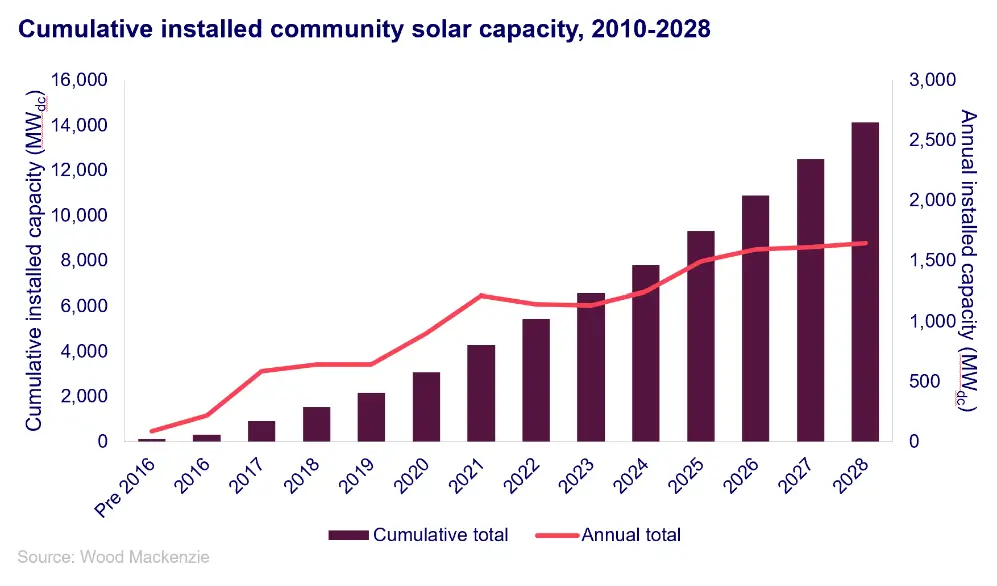
US Community Solar Subscriptions Surge in 2026 — Renters at the Forefront
As of 2026, renters are driving the surge in community solar subscriptions. A study by Lawrence Berkeley National Laboratory found that community solar adopters are 4.4 times more likely to rent compared to traditional rooftop solar adopters.
The figures underscore the growing demand among people who were previously unable to access solar power.
Why Renters Are Switching to Community Solar
1. Structural Barriers to Rooftop Solar
Rooftop solar requires suitable infrastructure and ownership of the property. Renters face a double barrier:
- Lack of roof access
- Restrictions on modifying properties
Community solar solves these challenges by allowing renters to participate without needing to own the roof or make structural changes. They simply subscribe to a nearby solar farm.
2. Financial Accessibility and Predictable Savings
The high upfront costs of installing rooftop solar panels are prohibitive for many, particularly renters.
- Community solar programs require no installation costs or initial investments.
- Subscribers receive immediate savings and bill credits based on the energy produced by their share of the solar farm.
- Long-term savings can range from 5% to 15% annually.
Such financial models make community solar an attractive option for households trying to manage rising electricity costs. According to industry estimates, a typical subscriber could save $300 to $400 per year.
3. Flexibility for Renters
Renters face frequent relocation, making long-term investments, such as rooftop solar, impractical. However, community solar programs offer:
- No long-term commitments
- Flexible subscription plans
- Easy transferability if the subscriber moves
Such flexibility is vital for those who rent in urban areas, where housing turnover is high.
4. Sustainability and Climate Concerns
More than 70% of U.S. renters report concern about climate change, with many seeking ways to reduce their carbon footprint. Shared solar is an ideal solution for those who cannot install personal solar panels but still want to contribute to a greener energy future.
Real-World Example: Renters Reap the Benefits
Across the U.S., renters are realizing financial and environmental benefits through community solar. One example comes from a Brooklyn apartment complex, where tenants saw an average of 12% savings on their monthly electricity bills simply by subscribing to a local community solar program. This was achieved without any infrastructure change or upfront investment.
Such stories reflect the broader trend toward financially accessible renewable energy for renters and urban dwellers.
Economic Impact: Community Solar’s Changing Landscape
Shared solar is not just a benefit for renters; it’s also transforming the broader energy market.
Key Benefits
- Lower electricity costs: A cost-effective alternative for renters without energy-efficient roofs.
- No installation fees: Unlike rooftop solar, there are no setup costs or maintenance fees for community solar.
- Flexible programs: Subscribers enjoy flexibility in switching between programs or canceling their subscriptions.
Experts note that community solar could represent a $1.5 billion opportunity for consumers and companies in the next five years.
Market Growth and Investment Trends
The U.S. community solar sector is one of the fastest-growing segments in the renewable energy market. Several key indicators show strong growth:
- Billions in investment: Venture capital and institutional investors are pouring money into the community solar market.
- Subsidized programs: Federal and state governments are incentivizing solar developers and offering rebates to community solar subscribers.
Policy Support and Government Role
Government support is a key factor in community solar growth. Programs such as the FAME II initiative aim to bring renewable energy to underserved communities, especially renters.
- State policies: In states like New York, Massachusetts, and Minnesota, government support has streamlined the process for community solar development and lowered costs for consumers.
- Federal funding: Bills like the Infrastructure Investment and Jobs Act include billions in grants for clean energy programs, including community solar initiatives.
Challenges and Concerns
Despite the rapid growth of community solar, some challenges remain.
Policy Variability
Community solar availability differs significantly across states due to local regulations and utility restrictions. Some states still lack supportive frameworks, making it harder for renters in those areas to access the benefits.
Grid Integration
Delays in connecting solar farms to the grid have caused slowdowns in some regions. This has been particularly problematic in areas with high demand for new energy sources.
Consumer Education
Many potential customers remain unaware of community solar options. Extensive outreach is required to raise awareness among renters who may not know they can participate.
Environmental and Social Impacts
Community solar not only benefits individual consumers but also has broader environmental and societal impacts.
- Lower carbon footprints: Community solar helps reduce the dependence on fossil fuels and cuts emissions.
- Energy access for marginalized communities: These programs ensure that low-income communities, who often cannot afford rooftop solar, have access to renewable energy.
Community solar is particularly beneficial in reducing energy inequality, providing affordable clean energy to millions of households that would otherwise be excluded.
Consumer Guide: How Renters Can Participate
Steps to Get Started:
- Check availability: Ensure community solar is available in your area (search for local programs).
- Compare providers: Research providers and their terms (pricing, cancellation policies, etc.).
- Review subscription plans: Make sure the contract is clear on how savings will be applied to your electricity bill.
- Sign up: Complete the sign-up process through the provider’s platform.
- Start saving: Receive credits directly on your utility bill based on the energy generated by the solar farm.
Expert Perspectives
Energy analysts agree that community solar is crucial for scaling clean energy adoption. Dr. Maria González, a renewable energy expert, explained:
“Community solar provides renters with an equal opportunity to participate in the clean energy revolution, especially in urban environments where traditional solar options are unfeasible.”
However, experts also stress the need for continued policy innovation and grid infrastructure improvements to support community solar’s growth.
Related Links
Canada Greener Homes Loan 2026: Status of the $40,000 Interest-Free Retrofit Loan
Best Solar Panel Snow Removal Tools 2026: Safe Ways to Keep Your Array Producing All Winter
Future Outlook: Is Shared Solar the Future?
The US community solar subscriptions surge in 2026 reflects a long-term trend toward more inclusive energy solutions.
Key Developments:
- Policy evolution: As states continue to adopt favorable policies, the availability of community solar will increase.
- Integration with storage: Advances in solar battery storage could further enhance community solar programs by ensuring consistent power generation and usage.
- National growth: As the U.S. aims for net-zero emissions by 2050, community solar will become a cornerstone of renewable energy access.
Experts predict that community solar will continue to expand as a mainstream energy solution, particularly for renters.
FAQs
How much can renters save with community solar?
Renters can typically save between 5% and 15% annually on electricity bills.
Do I need to install solar panels?
No, the energy comes from a shared solar farm, so no installation is required.
Can I join a community solar program as a renter?
Yes, community solar is specifically designed for renters and anyone without a suitable rooftop for solar panels.
Is community solar available in my area?
Availability varies by state and region, so you’ll need to check with local providers.