

Solar power has long been celebrated for its ability to provide clean, renewable energy during the day. But once the sun sets, most solar panels fall silent, leaving energy systems dependent on batteries or grid systems for backup.
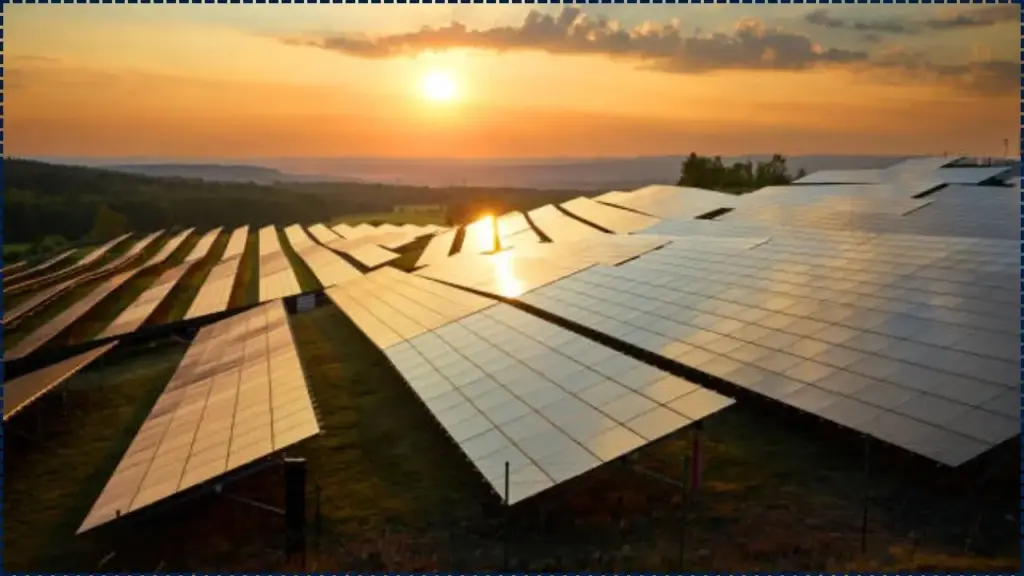
However, a groundbreaking new technology promises to extend the benefits of solar energy beyond daylight hours by harnessing the Earth’s infrared radiation — the heat that radiates out into space during the night.
This new nighttime solar technology offers a compelling alternative to traditional solar systems and could significantly change how we think about renewable energy. By capturing the Earth’s heat loss at night, this technology could provide continuous, 24/7 renewable energy without needing energy storage systems or grid connectivity.
How Night-Solar Technology Works: The Science of Infrared Radiation
For most solar technologies, sunlight is the key energy source. Photovoltaic cells convert sunlight into electricity by using the photovoltaic effect, where light excites electrons to create an electric current. However, nighttime solar systems work differently.
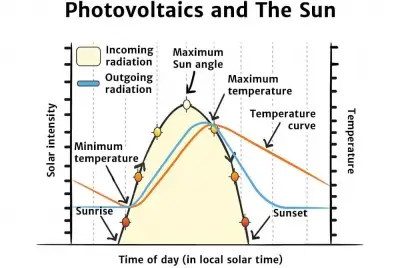
Rather than relying on sunlight, these systems capitalize on the infrared radiation that the Earth emits after sunset. After dark, the Earth’s surface loses heat by radiating infrared radiation into space.
While this energy is invisible to the human eye, it can be captured and converted into usable electricity by specially designed thermoradiative diodes — devices similar to photovoltaic cells, but designed to absorb infrared radiation and convert it into electrical power.
- Infrared Radiation: After the sun sets, the Earth cools, and infrared radiation is emitted into space.
- Thermoradiative Diode: These diodes absorb infrared radiation and generate electricity through the thermodynamic process of heat transfer.
- Efficiency: Though early prototypes generate much lower electricity output compared to conventional solar panels, the technology shows great promise for low-power applications.
Global Research and Development in Night-Solar Technology
The University of New South Wales (UNSW) has made significant strides in developing this technology, showcasing the potential of thermoradiative diodes for nighttime solar power generation.
The UNSW team, led by Professor Ned Ekins-Daukes, demonstrated that their technology could efficiently convert infrared radiation into electricity, generating power without sunlight.
Similarly, Stanford University has been exploring the integration of thermoelectric devices with traditional solar panels, creating hybrid systems that can harness thermal radiation at night, providing continuous low-level power.
Their experimental setups have shown that combining thermoelectrics with solar panels could allow for nighttime energy harvesting that complements traditional solar energy during the day.
These global efforts are still in the research phase, but they point to the rapid advancements in night-solar technology and its potential to reshape the energy landscape.
Energy Storage Integration and the Future of Continuous Solar Power
One of the most exciting aspects of night-solar technology is that it could complement or even reduce reliance on battery storage systems. Traditional solar power systems require batteries to store energy generated during the day, making them costly and inefficient over time.
Night-solar systems, by contrast, would generate power directly from the Earth’s thermal radiation, eliminating the need for expensive storage systems and providing continuous, renewable energy.
However, for large‑scale applications, integrating advanced batteries like solid-state batteries or flow batteries could help optimize the system for different energy demands.
By combining night-solar technology with high-capacity storage, we could see the emergence of fully autonomous energy systems capable of operating round-the-clock without relying on the grid.
Energy Efficiency and Environmental Impact
As night-solar systems continue to develop, it’s crucial to balance energy efficiency with environmental impact. Unlike conventional systems that depend on rare or toxic materials, night-solar technology primarily uses abundant materials like semiconductors and thermoelectric devices, reducing the environmental footprint of production and disposal.
The key challenge, however, will be scaling these technologies while ensuring that their materials remain environmentally friendly and recyclable. Additionally, research is focused on improving the efficiency of thermoradiative devices, which currently produce much lower output than traditional photovoltaic panels.
With ongoing improvements in material design and energy capture, these devices could one day match or exceed the efficiency of today’s solar panels, offering a practical solution for continuous, renewable energy.
Potential Applications Beyond Residential Use
While the immediate applications of night-solar technology may be for residential or low-power systems, the technology has the potential to go far beyond homes. Industrial applications, including powering remote facilities, sensors, or infrastructure in off-grid locations, could benefit greatly from continuous solar power, especially in harsh environments like deserts or the Arctic.
Moreover, space missions or satellite operations that require continuous, autonomous power could leverage night-solar systems. These systems would allow spacecraft and satellites to generate power without relying solely on solar panels, which only work while facing the Sun.
Challenges and Long-Term Prospects
While the promise of night-solar power is clear, challenges remain. The current energy output is still too small to replace conventional solar power on a large scale. To make night-solar systems viable for widespread use, researchers need to address several key challenges:
- Material optimization: Improving the efficiency of thermoradiative diodes.
- Scaling: Making the technology practical for large‑scale applications.
- Reliability: Ensuring the longevity of devices in various environmental conditions.
Researchers are optimistic, however, that breakthroughs in nanomaterials and thermoelectric technology could soon overcome these challenges, making night-solar power a mainstream technology in the coming decades.
Public and Government Support for Solar After Sunset
To fully realize the potential of this technology, public and private support will be critical. Governments around the world are already investing in renewable energy innovations, with clean energy incentives and subsidies aimed at fostering breakthrough technologies.
In the U.S., the Department of Energy (DOE) and EU green energy programs are actively supporting solar and energy storage projects, including those focused on night-solar applications.
Related Links
Charge Your Car for Free! How Much Does a Home Solar EV Charging Setup Cost in 2026?
The Big Comparison: Solar + Battery vs. Grid Power—Which one offers the maximum savings in 2026?
A New Era in Renewable Energy
Night-solar technologies hold immense promise for extending the benefits of solar power into the night and offering continuous renewable energy. As the technology matures, it could reduce dependence on fossil fuels, eliminate reliance on energy storage, and provide a more sustainable, reliable energy source for people all over the world.
The future of solar energy may no longer be limited by daylight — a breakthrough that could redefine how we approach clean, renewable power.
FAQs
Q: How much electricity can night-solar systems generate?
A: Currently, night-solar systems produce a small fraction of the power generated by traditional solar panels. However, ongoing research aims to increase their efficiency and output over time.
Q: Can night-solar technology replace batteries in solar systems?
A: Night-solar technology could reduce reliance on battery storage by providing continuous power generation even after sunset, though energy storage solutions may still be used for larger systems and during cloudy conditions.