Across India’s agricultural regions, Solar Cold Storage is Doubling Income systems are helping farmers cut post-harvest losses and increase earnings by providing reliable, solar-powered refrigeration near farms.
As food spoilage continues to undermine rural incomes, policymakers and experts say decentralised cooling infrastructure is emerging as a practical tool to reduce waste, improve price realisation, and strengthen agricultural supply chains.
The Post-Harvest Loss Challenge in India
India is among the world’s largest producers of fruits and vegetables. Yet a significant proportion of perishable crops is lost before reaching consumers.
According to the Food and Agriculture Organization of the United Nations (FAO), inadequate storage and transport infrastructure contributes heavily to food loss in developing economies. Estimates from Indian government studies suggest post-harvest losses in fruits and vegetables range between 15% and 30%, depending on crop type and region.
The Ministry of Food Processing Industries (MoFPI) has repeatedly identified cold chain gaps as a structural weakness in India’s agricultural economy. Many rural areas lack reliable electricity to operate conventional cold rooms. As a result, farmers often sell immediately after harvest, even when market prices are low.
This context has driven growing interest in Solar Cold Storage is Doubling Income as part of broader KW2 (renewable energy integration), KW3 (decentralised infrastructure), and KW4 (post-harvest management reform).
What Is Solar Cold Storage is Doubling Income and How Does It Function?
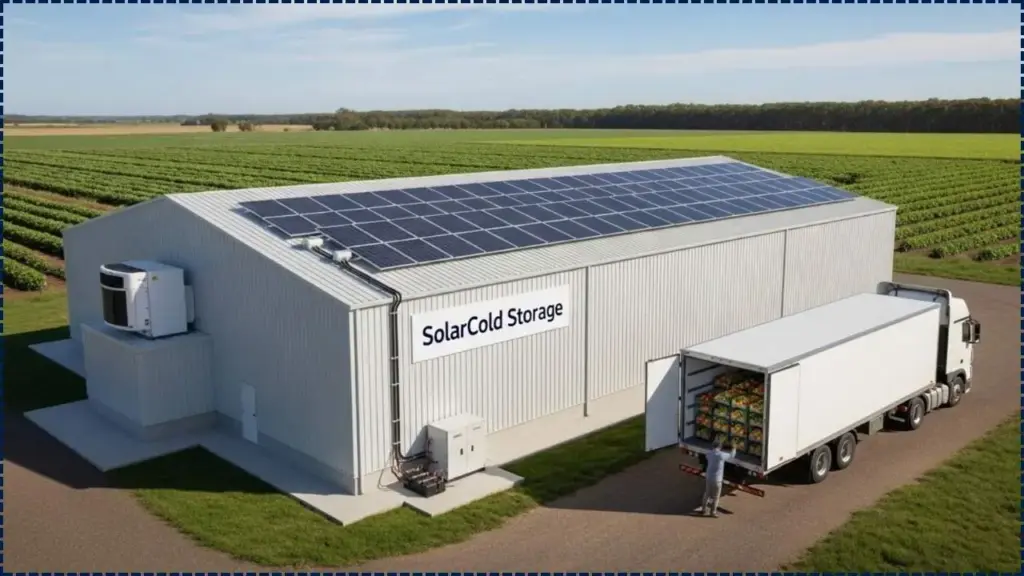
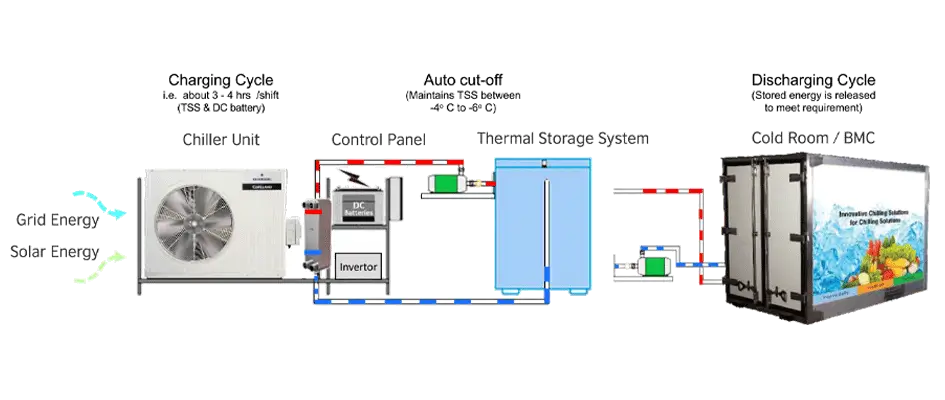
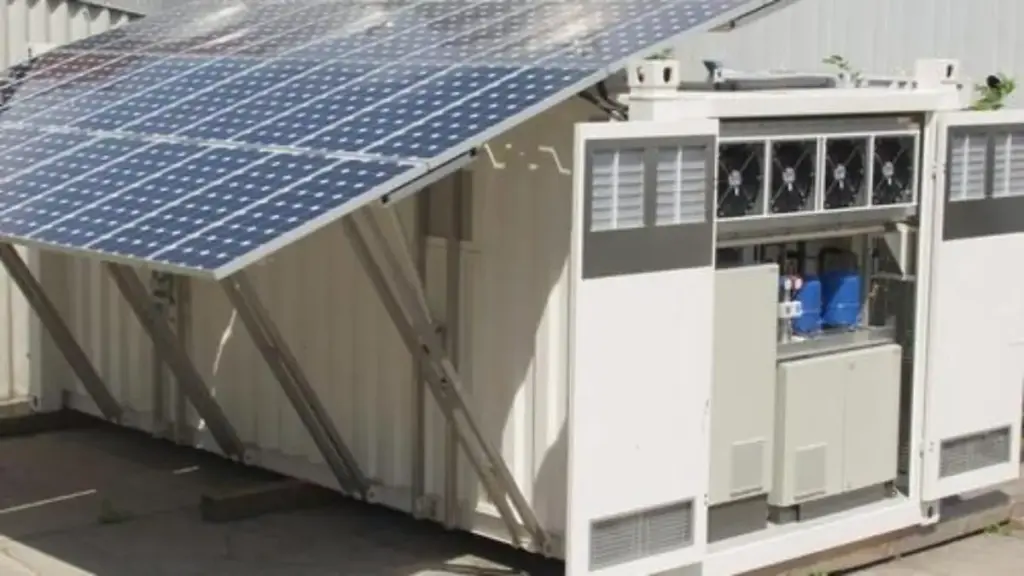
Solar Cold Storage is Doubling Income refers to solar-powered cold storage systems designed for agricultural produce. These systems use photovoltaic panels to generate electricity that powers refrigeration units.
Unlike traditional cold storage facilities that rely on grid electricity or diesel generators, solar-powered units can operate in off-grid or weak-grid environments. Many installations include battery or thermal storage systems to maintain temperature during the night.
Temperatures are typically maintained between 2°C and 8°C for vegetables and fruits, though specialised units can support dairy, fisheries, or seed storage.
Experts classify these installations as decentralised cold chain nodes, meaning they are located close to production sites rather than distant wholesale markets.
How Solar Cold Storage is Doubling Income Reduces Waste and Price Distress
Cold storage slows biological decay and moisture loss. Even a two- to three-day extension in shelf life can allow farmers to wait for better market conditions.
Research published in agricultural policy journals has shown that access to local cold storage can significantly reduce rejection rates for perishable produce. Reduced spoilage also improves grade quality, which directly influences wholesale prices.
Dr. Ashok Gulati, agricultural economist and former chairman of the Commission for Agricultural Costs and Prices, has argued in public forums that “post-harvest management is as important as increasing farm productivity. Without storage, farmers cannot capture full value.”
Farmers with access to Solar Cold Storage is Doubling Income systems can stagger sales rather than release all produce simultaneously during peak harvest.
Evidence of Income Growth
Several pilot projects have documented income improvements linked to decentralised solar cold storage.
In parts of Uttar Pradesh and Maharashtra, farmer-producer organisations operating small solar cold rooms reported improved price realisation for vegetables and horticulture crops. In some cases, income increases were reported at 30% to 100%, depending on crop type and local market dynamics.
The Council on Energy, Environment and Water (CEEW) has observed that renewable-powered decentralised infrastructure improves income stability by reducing dependence on middlemen and lowering operational costs.
However, experts caution that doubling income is not universal. Results depend on crop value, market linkages, and effective management.
Cost Structure and Business Models
A small modular Solar Cold Storage is Doubling Income unit with a capacity of 5–10 metric tonnes may cost between ₹5 lakh and ₹20 lakh, depending on features and backup systems.
To manage these costs, various business models have emerged:
- Farmer-Producer Organisation (FPO) Ownership: Collective investment and shared use
- Rental Model: Private operators charge per crate or per day
- Pay-as-you-store Model: Farmers pay only for storage duration
- Public-Private Partnerships: Government capital support with private operation
The National Bank for Agriculture and Rural Development (NABARD) and MoFPI provide financial support under agricultural infrastructure schemes. Subsidies and low-interest loans are often critical to project viability.
“Access to affordable finance determines whether smallholders can participate,” said a senior NABARD official during an agricultural infrastructure briefing.
Integration with Digital Markets and Logistics
Cold storage alone does not guarantee higher income. Integration with digital trading platforms such as the electronic National Agriculture Market (e-NAM) can improve transparency and price discovery.
Some Solar Cold Storage is Doubling Income projects incorporate digital temperature monitoring and inventory tracking. These tools help reduce spoilage and improve operational efficiency.
Improved logistics connectivity, including refrigerated transport, further enhances value capture. Experts emphasise that decentralised cold storage must be linked to broader supply chain reform.
Environmental and Climate Benefits
India’s electricity generation still relies heavily on coal. Diesel-powered refrigeration contributes to greenhouse gas emissions and local air pollution.
The International Renewable Energy Agency (IRENA) has highlighted decentralised solar infrastructure as a pathway to lower operational emissions in agriculture.
Reducing food waste also cuts embedded emissions associated with water, fertilisers, and transportation. According to the FAO, food loss contributes significantly to global greenhouse gas emissions.
By replacing diesel generators with solar energy, Solar Cold Storage is Doubling Income systems reduce both operational costs and environmental impact.
Social Impact and Gender Inclusion
Solar cold storage can generate rural employment, including technical maintenance and logistics roles. In several districts, women-led self-help groups manage cold storage operations, earning service fees and expanding their role in local value chains.
Development practitioners note that access to cooling encourages diversification into horticulture and high-value crops. This shift can increase farm income resilience.
However, equitable access remains essential. Smaller landholders without cooperative membership may face limited access during peak harvest.
Risks and Operational Challenges
Despite positive outcomes, challenges remain. Maintenance and technical training are critical. Equipment failure due to poor servicing can damage produce and erode trust.

Battery storage systems increase costs and require replacement after several years. Extreme weather events can also affect solar panel efficiency.
Market volatility remains a key risk. If wholesale prices fall sharply, extended storage may not fully offset losses. Dr. Ramesh Chand, member of NITI Aayog, has previously stated that infrastructure must be paired with market reforms to ensure stable returns.
Policy Outlook and Future Expansion
The Government of India continues to emphasise agricultural infrastructure in policy statements and budget allocations. Industry analysts expect growth in solar cold storage adoption as solar module prices decline and awareness increases.
Private investment in rural infrastructure has also increased, supported by impact funds and development finance institutions.
Experts stress that scaling Solar Cold Storage is Doubling Income systems will require:
- Stable subsidy frameworks
- Standardised technical guidelines
- Capacity-building for local operators
- Integration with transport and market systems
The Broader Economic Implication
Reducing post-harvest losses strengthens national food security. It can also moderate price volatility for consumers.
According to policy analysts, investments in cold chain infrastructure offer high economic returns relative to cost because they protect existing production rather than requiring additional cultivation.
Solar Cold Storage is Doubling Income systems represent a shift from reactive distress sales to planned market engagement.
Related Links
5 Genius Solar Hacks That Could Slash Your Electricity Bill Forever
Price Hike Warning: Why electricity costs could double by 2035 and how Solar can save you lakhs
Solar Cold Storage is Doubling Income is emerging as a practical response to one of Indian agriculture’s persistent structural challenges. By combining renewable energy with decentralised refrigeration, these systems reduce spoilage, stabilise income, and support environmental goals.
Yet, doubling farmer income is not automatic. Success depends on financing access, strong management, market integration, and supportive policies.
As India modernises its agricultural infrastructure, solar-powered cold storage is increasingly viewed not as an experimental pilot, but as a critical component of rural economic reform.