
As governments expand green financing programs worldwide, the relationship between real estate value and solar installations is gaining sharper focus. In 2026, evidence shows solar-equipped homes often command higher resale prices, but when systems are financed through government loans, outcomes vary depending on ownership clarity, loan terms, and local housing market dynamics.
Installing Solar with Government Loans
| Key Factor | Impact on Resale Value |
|---|---|
| Price Premium | 4%–10% increase |
| Buyer Demand | Faster sales for solar homes |
| Loan Impact | Neutral to positive if transparent |
| Ownership | Fully owned systems add highest value |
The relationship between solar installations and real estate value is increasingly significant but remains complex. Government loans have expanded access to solar, yet their impact on resale depends on transparency, ownership structure, and market context.
As energy efficiency becomes central to housing decisions, solar is poised to play a defining role in property valuation worldwide.
The Expanding Link Between Real Estate Value and Solar
The connection between real estate value and solar adoption has strengthened as energy prices rise and climate policies accelerate. Governments in countries such as India and the United States are promoting rooftop solar through subsidies, tax credits, and low-interest loans.
According to energy economists, solar is increasingly viewed as a financial asset rather than a lifestyle upgrade.
“Solar installations are now evaluated similarly to structural home improvements,” said Dr. Michael Reyes, a housing policy researcher. “They influence both operating costs and perceived long-term value.”
How Government Loans Are Reshaping Solar Adoption
Expanding Access
Government-backed loans have widened access to solar systems by reducing upfront costs. Programs typically:
- Offer low-interest financing.
- Provide subsidies covering 20%–40% of costs.
- Encourage adoption among middle-income households.
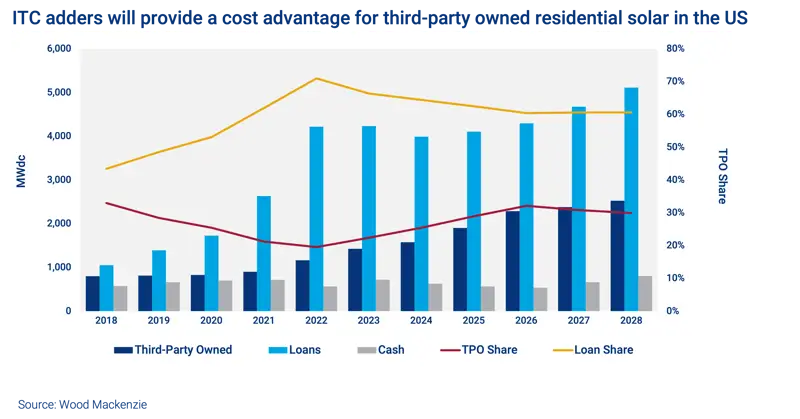
This policy-driven growth has significantly increased the number of solar-equipped homes entering the real estate market.
The Loan Factor in Resale Transactions
However, loans introduce a layer of financial complexity.
Key Variables Affecting Resale:
- Whether the loan is fully repaid.
- Transferability to the buyer.
- Interest rate and repayment terms.
- Legal documentation clarity.
“Buyers are willing to pay more for solar, but not for uncertainty,” said a real estate attorney specializing in energy assets.
Do Solar Panels Increase Real Estate Value?
Market Evidence
Studies across multiple housing markets indicate that solar panels can increase property value:
- Homes with solar often sell for 4%–10% more.
- Some markets report premiums exceeding $10,000–$15,000.
- Solar homes tend to sell faster than non-solar homes.
These gains are driven by both economic and psychological factors.
Buyer Psychology: Why Solar Homes Command Premiums
Financial Certainty
Buyers value predictable energy costs, especially amid rising electricity prices.
Perceived Modernity
Solar is associated with innovation and future-ready infrastructure.
Environmental Responsibility
Sustainability is a growing priority, particularly among younger buyers.
Status Signaling
In some markets, solar installations signal higher-quality construction and investment.
Ownership Models: The Most Important Factor
Fully Owned Systems
- Highest resale value increase.
- No financial obligations for buyers.
- Clean and simple transactions.
Government Loan-Financed Systems
- Moderate to strong value impact.
- Depends on loan clarity and transferability.
Leased Systems
- Often provide minimal or no added value.
- Can complicate property sales.
Industry experts consistently emphasize that ownership structure outweighs system size in determining resale impact.
Appraisal Methods: How Solar Value Is Calculated
A critical but often overlooked factor is how appraisers assess solar value.
Common Valuation Approaches
Income Approach
- Based on projected energy savings over time
Cost Approach
- Based on installation cost minus depreciation
Market Comparison
- Comparing similar solar-equipped homes
The income approach is increasingly favored, as it reflects actual financial benefits to buyers.
Legal and Documentation Considerations
Solar installations financed through loans require careful documentation during property transactions.
Key Legal Factors:
- Loan agreements must be disclosed.
- Transfer terms must be clearly defined.
- Warranty documentation should be included.
- Grid connection and net metering approvals must be valid.
Failure to provide clear documentation can delay or derail property sales.
Tax and Financial Implications
For Sellers
- Capital gains calculations may include solar improvements.
- Subsidies may not directly affect resale value.
For Buyers
- Potential eligibility for ongoing incentives.
- Responsibility for loan repayment (if transferred).
Tax treatment varies by country and jurisdiction, making professional advice essential.
Case Study: Two Homes, Two Outcomes
Case 1: Owned Solar System
- System fully paid.
- Clear documentation.
- Result: Sold at 8% premium within weeks.
Case 2: Loan-Financed System (Unclear Terms)
- Outstanding loan.
- Complex transfer conditions.
- Result: Sale delayed; price negotiated downward.
These examples illustrate how financial clarity directly impacts resale outcomes.
Regional Differences in Solar Value
High-Impact Markets
- High electricity costs.
- Strong policy incentives.
- High environmental awareness.
Low-Impact Markets
- Low energy prices.
- Limited solar adoption.
- Lower buyer awareness.
In India, urban markets with high electricity tariffs show stronger solar-related premiums.
Risks That Can Reduce Real Estate Value
Solar does not guarantee increased property value in all cases.
Key Risks:
- Poor installation quality.
- Aging or outdated systems.
- Non-transferable loans.
- Roof condition issues.
“Solar adds value only when it adds confidence,” said a property valuation expert.
Cost vs. Value: A Balanced Perspective
Installation Costs
- ₹2–4 lakh in India (before subsidies).
- Reduced through government incentives.
Payback Period
- Typically 4–8 years.
Resale Contribution
- Partial recovery through higher home price.
Experts stress that solar should be evaluated as a long-term investment, not a short-term resale strategy.
Related Links
Nova Scotia Solar Update: Is 1:1 Net Metering the New “Grant” for Maritimers?
The Post-ECO4 Era: What Happens to Free Solar Grants After the March 31st Deadline?
Future Trends: Solar and Housing Markets
Key Developments
- Integration into property valuation standards.
- Expansion of green mortgages.
- Growth of net-zero homes.
- Increased adoption of battery storage.
By 2030, solar is expected to become a standard feature in many residential markets.
FAQs
Do solar panels always increase home value?
No. Value depends on ownership, system quality, and market conditions.
Are government loans a disadvantage?
Not necessarily, but unclear loan terms can reduce buyer interest.
Should sellers pay off loans before selling?
Often recommended to simplify transactions and maximize value.
How much value does solar add?
Typically 4%–10%, depending on multiple factors.