
In rural Australia, an innovative approach called solar grazing is revolutionising how farmers manage their land.
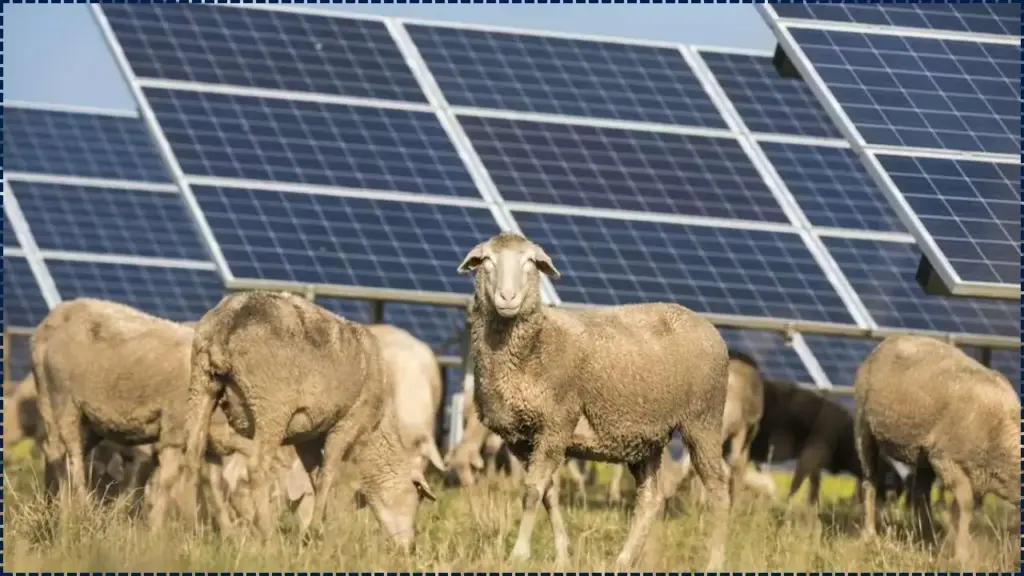
By allowing sheep to graze under solar panels, the practice is reducing land maintenance costs, boosting wool quality by up to 20%, and contributing to the country’s renewable energy goals. This new form of agriculture is a promising solution for both the environment and farmers.
Solar Grazing in Australia’s Agricultural Revolution
The Australian agricultural sector is experiencing a transformation as innovative solutions are merging farming and renewable energy. Solar sheep, a practice where sheep graze under solar panels, is an example of this integration.
Farmers are increasingly adopting this method not just to generate power but also to enhance wool production. Recent reports show that grazing sheep under solar panels can increase wool quality by 20%, offering significant benefits to both farmers and the environment.
This trend is part of a broader global shift towards agrivoltaics, the practice of combining agriculture with solar power production, where land that was traditionally used for farming is now simultaneously used for energy generation.
In Australia, this trend is gaining momentum as both rural communities and the renewable energy sector look for sustainable solutions to environmental challenges.
What is Solar Grazing and How Does It Work?
The Concept of Agrivoltaics
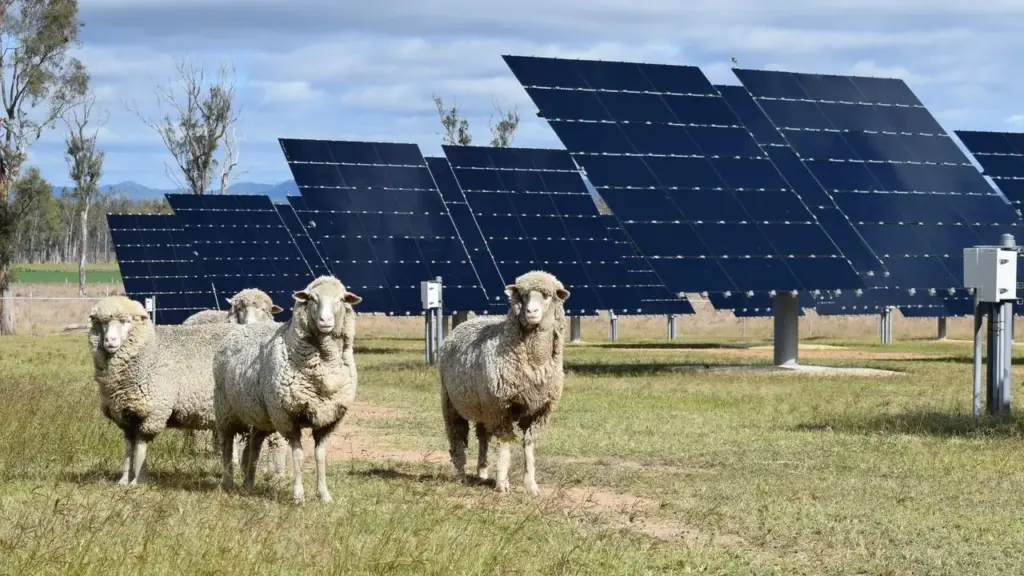
Solar grazing, also known as agrivoltaic grazing, refers to the practice of grazing livestock under solar panels. This practice enables farmers to make the best use of their land by simultaneously producing renewable energy and raising animals.
Solar farms are often installed in vast, open fields where the land is underused, and sheep naturally help maintain the vegetation around the panels. The sheep feed on the grass under the panels, reducing the need for costly mechanical mowers, while also benefiting from the shade the panels provide, especially during Australia’s hot summers.
In turn, this form of farming helps maintain healthy pastures, improves soil moisture retention, and reduces land degradation. This symbiotic relationship is proving beneficial to both farmers and the renewable energy sector.
Improving Wool Quality Under Solar Panels
One of the most surprising benefits of solar grazing is the reported increase in wool quality. The presence of shade beneath the panels offers a cooler environment, which reduces heat stress in the sheep.
The reduction in stress is critical, as it impacts wool quality, growth, and overall health. In fact, some Australian farmers have reported a 20% improvement in wool quality in flocks that graze under solar panels compared to those on traditional pastures.
At solar farms such as the Wellington Solar Farm in NSW, several growers have noted that sheep grazing beneath arrays have yielded wool described as “cleaner” and more consistent in quality. These improvements are attributed to the more uniform diet provided by pasture shaded by solar panels and less exposure to inconsistent weather patterns.
A study carried out by environmental research groups and agribusiness organisations found early indications that wool from solar‑grazing sheep showed some parameters suggesting improved quality compared with traditional pasture flocks. However, researchers caution that longer‑term data is needed to understand these benefits fully and conclusively.
The Benefits of Solar Grazing for Farmers
Financial Gains from Solar Grazing
Farmers adopting solar grazing are not only improving the quality of their wool but also increasing their profitability. The solar grazing model offers several economic advantages:
- Reduced Land Maintenance Costs: Sheep graze on the grass, effectively acting as natural mowers, which significantly reduces the need for manual mowing or herbicide use.
- Additional Revenue Streams: Farmers can earn income from leasing land to solar operators while maintaining agricultural production, creating a dual revenue stream.
- Improved Wool Yields: The cool shade and healthier pastures support better wool production, leading to higher quality and, in some cases, higher market prices.
By integrating solar panels with livestock grazing, farmers are reducing operational costs and improving their wool yields, which translates into more sustainable income.
Environmental and Ecological Advantages
Reduced Carbon Footprint
The dual use of land for both agriculture and renewable energy production offers a significant reduction in carbon emissions. As the demand for renewable energy increases, integrating sheep grazing with solar energy production reduces the carbon footprint of farming operations.
Sheep, under solar panels, do not just contribute to cleaner air by reducing the reliance on fossil fuels, but they also improve the soil by fertilising the land naturally through grazing.
Improved Land Health and Biodiversity
The shade provided by the solar panels helps maintain a healthy pasture. The panels protect the grass from extreme temperatures, making it more resilient during dry periods. This leads to better soil moisture retention and less irrigation needed.
Additionally, this method of grazing reduces soil compaction, improves plant biodiversity, and helps prevent overgrazing, creating a more sustainable farming environment.
Farmers have also reported that solar grazing creates habitats for small animals and birds, improving biodiversity on farms. As such, the combination of grazing and renewable energy production can foster sustainable agriculture that benefits the environment as much as it benefits farmers.
Case Studies: How Solar Grazing Is Changing the Game
A Successful Pilot in New South Wales
One of the first large-scale solar grazing projects in Australia took place in New South Wales, where Reneweco, a company focused on renewable energy and agricultural innovation, has been experimenting with solar sheep grazing.
The project involved over 10,000 sheep grazing beneath solar panels, where it was found that the wool produced under the panels had notably higher quality compared to that from traditional grazing.
Farmers who participated in the project reported improved wool yield, reduced grazing costs, and better land management. The dual-use of land allowed them to remain competitive in the wool industry while contributing to the growth of Australia’s renewable energy capacity. (abc.net.au)
Victoria: Integrating Solar Farms with Sheep Grazing
In Victoria, another pilot project has emerged at Numurkah Solar Farm, where sheep are grazing beneath the solar panels, helping with vegetation control while providing more space for energy generation.
The project has not only helped generate renewable energy but has also supported local wool producers in their sustainable practices. These pilot projects are rapidly gaining attention for their potential to scale across Australia’s agricultural zones.
Agrivoltaics: Solar Agriculture Integration Beyond Sheep
The concept helping rural Australia is part of a broader global trend known as agrivoltaics — the co‑location of agriculture and photovoltaic power generation. In this model, food and fibre production coexist directly with solar energy infrastructure, reducing land‑use competition and promoting sustainable rural economies.
Australia’s agrivoltaic examples primarily involve sheep grazing, but in other regions, researchers are experimenting with integrating crops, orchards and even livestock other than sheep under and around solar arrays.

This approach aims to encourage agricultural productivity alongside renewable energy goals in a way that strengthens rural resilience and environmental stewardship.
Challenges and Practical Considerations
While farmers and solar developers generally endorse solar grazing, there are practical risks and considerations. For example, older or low‑raised panels can entangle sheep if not appropriately spaced, and insurance and liability arrangements must be negotiated between landholders and solar operators.
Moreover, grazing intensities must be managed carefully to ensure pasture health and prevent overgrazing under shaded conditions.
Some ecological studies suggest that shading can change vegetation productivity and, without management, may lead to uneven grazing patterns if stocking rates are too high.
Economic and Community Impacts
Solar grazing does more than support wool quality and renewable energy. In regional towns, large solar projects that integrate agrivoltaic grazing have contributed to employment and local investment, especially during construction and operational phases.
For example, the Numurkah Solar Farm in Victoria created several full‑time jobs and community benefit funds, helping revitalise local economies facing agricultural downturns.
While this is a separate case from solar sheep, it underscores how renewable energy and agriculture can co‑deliver economic benefits for rural communities.
Related Links
India’s Export Leap! How the Green Hydrogen jump is making these 3 Indian companies global leaders
The Battery Boom: Why storage sector stocks are predicted to see a 5x jump in the next 5 years
In rural Australia, ‘Solar Sheep’ Are Helping Rural Australia is emerging as an innovative intersection of agriculture and renewable energy.
By allowing sheep to graze under solar panels, farmers, solar operators and communities are finding a practical and sustainable way to manage vegetation, generate clean power and — potentially — enhance wool quality and farm profitability.
While long‑term scientific data on wool improvements and ecological impacts is still growing, the early results and positive farmer experiences suggest a promising future for solar sheep as part of Australia’s broader transition to cleaner and more resilient rural economies.