

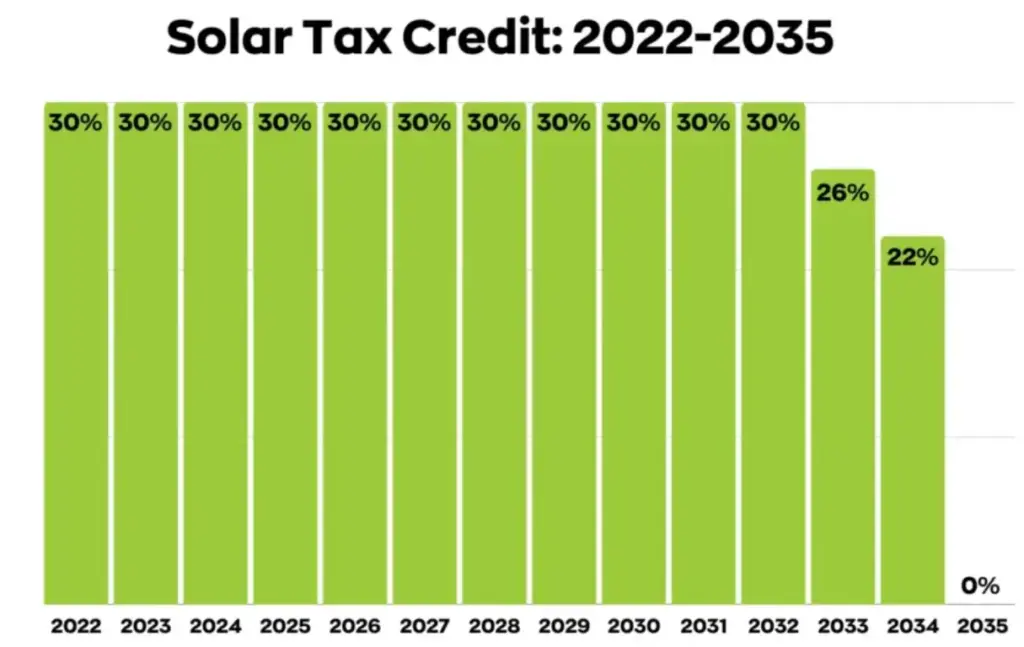
The 30% solar tax credit, a federal incentive that significantly reduced the cost of installing rooftop solar systems for U.S. homeowners, is scheduled to expire for residential systems after December 31, 2025.

Beginning in 2026, the policy change could increase installation costs and reshape how households evaluate solar investments across the United States.
End of 30% Solar Tax Credit
| Key Fact | Detail |
|---|---|
| Tax Credit Value | Homeowners could deduct 30% of solar installation costs from federal taxes |
| Expiration Date | Residential credit ends after Dec. 31, 2025 |
| Typical Savings | $4,000–$9,000 depending on system cost |
| Market Impact | Residential solar installations may slow after expiration |
A Two-Decade Policy That Helped Build the Solar Market
The federal solar tax incentive has been one of the most influential clean-energy policies in the United States. Originally introduced in 2006 as the Solar Investment Tax Credit (ITC), the program aimed to encourage adoption of renewable energy technologies by lowering upfront installation costs.
At the time, solar systems were far more expensive than today. Federal policymakers hoped the credit would stimulate demand and accelerate technological development. Over time, that goal largely materialized.
According to the Solar Energy Industries Association (SEIA), U.S. solar capacity has grown more than 200-fold since the tax credit was introduced, making solar one of the fastest-growing electricity sources in the country.
“The investment tax credit has been critical in helping the solar industry reach scale,” the association said in policy materials describing the program.
How the 30% Solar Tax Credit Worked
The tax incentive allowed homeowners to subtract 30 percent of the total cost of installing a solar energy system from their federal tax liability. Eligible expenses typically included:
- Solar panels
- Inverters and electrical equipment
- Installation labor
- Wiring and mounting hardware
- Energy storage batteries
Because the credit applied to the full system cost, the financial benefit could be significant.
For example:
| System Cost | Tax Credit | Net Cost |
|---|---|---|
| $20,000 | $6,000 | $14,000 |
| $25,000 | $7,500 | $17,500 |
| $30,000 | $9,000 | $21,000 |
For many homeowners, the incentive shortened the time needed for solar energy savings to offset installation costs.
Why the Policy Is Changing in 2026
The expiration of the residential solar tax credit is tied to federal legislation passed in 2025 that revised several energy-related tax incentives. Under the updated policy, homeowner-owned solar installations must be completed by December 31, 2025 to qualify for the credit.
After that date, the residential credit under Section 25D of the U.S. tax code will no longer apply. Supporters of the change argue that government incentives should gradually decline as renewable technologies mature.
Some policymakers also say reducing subsidies will lower federal spending. However, critics warn that removing the incentive could slow clean-energy adoption.
“Tax incentives have been one of the most effective tools for expanding residential solar,” said Jenny Chase, a solar analyst at BloombergNEF, in previous market research on renewable energy incentives.
Impact on Household Energy Savings
Without the 30% tax credit, installing rooftop solar systems will likely become more expensive for homeowners. Energy economists say the change could increase payback periods for residential solar investments.
The payback period refers to the time it takes for electricity savings to equal the cost of installing the system. Before the policy change:
- Typical solar payback period: 6–10 years
After expiration:
- Estimated payback period: 8–13 years
However, actual savings depend heavily on local electricity prices. Households in states with high energy costs—such as California, New York, and Massachusetts—may still benefit from solar installations even without federal incentives.
Real-World Example: A Homeowner’s Decision
Consider a homeowner installing a $25,000 solar system in 2025.

With the tax credit:
- Credit amount: $7,500
- Net installation cost: $17,500
If the same system were installed in 2026 without the incentive:
- Net cost: $25,000
The difference could influence whether homeowners proceed with installation plans. Solar installers report that some customers are already accelerating projects to qualify for the credit before the deadline.
Industry Response to the Policy Change
Solar companies and industry groups are closely watching the policy transition. According to reports from Reuters, some rooftop solar companies have begun restructuring operations in anticipation of slower residential demand.
Industry analysts say the market could experience a surge in installations in 2025 followed by a slowdown in 2026. This pattern has occurred before when tax incentives approached expiration deadlines. Companies are also exploring new business strategies.
These include:
- Solar leasing programs
- Power purchase agreements (PPAs)
- Battery-storage packages
Under these models, solar companies retain ownership of the system and can claim certain commercial tax incentives.
State Incentives May Still Reduce Costs
Even after the federal credit expires, many states continue to offer solar incentives. Examples include:
California
Net-metering programs allow homeowners to receive credits for excess electricity sent to the grid.
New York
State tax credits can cover a portion of solar installation costs.
Massachusetts
Solar renewable energy credit (SREC) programs provide payments for solar generation. These state policies could partially offset the loss of the federal credit.
Solar Job Market Implications
The solar industry has become a major source of employment in the United States. According to the U.S. Department of Energy, the solar sector employs over 250,000 workers nationwide. These jobs include:
- Solar installers
- Electrical technicians
- Engineers
- Manufacturing specialists
Industry advocates say policy changes affecting solar demand could influence employment levels. However, utility-scale solar projects and manufacturing expansion may continue to drive job growth.
Climate Policy and Renewable Energy Goals
The expiration of the residential tax credit also intersects with broader climate policy debates. Many countries, including the United States, have pledged to reduce greenhouse gas emissions in the coming decades. Solar power plays a key role in those plans.

उत्तर प्रदेश में सोलर लगवाने पर मिल रही है भारी सब्सिडी – ये कंपनियाँ कर रही हैं इंस्टॉलेशन!
The International Energy Agency (IEA) estimates that solar energy will account for the largest share of global electricity capacity growth by 2030.
Energy policy experts say stable incentives often help accelerate renewable energy deployment. However, technological improvements and falling costs may sustain solar growth even with fewer subsidies.

Outlook for the Solar Market
Analysts expect a surge in residential solar installations leading up to the expiration deadline. After 2026, the industry may shift toward alternative financing models and utility-scale projects. Declining technology costs, increasing electricity demand and climate policy commitments are expected to support long-term solar growth.
As Fatih Birol, executive director of the International Energy Agency, has noted in global energy reports, renewable energy technologies are becoming increasingly competitive with traditional power sources.
Related Links
Why Are Global Funds Increasing Stake in SolarEdge Technologies?
Should You Buy First Solar or Enphase Energy? Side-by-Side Comparison
The end of the 30% solar tax credit marks a significant policy transition for the U.S. renewable energy market. While the expiration may increase short-term installation costs, the long-term trajectory of solar power will likely depend on technological progress, state policies and global energy trends.
FAQs
What is the 30% solar tax credit?
It is a federal tax incentive that allows homeowners to deduct 30% of solar installation costs from federal income taxes.
When does the credit expire?
The credit expires for residential systems installed after December 31, 2025.
Can I still claim the credit if I install solar in 2025?
Yes. Systems installed before the deadline remain eligible.
Will solar still be affordable after the credit ends?
In many regions, declining solar equipment costs and rising electricity prices may still make solar financially attractive.
Are commercial solar incentives still available?
Some commercial solar projects may continue to qualify for federal incentives under different tax provisions.