
The latest chapter in the ongoing solar trade war between India and the United States sees Indian solar manufacturers preparing to defend themselves against significant tariffs imposed by the U.S. International Trade Commission (ITC).
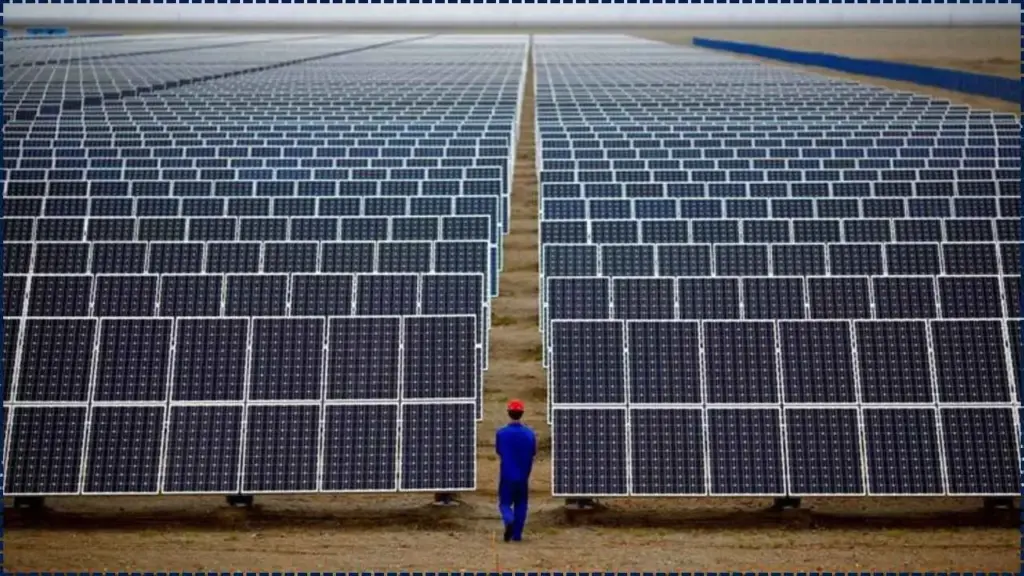
The dispute stems from allegations that Indian solar companies are benefiting from unfair subsidies that undercut U.S. producers. With tariffs as high as 126% on solar panels and modules, India’s solar exporters now face the challenge of maintaining their dominant position in the U.S. market.
As these companies prepare legal battles and new strategies to mitigate the tariffs, the outcome will have significant implications for solar energy trade and global renewable energy goals.
What Triggered the U.S. Action Against Indian Solar Exports?
The Allegations and Investigation
The U.S. Department of Commerce has been investigating allegations that Indian solar manufacturers are receiving unfair government subsidies.
The U.S. International Trade Commission (ITC), the body responsible for assessing trade injury, found that Indian manufacturers were benefiting from subsidies that allowed them to sell their products in the U.S. at artificially low prices, harming American manufacturers.
As a result, countervailing duties (CVDs) have been imposed, leading to tariffs on Indian solar exports of up to 126%. (reuters.com)
Impact on U.S. Solar Market
The tariffs on Indian solar panels are a response to concerns over the domestic U.S. solar industry, which has faced increasing competition from low-cost imports. The U.S. government is taking steps to protect its local manufacturers, while simultaneously promoting its green energy transition through the Inflation Reduction Act, which supports U.S. solar production.
However, these tariffs could increase the cost of solar installations in the U.S., slowing the adoption of solar energy at a time when climate goals are pushing for faster renewable energy expansion.

Indian Manufacturers’ Response: Legal Defenses and Strategic Adjustments
Legal Defense and Engagement with ITC
In response to the U.S. tariffs, Indian solar manufacturers, led by industry bodies like the Indian Solar Manufacturers Association (ISMA), are preparing a legal defense. The Indian government and manufacturers argue that the tariffs are not only unjust but violate international trade agreements.
The companies are expected to present evidence showing that their pricing is in line with global standards and that any subsidies offered do not distort market competition in a harmful way.
These legal battles will be crucial in determining whether the tariffs will be upheld in their current form or adjusted as negotiations continue.
Diversification of Export Markets
Given the uncertainty in the U.S. market, Indian manufacturers are looking at new opportunities in other countries. With global solar adoption on the rise, markets in Europe, Latin America, and Africa present new avenues for growth.
Companies such as Waaree Energies, Vikram Solar, and Adani Green have already begun increasing their focus on these regions. In addition, Indian firms are exploring local manufacturing in countries like Vietnam, Indonesia, and the Middle East to circumvent tariffs on solar panels and modules.
These manufacturing hubs will help reduce shipping costs, mitigate the impact of duties, and meet the increasing demand for solar energy in various regions.

The "Give It Up" Option: When Should You Opt Out of Central Financial Assistance? A 2026 Guide
Policy Support and India-U.S. Trade Relations
Government Support and Diplomatic Pressure
The Indian government has been actively involved in pushing for the removal or reduction of these tariffs through bilateral trade talks with the U.S. government. High-level meetings are taking place to discuss trade fairness and the broader implications of these tariffs on the global green energy transition.
Additionally, the Ministry of New and Renewable Energy (MNRE) is proposing policy measures to support the domestic solar manufacturing industry, such as encouraging Special Economic Zones (SEZs) and tax incentives to help Indian manufacturers maintain competitiveness even in the face of external trade barriers.
Expert Opinions on the U.S.-India Solar Trade Dispute
Global Trade Implications
Experts argue that the outcome of this trade dispute will have far-reaching implications for the global solar industry. According to Dr. Arun Kumar, an economist at the Centre for Policy Research, the U.S. tariffs on Indian solar exports may lead to a domino effect on solar trade in other regions:
“This is a classic case of protectionism at a time when the world needs more cooperation to fight climate change. The tariffs may hurt consumers in the U.S. and slow down the global transition to renewable energy, which will have broader economic consequences.”
Further analysis suggests that these tariffs may push Indian manufacturers to explore alternative energy sectors, including energy storage solutions and solar-powered appliances, to reduce their dependency on solar exports.
Potential Effects on Solar Consumers in the U.S.
For solar consumers in the U.S., the immediate impact of these tariffs could be higher prices for solar panels and energy systems. In a market where affordability is a key concern, the increase in costs could delay solar installations, especially for residential users.
According to Solar Energy Industries Association (SEIA), this may slow down solar adoption, making it more challenging for the U.S. to meet its climate and energy goals.
Additionally, the U.S. will likely face increased pressure to ramp up domestic manufacturing of solar components, a process that will take time and could result in supply chain disruptions in the short term.
The Broader Impact on Global Solar Energy Transition
Sustainability Goals at Risk
The U.S. tariffs on Indian solar products are part of a broader debate on how best to balance trade policies with environmental sustainability goals. As countries strive for carbon neutrality, barriers to trade in renewable technologies like solar energy could delay global efforts to transition to green energy.
This trade war underscores the tension between free trade and national interests as countries compete to become leaders in the rapidly growing solar energy market.

The ongoing dispute highlights the need for cooperative international trade policies that can help foster innovation in solar technology while keeping costs manageable for consumers.
Related Links
Can’t Choose One Stock? Invest in Solar ETFs for Steady Returns and Lower Risk!
A Critical Moment for Global Solar Trade
The India-U.S. solar trade dispute marks a pivotal moment in the global solar industry. As Indian manufacturers prepare to defend their position through legal channels, market diversification, and government lobbying, the outcome will affect not only the future of solar energy exports but also the broader shift toward renewable energy worldwide.
The final rulings in mid-2026 will be crucial in determining whether India’s solar sector can continue its export growth or if tariffs will force a restructuring of global solar supply chains.
The broader impact on U.S. consumers, global climate goals, and energy pricing will continue to unfold as trade discussions progress.
FAQs
Q: Why did the U.S. impose tariffs on Indian solar exports?
The U.S. claims that Indian solar companies benefit from unfair subsidies, making their products too cheap and hurting U.S. manufacturers.
Q: How are Indian manufacturers responding to the tariffs?
Indian manufacturers are preparing legal defenses, diversifying export markets, and working with the Indian government to reduce tariff impacts.
Q: What are the potential impacts of the tariffs on U.S. solar consumers?
The tariffs may lead to higher prices for solar panels and energy systems in the U.S., slowing down the adoption of solar energy and potentially making renewable energy projects more expensive.
Q: What is India doing to mitigate the impact of these tariffs?
India is focusing on legal challenges, exploring new markets for solar exports, and pushing for policy support from the Indian government to help local manufacturers compete globally.