A breakthrough in Solvent-Free Perovskite Cells—the development of solvent-free perovskite solar cells—could reduce the cost of solar panels by up to 50% as soon as 2026.

This major advancement in solar technology promises to revolutionize the industry by making clean energy more affordable, efficient, and accessible for homeowners and businesses alike.
What Are Perovskite Solar Cells?
Perovskite solar cells are a class of next-generation photovoltaic materials that promise to surpass traditional silicon solar cells in efficiency, cost, and versatility. Unlike silicon, perovskite materials are easier and cheaper to produce, with high absorption efficiencies and the potential for flexible, lightweight applications.
Over the past decade, researchers have made significant strides in perovskite solar cell technology. The cells have achieved efficiencies as high as 29.5%, pushing the limits of what was once thought achievable with traditional silicon cells.
While laboratory results have been promising, the technology’s commercial viability has been hindered by the complex and expensive manufacturing processes—specifically, the use of harmful solvents required to produce perovskite materials.
The Solvent‑Free Breakthrough
Researchers from various institutions and solar companies have recently developed a solvent-free method for fabricating perovskite solar cells, a key development that could transform the industry.
Traditionally, perovskite materials were processed using organic solvents like dimethylformamide (DMF), which are costly, toxic, and difficult to scale in mass production. These solvents also add environmental concerns during disposal and recovery.
In the new solvent-free approach, scientists use physical deposition techniques or other dry processing methods that eliminate the need for solvents altogether. This breakthrough not only reduces the environmental footprint but also makes the production process simpler and more efficient, thus slashing production costs.
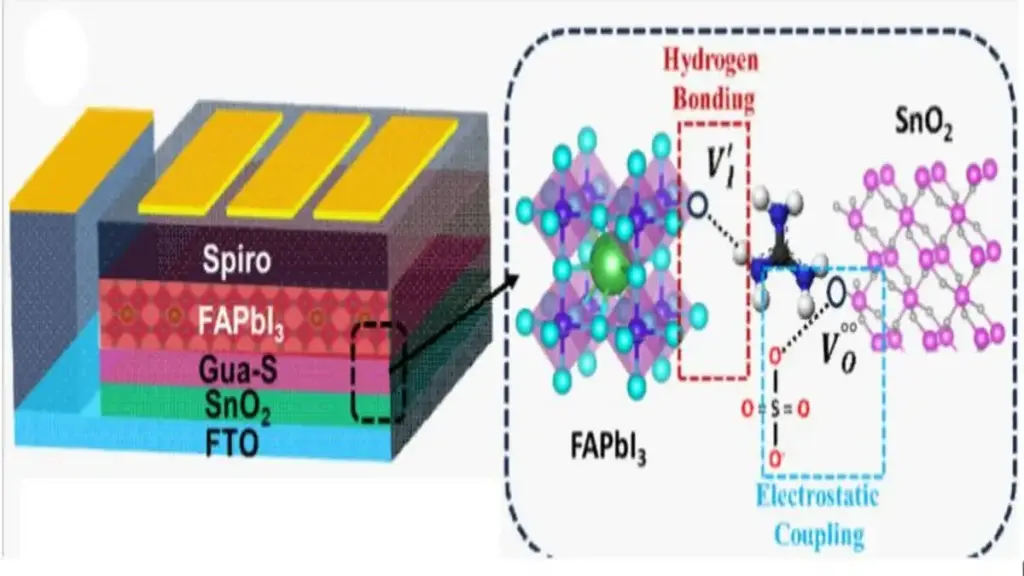
According to Dr. Kendra Lee, a leading researcher in the field, “This new approach to fabricating perovskite solar cells represents a leap forward, making the technology more scalable and economically viable for mass production.
By eliminating solvent-based processes, we can reduce both material and operational costs, making solar energy even more affordable for consumers.”
How Solvent‑Free Manufacturing Reduces Costs
The removal of solvents in the manufacturing of perovskite solar cells is expected to bring several key financial benefits:
- Lower Material Costs: Solvents like DMF and DMSO are expensive and difficult to work with in mass production. Removing these from the process could save manufacturers millions of dollars annually, lowering the price of each solar panel.
- Simplified Production Process: The new solvent-free method allows for faster production times, fewer steps, and less complex equipment, leading to overall cost savings in the manufacturing process.
- Environmental Benefits: Eliminating the use of solvents reduces harmful chemical waste and cuts down on the need for energy-intensive solvent recovery systems, further reducing costs and improving sustainability.
- Roll-to-Roll Production: Solvent-free perovskite cells are more compatible with roll-to-roll manufacturing, a highly efficient method for producing solar materials at scale. This process is already widely used in industries like printing, where large sheets of material can be produced rapidly and cost-effectively.
Together, these changes could dramatically reduce the cost of producing perovskite solar panels. Researchers estimate that the cost per watt of solar panels could drop by as much as 50% once solvent-free processes are fully implemented in industrial-scale manufacturing.
The Potential Impact on Solar Panel Prices
Currently, the average price for solar panels in the United States is around $2.50 per watt. For comparison, the cost of silicon-based panels has steadily dropped over the past decade, but it still represents a significant investment for consumers looking to adopt solar energy.

Free Electricity from Sea Waves? India's First Ocean Energy Project Lights Up Coastal Cities.
The introduction of solvent-free perovskite technology could reduce these costs by half, potentially bringing the price of solar panels down to $1.25 per watt or lower by late 2026.
This price reduction could make solar power more affordable for both residential and commercial users, leading to widespread adoption of clean energy and helping governments meet their renewable energy targets.
Key Benefits of Cheaper Solar Panels:
- Affordable Energy for All: With lower upfront costs, solar energy will become more accessible to homeowners, especially in regions where energy prices remain high.
- Faster Payback Period: Reduced installation costs could make solar installations more financially attractive, allowing users to recover their investment in a shorter time frame.
- Wider Adoption: More businesses and homeowners could switch to solar, contributing to national and global sustainability goals.
- Boost to Solar Installations: Lower solar panel prices could lead to an acceleration in installations, helping the world achieve renewable energy targets faster.
The Road Ahead: Mass Production in 2026
While solvent-free perovskite solar technology is still in the experimental phase, industry experts predict that mass production could begin as early as late 2026.
Companies like Oxford PV and Saule Technologies, pioneers in perovskite solar cell research, are already working on scaling up their production processes to incorporate solvent-free methods. The transition from laboratory-scale success to mass production is always challenging, but the potential rewards are significant.
As the industry builds out new manufacturing facilities and refines the production process, we can expect to see cheaper, more efficient solar panels flooding the market in the next few years.
Factors to Monitor:
- Commercial Scaling: The success of mass production will depend on how well the technology can be scaled in real-world factories.
- Efficiency Improvements: Continued research is needed to improve the efficiency of perovskite solar cells, even as production costs drop.
- Material Stability: Perovskite solar cells must prove durable and stable over the long term in harsh outdoor environments before becoming a mainstream product.
Industry leaders remain cautiously optimistic about the transition to mass production. Dr. Sarah M. Patterson, an expert in renewable energy from MIT, believes, “While the solvent-free breakthrough is an exciting step, we must ensure that perovskite cells meet the reliability standards of silicon-based panels before they become a dominant force in the market.”
Challenges to Overcome
Despite the promising outlook for solvent-free perovskite cells, there are still a few challenges that must be addressed before these cells become mainstream:
Stability and Durability
Perovskite solar cells have faced concerns regarding long-term stability. While they offer excellent efficiency, their performance can degrade when exposed to moisture, heat, and UV light over time. Overcoming these challenges will be critical for their widespread adoption.
Lead Content and Environmental Concerns
Another ongoing concern is the use of lead in most perovskite formulations. Lead is toxic and poses environmental risks if panels are improperly disposed of or damaged. Researchers are working on lead-free alternatives, but these alternatives are still in development and may not yet match the efficiency of lead-based perovskites.

Mass Production Challenges
Scaling up production is always a challenge, and perovskite technology faces a steep learning curve. Efficient and sustainable mass production will require significant investment in infrastructure and innovation in manufacturing techniques.
Industry Perspective and Outlook for 2026
Investors and solar companies are increasingly seeing perovskite solar as a viable commercial technology within the next few years. Some firms are already planning pilot lines or prototype production facilities to deploy perovskite modules in late 2026 and beyond.
Commercial availability timelines vary, with projections suggesting that the first commercial perovskite-silicon tandem panels may appear in markets by late 2026, followed by broader residential and utility offerings by 2027-2028.
Renewable energy analysts believe that if solvent-free production methods prove reliable at scale, solar panel manufacturing costs — and therefore end-user prices — could drop by as much as 50% compared with legacy silicon technology, spurring faster solar installations worldwide.
Related Links
Hidden Gems: Top 5 Smallcap Renewable stocks that could turn into the next multibagger opportunities
The breakthrough in solvent-free perovskite cells marks one of the most important recent advances in solar photovoltaic technology. By cutting production costs and improving efficiency, these cells have the potential to lower solar panel prices by up to 50% by 2026.
While there are still challenges to overcome, including material stability and environmental safety, ongoing research and investment suggest that perovskite solar modules may soon become a cornerstone of the global renewable energy transition.
As we look toward the next few years, perovskite technology stands poised to revolutionize the solar industry, creating a more affordable and sustainable future for all.