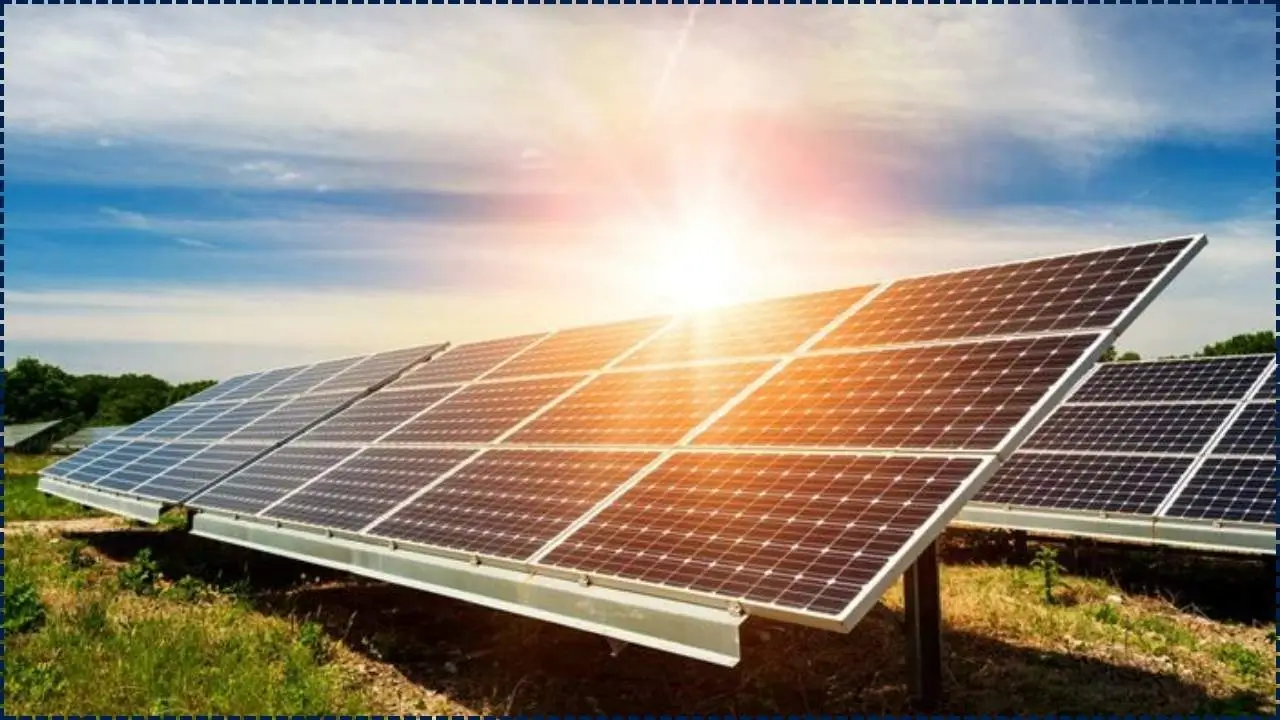

A new crystal-seed fabrication technique may help overcome one of the most persistent obstacles in perovskite commercialization: scaling production without losing efficiency or durability.
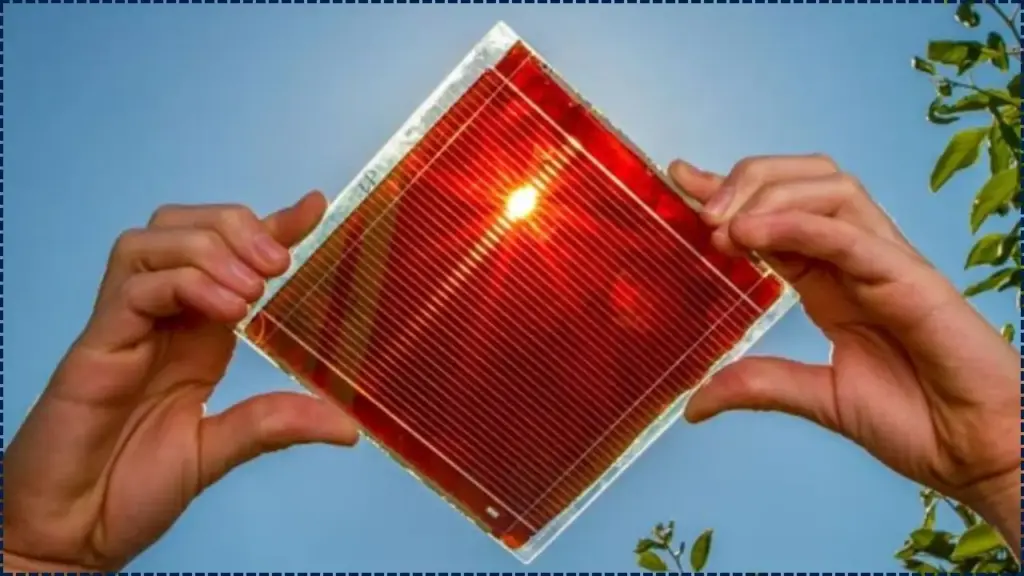
Researchers report that the approach enables more uniform crystal growth in solar cells, delivering strong performance in both small laboratory devices and larger modules designed for manufacturing.
The development addresses a central question facing the solar industry: can perovskite materials move reliably from research labs into mass production?
The Scalability Challenge in Perovskite Commercialization
Perovskite solar cells use a class of crystalline compounds that efficiently convert sunlight into electricity. According to the National Renewable Energy Laboratory (NREL), laboratory efficiencies have climbed from below 4% in 2009 to more than 26% in recent years.
Yet those gains have largely occurred in small-area cells. When researchers attempt to manufacture larger panels, performance often drops. Uneven crystal formation creates microscopic defects that disrupt electrical flow and reduce long-term stability.
“Lab-scale performance is no longer the main bottleneck,” said a senior photovoltaic scientist during a public NREL research briefing. “The issue is translating that performance into large, uniform modules that can survive real-world conditions.”
This scalability problem has slowed perovskite commercialization despite intense investor interest and global demand for renewable energy technologies.
How the Crystal-Seed Method Works
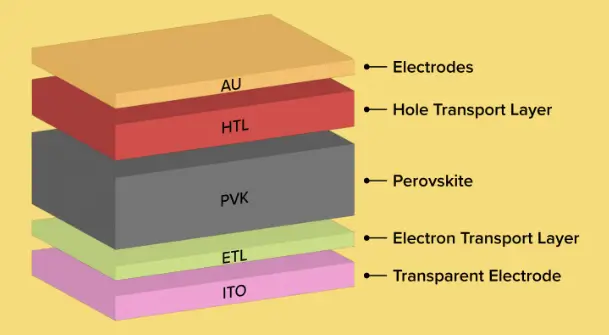
The newly reported method introduces what researchers describe as a “crystal-solvate pre-seeding” layer before depositing the main perovskite film.
Controlled Nucleation
In conventional solution processing, perovskite crystals form rapidly as solvents evaporate. That rapid crystallization can lead to inconsistent grain sizes and defect-rich interfaces. The crystal-seed layer acts as a template. It defines where and how crystals begin to grow, guiding the formation of a compact and orderly film.
By improving nucleation control, the method reduces structural irregularities and enhances electrical contact between layers. Researchers say this strengthens charge transport and improves fill factor, a key measure of solar cell performance.
“Interfacial engineering is critical,” one of the study’s authors said in a university statement. “The pre-seeding step helps align crystal growth at the microscopic level, which improves uniformity across larger areas.”
Reported Performance Data
Using the inverted “p-i-n” architecture—considered more compatible with industrial coating methods—researchers achieved 26.1% efficiency in small laboratory cells.
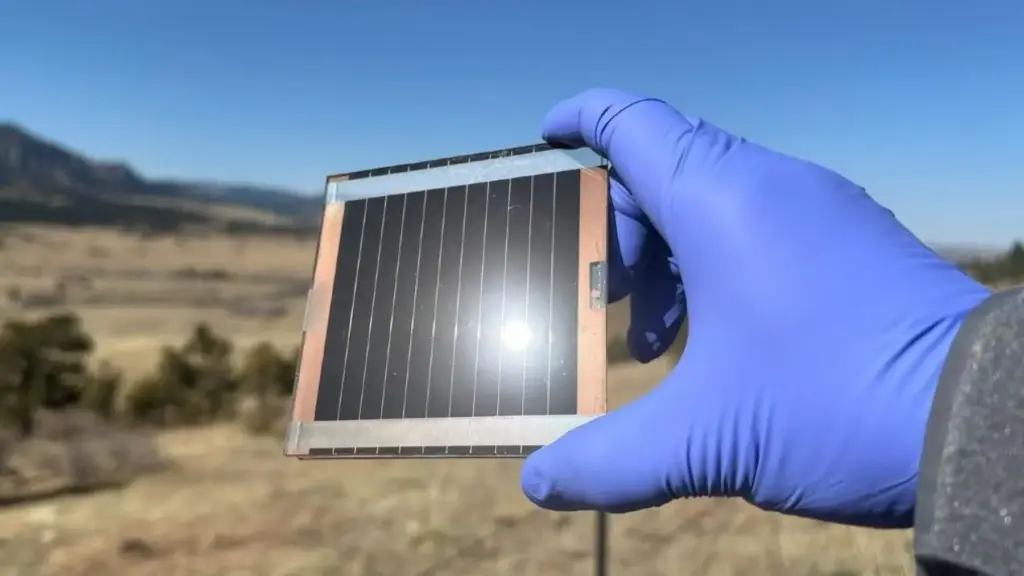
When scaled to a mini-module measuring approximately 49.9 square centimeters, the device maintained 23.15% efficiency. Experts say the modest drop between lab cell and module performance is significant.
“Efficiency typically declines sharply during scale-up,” said a materials engineering professor not involved in the research. “If independently confirmed, this suggests meaningful progress toward scalable manufacturing.”
The research team also reported improved operational stability under simulated sunlight and elevated temperatures. Long-term outdoor validation is ongoing.
Manufacturing Implications
A core question in perovskite commercialization is whether fabrication methods can integrate with high-throughput industrial systems such as slot-die coating or roll-to-roll printing. Because the crystal-seed method relies on solution processing, researchers say it is compatible with scalable production lines.
This aligns with goals set by the U.S. Department of Energy (DOE), which has emphasized advanced manufacturing under its Solar Energy Technologies Office programs.
अब AC चलाओ बिना बिजली बिल की टेंशन! आ गई है धूप से चलने वाली Solar AC – गर्मी में और तेज चलेगी
“Manufacturing consistency determines bankability,” a DOE representative said during a public renewable energy workshop. “Investors require confidence in production yield and reliability.” Reduced defect rates could lower material waste and increase manufacturing yield, improving cost competitiveness.
Global Market Context
Solar energy continues to expand worldwide. According to the International Energy Agency (IEA), global solar capacity additions reached record levels in recent years, driven primarily by crystalline silicon technology.
Silicon panels dominate due to their reliability and established supply chains. However, they approach theoretical efficiency limits for single-junction cells.
Perovskite materials offer a path beyond those limits, particularly in tandem configurations that stack perovskite layers atop silicon. Companies such as Oxford PV have reported tandem efficiencies above 28% in commercial-scale modules.
If scalable fabrication methods mature, perovskite commercialization could support next-generation high-efficiency solar panels.
Environmental and Regulatory Considerations
Many high-performance perovskite formulations contain small amounts of lead. Environmental compliance remains a central policy concern.
Researchers are investigating encapsulation techniques and recycling strategies to prevent environmental release. The crystal-seed approach does not remove lead from formulations but may improve material utilization and reduce waste.
Regulatory agencies have not yet established specific rules for perovskite modules, but compliance with hazardous substance standards will be necessary before mass deployment.
Lifecycle assessments are ongoing to evaluate environmental impacts compared with silicon manufacturing, which itself requires energy-intensive processing.
Supply Chain and Economic Factors
Supply chain resilience has become a priority in clean energy manufacturing. Silicon solar production is concentrated in several major producing countries, creating geopolitical sensitivity.
Perovskite materials rely on more widely available precursor chemicals, though commercialization would require reliable sourcing at scale. According to analysts at BloombergNEF, next-generation solar technologies must demonstrate cost competitiveness over a 20- to 30-year operating life.
“Efficiency alone does not determine market success,” one analyst said in a clean energy market briefing. “Durability, warranty backing, and financing confidence are equally critical.”
Certification and Bankability
Before large-scale adoption, perovskite modules must pass international certification standards for safety and durability. These include thermal cycling tests, humidity exposure, and mechanical stress validation.
Financial institutions require such certification before underwriting solar projects. Without bankability, even high-efficiency modules struggle to enter utility markets. Independent testing laboratories will likely evaluate crystal-seed-based modules in pilot manufacturing phases.

Expert Perspectives
Independent experts caution that laboratory breakthroughs often require years of engineering refinement before commercial rollout.
“There is a difference between demonstrating scalability in a research setting and sustaining it in a factory environment,” said the materials science professor. “Pilot lines and durability data will determine whether this approach becomes industrial standard practice.”
Still, researchers view the development as part of a broader maturation of the field. Perovskite research has shifted from chasing record efficiencies to solving practical engineering challenges. That transition signals a field moving closer to industrial readiness.
Related Links
Outlook for Perovskite Commercialization
Global decarbonization goals continue to drive demand for renewable energy innovation. The International Renewable Energy Agency (IRENA) projects that solar power will remain central to achieving net-zero targets.
If crystal-seed fabrication proves reproducible and durable at scale, it could narrow the gap between laboratory promise and commercial deployment.
For now, researchers emphasize validation and collaboration with industry partners. As one study author stated, “Solving scalability is the bridge between scientific discovery and market impact.”
FAQs
Why are perovskite solar cells important?
They offer high efficiency and potential low-cost production using solution-based processes.
What limits commercialization?
Challenges include large-area uniformity, long-term stability, environmental compliance, and certification.
Does the crystal-seed method solve all challenges?
It addresses film uniformity and scalability but does not eliminate durability or regulatory hurdles.
When could widespread adoption occur?
Industry timelines suggest several years of further testing and pilot-scale manufacturing are likely needed.