In 2026, the long-imagined concept of generating electricity in space and transmitting it to Earth is advancing beyond theory. Known as Space-Based Solar Power Tech, space-based solar power (SBSP) is now the focus of demonstration missions, policy studies, and private investment across multiple countries.
Proponents argue that SBSP could provide uninterrupted renewable energy. Critics warn that economic and engineering barriers remain substantial. The debate reflects a broader question facing the global energy transition: can innovation in orbit help solve energy challenges on Earth?
Space-Based Solar Power Tech Explained: How Electricity Could Flow from Orbit
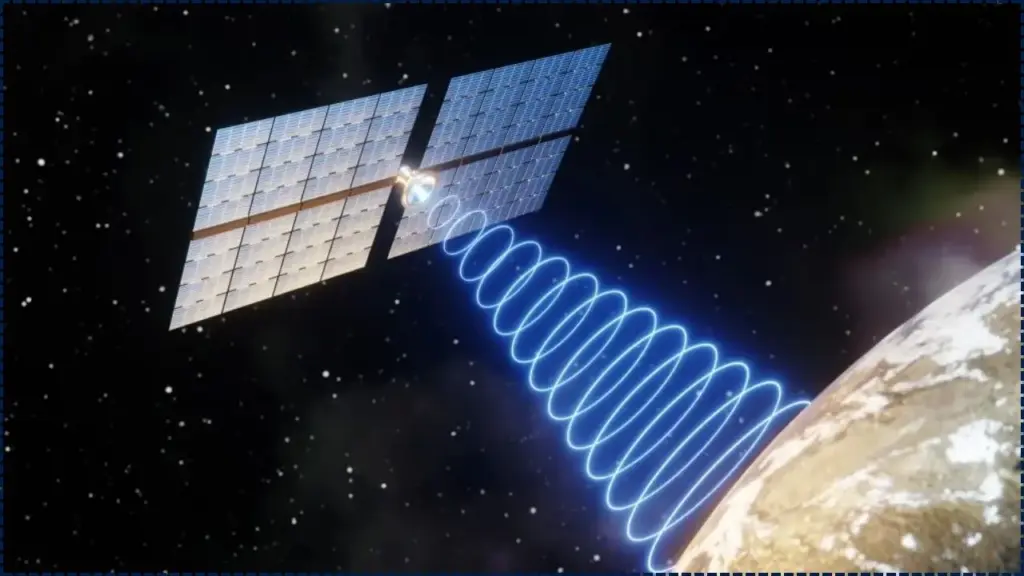
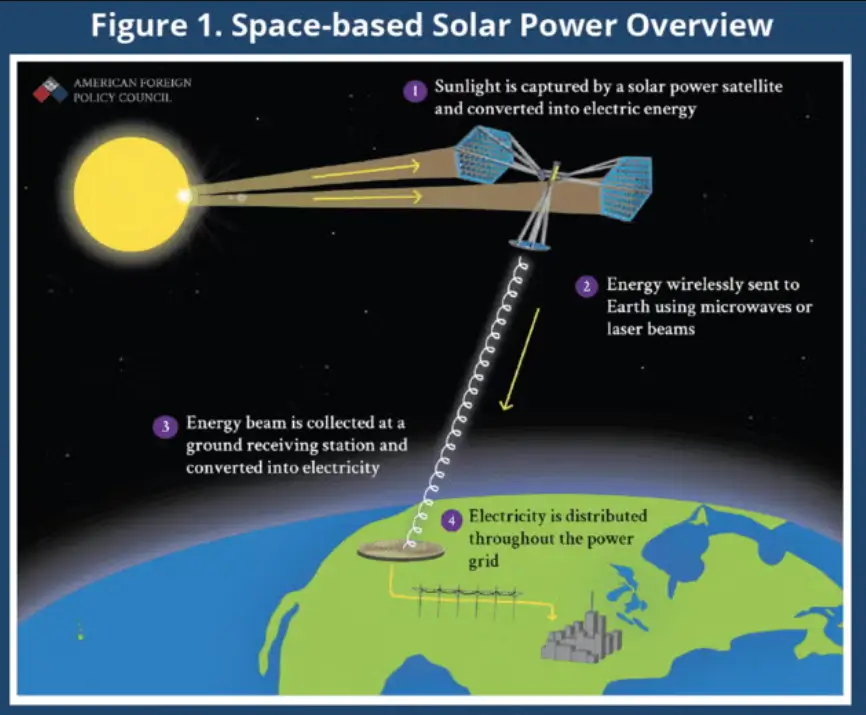
Space-based solar power involves placing large solar arrays in orbit, where sunlight is available almost continuously. Unlike terrestrial solar panels, satellites above the atmosphere avoid night-time darkness and weather disruptions.
The process includes three main steps:
- Collection: Solar panels on satellites convert sunlight into electricity.
- Transmission: Electricity is converted into microwaves or laser beams and transmitted toward Earth.
- Reception: Ground-based stations, called rectennas, convert the transmitted energy back into usable electricity.
The concept was first proposed in 1968 by American engineer Peter Glaser. For decades, it remained impractical due to high launch costs and limited wireless power transmission capability. Today, falling launch expenses and improved photovoltaic efficiency have revived serious research interest.
Why 2026 Marks a Turning Point
Demonstration Missions
Japan’s Japan Aerospace Exploration Agency (JAXA) is preparing small-scale orbital experiments to test microwave power transmission from space to Earth. These missions aim to validate beam accuracy and conversion efficiency, key prerequisites for scaling up.
In the United States, researchers supported by NASA and the Department of Defense are studying lightweight modular solar arrays that can be assembled in orbit. Europe’s European Space Agency (ESA) is conducting feasibility studies under its SOLARIS programme, examining cost models and technical readiness.
Although none of these projects yet approach commercial scale, they represent tangible movement beyond laboratory research.
Reduced Launch Costs (KW2)
Reusable rockets have significantly lowered the cost per kilogram to low Earth orbit. Companies such as SpaceX have demonstrated routine launch and landing of booster stages, making satellite deployment more affordable.
Lower launch costs are critical. A fully operational SBSP system would require extremely large structures in orbit. Economic viability depends heavily on how cheaply those components can be transported and assembled.
Advances in Wireless Power Transmission (KW3)
Microwave transmission experiments conducted by Japanese and American researchers have demonstrated controlled beaming over test distances. Efficiency rates are improving steadily.
Laser-based systems are also being explored, though they require precise atmospheric modelling and safety controls. Scientists emphasise that beam accuracy and automatic shutoff mechanisms are essential for safe operation.
Economic Questions: Can Space Power Compete?
Despite technological momentum, cost remains the central debate.
Analysts estimate that constructing a full-scale space solar power station would require multiple heavy launches, robotic assembly systems, and advanced materials capable of surviving harsh orbital conditions. Initial capital expenditure could run into tens of billions of dollars.
By comparison, terrestrial solar and wind costs have fallen dramatically over the past decade. According to the International Renewable Energy Agency (IRENA), utility-scale solar power is among the cheapest forms of electricity generation globally.
Supporters argue that SBSP’s continuous generation capability could offset higher capital costs by eliminating storage needs. Critics contend that ground-based renewables combined with battery storage remain more cost-effective.
“Space solar must compete not with yesterday’s energy system, but with rapidly improving terrestrial renewables,” said a renewable energy economist at the University of Oxford.
Strategic and Geopolitical Dimensions
Space-based solar power also carries strategic implications.Countries investing in SBSP see potential for energy independence and technological leadership. For energy-importing nations, continuous power from orbit could reduce vulnerability to fuel price shocks.
China has announced plans for pilot space solar stations by the 2030s, while U.S. defence agencies view SBSP as a potential power source for remote bases or disaster zones.
Energy analysts note that if even small-scale systems prove reliable, governments may prioritise SBSP as part of long-term infrastructure planning.
Environmental and Safety Considerations (KW4)
The environmental footprint of space solar power differs from terrestrial projects but is not negligible.
Space Debris
Launching large numbers of satellites increases congestion in Earth’s orbit. Collision risks and debris accumulation are ongoing concerns for international regulators.
Microwave and Laser Safety
Energy beams must remain precisely targeted. Experts say microwave intensities designed for power transmission are lower than levels harmful to humans, but comprehensive testing and international standards will be necessary.
Land Use for Rectennas
Ground receiving stations require significant land area. However, some researchers suggest these sites could coexist with agriculture, as microwave beams would pass above crops at safe energy levels.
Potential Applications Beyond the Grid
Early commercial SBSP applications may not serve entire cities immediately.
Instead, experts suggest niche uses such as:
- Powering remote military installations
- Providing emergency electricity during disasters
- Supplying energy to offshore platforms
- Supporting space-based data centres or lunar operations
These smaller-scale uses could demonstrate viability before grid-scale expansion.
India’s Position in the SBSP Landscape
India has not yet launched a dedicated space solar demonstration, but research institutions have examined feasibility studies. The Indian Space Research Organisation (ISRO) has acknowledged interest in advanced solar technologies, particularly lightweight photovoltaic systems.
As India expands both its space capabilities and renewable energy ambitions, experts believe collaboration with international partners could accelerate involvement.
Given India’s growing energy demand and strong solar expertise, policymakers may evaluate SBSP as a long-term research priority.
Technical Hurdles Still to Overcome
Several engineering barriers remain:
- Orbital assembly: Building kilometre-scale structures in space requires robotic precision and automation.
- Energy conversion efficiency: Every conversion step reduces usable output.
- Thermal management: Satellites must dissipate heat effectively to avoid performance degradation.
- Long-term maintenance: Repairing or replacing orbital components remains expensive.
Experts caution that solving these challenges will require sustained funding and multi-decade planning.
Balancing Optimism with Realism
Supporters of space solar power describe it as a transformational clean energy source capable of delivering continuous electricity worldwide.
Sceptics argue that while technically feasible, SBSP may struggle to compete economically against rapidly advancing ground-based renewables and storage systems.Both perspectives agree on one point: 2026 represents a shift from speculative discussion toward experimental implementation.
Related Links
Green Steel: Coal-Free Steel Production; Hydrogen Energy to Transform Heavy Industries.
Space-based solar power is no longer confined to science fiction. In 2026, governments and private firms are testing components, refining cost models, and assessing feasibility. Advances in launch technology, wireless transmission, and materials science have made the concept more credible than at any time in the past half century.
Yet large-scale deployment remains years, possibly decades, away. Whether Space-Based Solar Power Tech becomes a cornerstone of global energy supply will depend on economics, safety standards, international cooperation, and technological breakthroughs still unfolding.
For now, electricity from space is moving steadily from imagination toward engineering reality.