

Renewable power developer Sunsure Energy has signed long-term agreements to supply approximately 12.7 million units of solar electricity annually to manufacturing facilities operated by companies within South Korea’s Daeseung Group in Tamil Nadu.

The electricity will be generated from Sunsure Energy’s 75-MW solar project at Ilayangudi, enabling the industrial plants to significantly increase their use of renewable energy.
Sunsure Energy Signs Deal
| Key Fact | Detail |
|---|---|
| Annual solar power supply | 12.7 million units of electricity |
| Solar generation source | 75-MW Ilayangudi solar project in Tamil Nadu |
| Industrial consumers | Daeseung Autoparts India and Ilgahng Automotive |
| Renewable share | Around 60% of electricity demand for the facilities |
Corporate Renewable Power Procurement Expands
The agreement highlights a growing trend among industrial companies in India to procure renewable electricity directly from developers through long-term contracts. Under the arrangement, Sunsure Energy will supply around 8 million units of electricity annually to Daeseung Autoparts India and approximately 4.7 million units to Ilgahng Automotive.
Both companies operate manufacturing plants in Kanchipuram district, Tamil Nadu, a major hub for automotive and electronics production. Electricity generated at Sunsure’s 75-megawatt Ilayangudi solar facility will be delivered to the industrial plants through the state electricity grid.
Energy analysts say such arrangements allow manufacturers to access renewable electricity without investing in their own generation infrastructure.
Power Purchase Agreements Driving Renewable Growth
The deal is structured through power purchase agreements (PPAs), which have become one of the most common mechanisms for corporate renewable energy procurement.
In a PPA, a renewable energy developer builds and operates a solar or wind facility while a corporate buyer commits to purchasing the electricity produced over a long period. These contracts typically last between 10 and 25 years.
PPAs provide several advantages:
- Long-term electricity price stability
- Reduced carbon emissions
- Financial certainty for renewable developers
- Improved compliance with corporate sustainability targets
Energy economist Dr. Rahul Tongia, a senior fellow at the Centre for Social and Economic Progress, notes that corporate renewable procurement has become a key driver of solar energy growth.
“Commercial and industrial demand is now one of the fastest-growing segments of India’s renewable market,” Tongia said in recent policy discussions on energy transition.
Automotive Manufacturing and Decarbonisation
The automotive supply chain has emerged as one of the leading industrial sectors adopting renewable energy. Global automakers are increasingly requiring suppliers to reduce emissions across production processes as part of broader sustainability initiatives.
Daeseung Group, headquartered in South Korea, manufactures automotive components such as suspension systems, seat mechanisms, and precision metal parts used by major car manufacturers.
Industry experts say renewable electricity procurement allows suppliers to meet environmental standards set by global automobile companies.
“Automotive supply chains are under growing pressure to demonstrate low-carbon manufacturing practices,” said Anand Upadhyay, an energy transition analyst specialising in industrial decarbonisation. “Renewable energy contracts are one of the most practical ways to achieve these targets.”
Carbon Emissions Reduction
According to company estimates, the solar electricity supplied under the agreement will significantly reduce greenhouse gas emissions from the industrial facilities. The renewable energy generated is expected to:
- Offset approximately 5,800 tonnes of carbon dioxide emissions annually at Daeseung Autoparts India.
- Reduce around 3,400 tonnes of CO₂ emissions annually at Ilgahng Automotive.
These reductions will allow the companies to meet part of their sustainability commitments while lowering dependence on fossil-fuel-based electricity. Industrial renewable procurement is increasingly viewed as a key strategy for reducing emissions in energy-intensive manufacturing sectors.

Tamil Nadu’s Renewable Energy Leadership
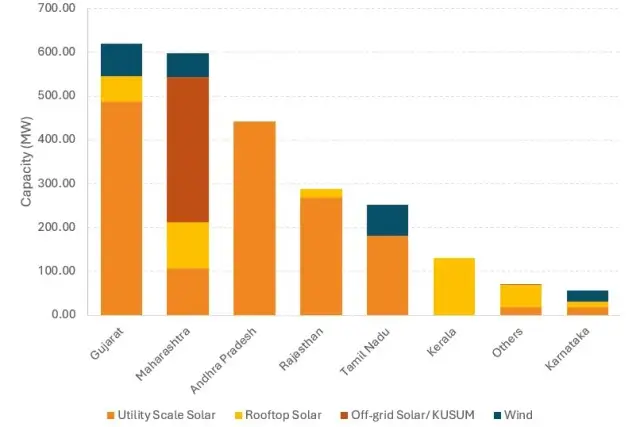
Tamil Nadu has long been one of India’s leading renewable energy states. The state hosts some of the country’s largest wind farms and has recently expanded solar capacity to meet rising industrial demand.
Manufacturing clusters in Kanchipuram, Sriperumbudur, and Oragadam are home to numerous multinational companies, including automotive manufacturers and electronics firms.
Many of these companies require reliable electricity supplies to operate high-precision manufacturing processes. Renewable energy contracts offer companies an alternative to conventional grid power while helping the state meet its clean energy targets.
India’s Open-Access Renewable Power Market
The Sunsure–Daeseung agreement is made possible through India’s open-access electricity framework, which allows large consumers to purchase power directly from renewable energy generators.
Under this system, electricity generated at a solar plant can be transmitted through the state grid to a consumer located elsewhere. Open-access renewable procurement has grown significantly as companies seek cleaner energy sources and long-term price stability.
However, the system also faces challenges, including:
- Transmission infrastructure limitations
- Regulatory differences between states
- Charges imposed on open-access power transfers
Despite these issues, energy policy experts say open-access renewable procurement remains a major driver of corporate clean energy adoption in India.
Sunsure Energy’s Expanding Renewable Portfolio
Founded in 2014, Sunsure Energy has grown into one of India’s emerging renewable energy providers focused on the commercial and industrial sector. The company currently operates around 700 megawatts of renewable energy assets across multiple states.
Its development pipeline includes approximately 7.1 gigawatts of solar, wind, and hybrid projects.Sunsure has announced a long-term goal of reaching 10 gigawatts of renewable energy capacity by 2030.
Projects are currently located in states such as Rajasthan, Maharashtra, Uttar Pradesh, Karnataka, and Tamil Nadu. Renewable developers serving corporate customers are increasingly important in India’s clean energy transition.
Solar Technology and Infrastructure
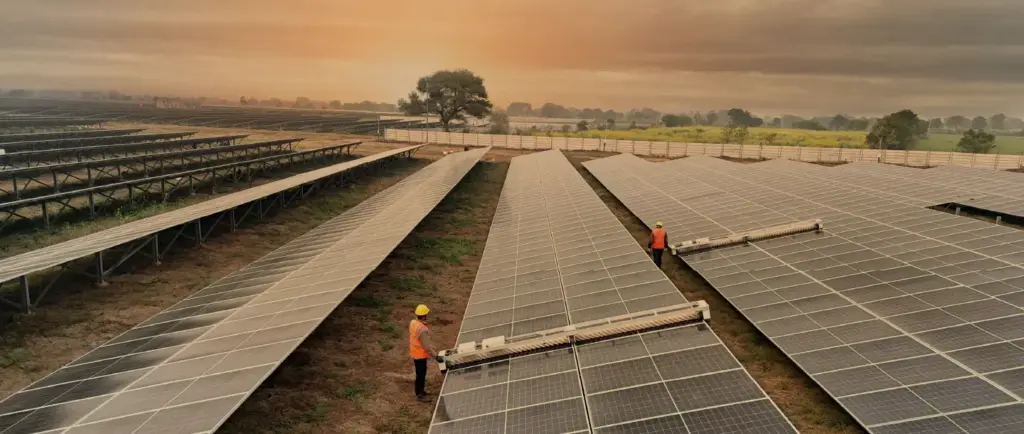
Utility-scale solar projects like the Ilayangudi facility rely on photovoltaic technology to convert sunlight into electricity. Thousands of solar panels are installed across large land areas to capture solar radiation.
The generated electricity is converted into grid-compatible alternating current using inverters and then transmitted through power lines. Many modern solar plants incorporate single-axis tracking systems that rotate panels to follow the sun’s path throughout the day.

These systems improve energy output compared with fixed solar installations. Advances in solar technology have significantly reduced electricity generation costs, making solar power one of the most competitive energy sources.
Challenges in Industrial Renewable Adoption
While renewable energy procurement is expanding rapidly, several challenges remain. Industrial companies often face regulatory and infrastructure barriers when sourcing renewable electricity. Key issues include:
- Grid transmission capacity limitations
- Variations in state renewable policies
- Approval processes for open-access power procurement
- Variability of solar generation during cloudy weather or nighttime
Energy storage technologies, including battery systems, are expected to play a greater role in stabilising renewable electricity supply. Hybrid renewable projects combining solar, wind, and storage may enable more consistent clean power delivery to industrial consumers.
Industrial Demand Driving India’s Energy Transition
Corporate demand for renewable energy has become a major factor in India’s clean energy expansion. Large companies increasingly view renewable electricity procurement as both an environmental responsibility and a financial strategy.
In addition to reducing carbon emissions, renewable energy contracts can provide long-term cost savings compared with conventional electricity tariffs.
Global investors and financial institutions are also encouraging companies to adopt renewable energy as part of environmental, social, and governance (ESG) commitments. As more companies adopt net-zero targets, corporate renewable energy procurement is expected to continue growing.
Related Links
Solar Success in Mandi: Farmer Chhajju Ram Earns ₹4 Lakh Annually via Clean Energy Transition
Sun Sheroes: Women Empowerment at the Forefront of Tata Power’s 300 MW Koppal Solar Project
The agreement between Sunsure Energy and Daeseung Group illustrates the increasing role of corporate renewable energy partnerships in India’s industrial sector.
By supplying 12.7 million units of solar electricity annually, the deal enables automotive manufacturing facilities to reduce emissions while supporting the country’s expanding renewable energy infrastructure.
As renewable energy costs decline and sustainability targets intensify, similar corporate solar agreements are likely to become an essential component of India’s energy transition.