The concept of tandem retrofits—adding perovskite layers to existing silicon solar panels—has attracted growing attention as scientists push solar efficiency beyond conventional limits.
While laboratory results show that perovskite-silicon tandem cells can significantly outperform traditional panels, experts say retrofitting existing systems is not yet technically or commercially viable.
Upgrade Your Existing Silicon Panels
| Key Fact | Detail | Context |
|---|---|---|
| Efficiency Potential | Tandem cells exceed 30% in lab settings | Research institutions |
| Retrofit Status | Not commercially available | Industry consensus |
| Main Barrier | Requires factory-level fabrication | Manufacturing reality |
Tandem solar technology represents a significant leap forward in photovoltaic efficiency, but the concept of retrofitting existing silicon panels with perovskite layers remains largely theoretical.Industry efforts are focused on developing new tandem modules rather than modifying existing systems.
As research progresses and commercialization advances, tandem panels may redefine solar energy production, but retrofits are unlikely to play a central role in that transition.
What Are Tandem Solar Cells?
Tandem solar cells combine two materials with different light absorption properties. A perovskite top layer captures high-energy photons, while a silicon base layer absorbs lower-energy light.
This structure improves efficiency by overcoming the Shockley–Queisser limit, which caps single-junction silicon cells at around 29% efficiency. Research led by institutions such as the National Renewable Energy Laboratory (NREL) has demonstrated rapid gains in tandem performance, with efficiencies surpassing 30% in controlled environments.
Why Tandem Retrofits Are Attractive
The idea of retrofitting appeals to both consumers and industry stakeholders because it could:
- Extend the lifespan of existing solar installations.
- Increase output without replacing infrastructure.
- Reduce upfront investment compared to full system replacement.
For homeowners and utilities alike, this represents a potentially transformative upgrade pathway.
Why Tandem Retrofits Are Not Yet Feasible
Manufacturing Integration at the Cell Level
Tandem solar cells are built using highly controlled deposition techniques, such as vapor deposition or spin coating. These processes occur during manufacturing and require cleanroom conditions.
Experts say applying such layers to already-installed panels is not currently possible without dismantling them entirely.
Structural and Encapsulation Constraints
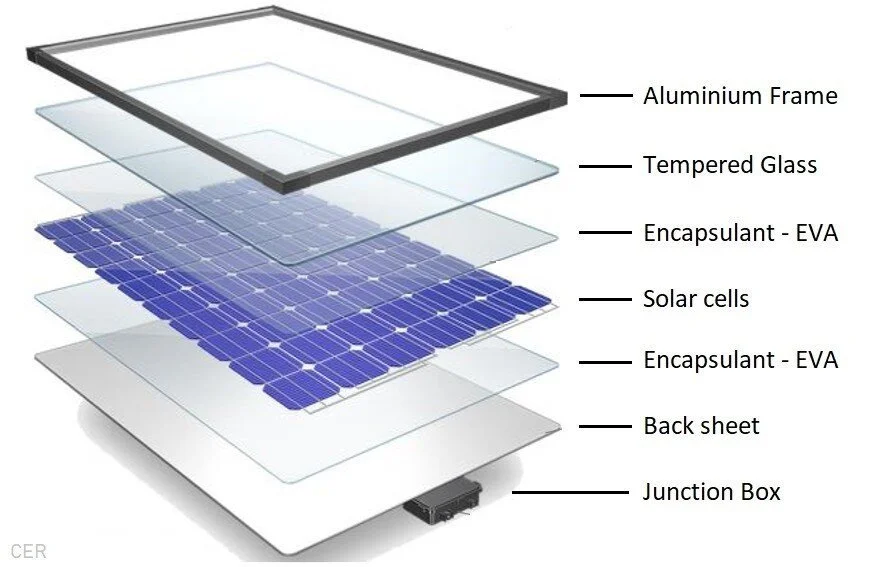
Modern solar panels are sealed units designed to endure decades of environmental exposure. Opening or modifying them can compromise:
- Moisture resistance.
- Mechanical stability.
- Electrical safety.
Once compromised, panels may fail prematurely.
Electrical Matching Requirements
Tandem cells require precise current matching between the perovskite and silicon layers. Even small mismatches can reduce efficiency significantly.
Technical Deep Dive: Why Bandgap Matters
Perovskites are tunable materials, meaning their bandgap can be adjusted to absorb specific wavelengths of light. This allows them to complement silicon effectively.
In tandem configurations:
- Perovskite layer absorbs visible light.
- Silicon layer absorbs infrared light.
This dual absorption increases total energy conversion efficiency. However, achieving optimal bandgap alignment requires precision that is currently only possible during manufacturing.
Industry Strategy: New Panels Over Retrofits
Instead of retrofitting, companies are focusing on producing new tandem panels. Firms like Oxford PV have begun commercializing perovskite-on-silicon modules.
These panels can deliver up to 20–30% more energy output compared to traditional silicon panels under similar conditions. Industry analysts say replacing panels is more cost-effective than attempting retrofits.
Global Race in Tandem Solar Technology
Countries including the United States, Germany, China, and South Korea are investing heavily in tandem solar research.
Governments and private investors are funding projects to accelerate commercialization. According to energy policy analysts, tandem technology could become mainstream within the next decade.
Competition is driving innovation in:
- Efficiency improvements.
- Manufacturing scalability.
- Material stability.
Cost Economics: Retrofit vs Replacement
A retrofit approach would involve:
- Panel disassembly.
- Perovskite layer deposition.
- Re-encapsulation and testing.
These steps introduce complexity and cost. In many cases, replacing panels with new tandem modules may be cheaper and more reliable. Falling solar panel prices further reduce the economic case for retrofits.
Durability and Stability Challenges
Perovskite materials are sensitive to environmental factors such as:
- Heat.
- Moisture.
- UV radiation.
While silicon panels can last 25–30 years, perovskite layers are still being tested for long-term durability. Researchers are developing encapsulation methods to improve stability, but commercial validation is ongoing.
Environmental and Lifecycle Considerations
Tandem technology could improve sustainability by increasing energy output per panel. However, lifecycle considerations remain important.
Key Issues
- Recycling tandem panels may be more complex.
- Some perovskites contain lead, raising environmental concerns.
- End-of-life disposal frameworks are still evolving.
Regulators may need to establish guidelines before widespread adoption.
Policy and Regulatory Landscape
Governments are supporting solar innovation through funding and incentives. In the United States, agencies such as the Department of Energy are investing in next-generation solar technologies.
Policy frameworks may eventually influence whether retrofit solutions become viable. For now, regulations focus on encouraging deployment of new high-efficiency systems.
Real-World Deployment Scenarios
Tandem panels are expected to be adopted first in:
- Utility-scale solar farms.
- Commercial installations.
- High-efficiency rooftop systems in urban areas.
These environments can justify higher initial costs in exchange for greater energy output. Retrofits, if they emerge, would likely target large-scale installations rather than individual homes.

अमेरिका ने सोलर पैनल पर बरसाया ट्रंप वाला कहर, लगाया 3,521% टैरिफ! – इन देशों को लगेगा तगड़ा झटका
Investor and Industry Outlook
Investors are increasingly backing companies developing tandem technology. The potential for higher efficiency and lower energy costs makes it an attractive long-term opportunity.
However, analysts caution that commercialization timelines remain uncertain due to technical and manufacturing challenges.
Expert Perspectives
A solar technology researcher noted:
“Tandem cells are one of the most promising developments in photovoltaics, but retrofitting existing panels is not a near-term solution.”
An industry executive added that “the focus should be on scaling production of new tandem modules rather than modifying legacy systems.”
Related Links
TOPCon vs. HJT: The Battle for the New “Industry Gold Standard” in High-Efficiency Panels
Beyond 30% Efficiency: How Perovskite-Silicon Tandem Cells are Revolutionizing Solar in 2026
Future Outlook: Timeline for Adoption
Experts suggest the following timeline:
- Short term (0–3 years): Pilot-scale tandem panels.
- Medium term (3–7 years): Wider commercial availability.
- Long term (7–10 years): Potential mainstream adoption.
Retrofit solutions, if viable, are expected to emerge only in the later stages, if at all.
FAQs
Can existing solar panels be upgraded with perovskite layers today?
No. Current technology does not allow practical retrofitting of installed panels.
Are tandem solar panels available commercially?
Yes, but availability is limited and primarily focused on new installations.
Will tandem technology replace silicon panels?
Tandem technology is expected to enhance silicon panels rather than replace them entirely.
Is it worth waiting for tandem panels?
For new installations, waiting may offer higher efficiency, but current panels remain cost-effective.