As demand grows for low-maintenance, wire-free home security, TP-Link has introduced the Tapo C645D Kit, a solar-powered, dual-lens outdoor camera designed to operate continuously with minimal user intervention.
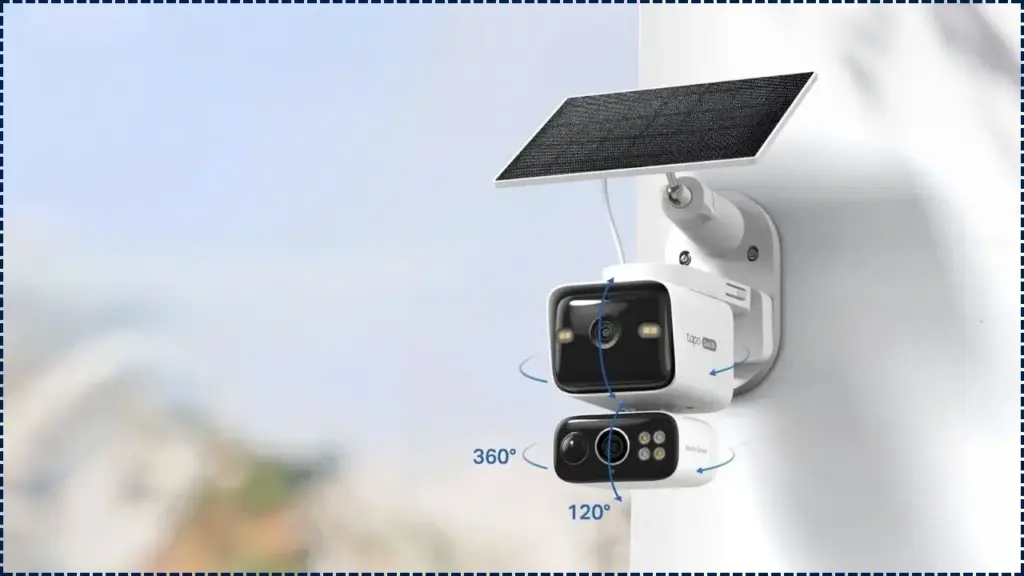
The TP-Link’s New Dual-Lens Solar Camera system combines 2K dual-lens resolution, AI-powered tracking, and integrated solar charging to address two persistent challenges in smart security: blind spots and battery management.
The launch comes amid expanding global interest in sustainable smart home devices, as homeowners seek reliable monitoring without recurring maintenance costs or complex wiring. According to TP-Link, the Tapo C645D Kit is engineered to provide wide-area coverage and detailed zoom simultaneously, powered largely by renewable energy.
TP-Link’s New Dual-Lens Solar Camera
| Feature | Detail |
|---|---|
| Resolution | Dual 2K lenses |
| Field of View | 165° ultra-wide + 360° pan/tilt |
| Power Source | Solar panel + rechargeable battery |
| Backup Battery | Up to 120 days without sunlight |
| Storage | microSD up to 512GB or cloud |
| Weatherproof Rating | IP65 |
| Connectivity | Dual-band Wi-Fi (2.4GHz / 5GHz) |
| Launch Price (AU) | Approx. AUD $379 |
TP-Link’s New Dual-Lens Solar Camera: Dual-Lens Solar Security Designed for Continuous Operation
At the center of the Tapo C645D Kit’s design is its dual-lens architecture. Unlike conventional single-lens outdoor cameras, the device pairs:
- A fixed 165-degree ultra-wide lens for constant panoramic monitoring
- A motorized telephoto lens capable of pan-and-tilt tracking
This design allows the wide lens to maintain situational awareness while the telephoto module zooms in and tracks motion automatically. According to TP-Link’s technical brief, the system enables synchronized tracking when motion is detected, minimizing the risk of missed details.
Industry analyst Rebecca Liu of SmartHome Research Group says multi-lens systems are becoming more common as manufacturers attempt to “combine coverage and identification in one device instead of requiring multiple installations.”
Solar Charging and Energy Autonomy
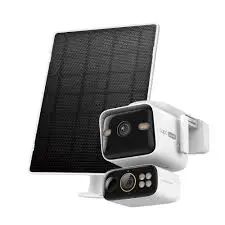
A major selling point of the TP-Link’s New Dual-Lens Solar Camera device is its solar-powered design. The kit includes a detachable solar panel connected to a 10,000 mAh rechargeable battery. TP-Link states that approximately one hour of direct sunlight can provide enough power for a full day of operation under typical usage conditions.
In prolonged cloudy weather, the internal battery can sustain operation for up to 120 days, depending on recording frequency. This hybrid solar-plus-battery architecture reflects broader trends in off-grid smart devices, particularly in regions where electrical wiring is costly or impractical.
AI Detection and Smart Tracking
The camera uses on-device artificial intelligence to classify detected movement as human, vehicle, or pet activity. This reduces false alerts caused by wind-blown foliage or passing shadows.
Once triggered, the telephoto lens automatically follows the subject through motorized pan and tilt movement, maintaining focus in real time.
Security consultant Dr. Elena Martinez explains that “intelligent tracking significantly reduces post-incident review time because users can quickly identify relevant footage without scanning hours of video.”
The system also supports one-tap smart focus within the Tapo mobile app, allowing users to manually direct zoom to a specific point in the live feed.
Night Vision and Low-Light Performance
The Tapo C645D Kit offers both infrared night vision and color night vision supported by built-in spotlights.
Infrared mode provides discreet monitoring, while color night vision enhances identification clarity. The dual-lens setup ensures that even after sunset, both contextual wide shots and detailed zoom images remain accessible.
Installation Scenarios: Urban vs. Rural Use
Urban Installations
In city environments, the wide lens can monitor driveways, front entrances, and sidewalks, while the zoom lens captures license plates or facial detail.
Rural or Remote Installations
For rural properties, farms, or construction sites, the solar power capability reduces the need for wired infrastructure. This makes the camera suitable for off-grid barns, remote gates, or long driveways.
However, effective operation still depends on adequate Wi-Fi coverage. In remote settings, signal extenders may be necessary.

Data Privacy and Cybersecurity Considerations
As with any connected device, cybersecurity remains a concern. TP-Link states that Tapo cameras use encrypted communication protocols and support secure login authentication. Footage can be stored locally on microSD cards up to 512GB, reducing reliance on cloud storage.
Privacy advocates note that users should:
- Secure their Wi-Fi networks
- Use strong passwords
- Regularly update firmware
Cybersecurity expert Alan Cross from the Digital Security Institute emphasizes that “local storage options are critical for consumers who want greater control over their footage.”
Storage Flexibility and Cloud Integration
The Tapo C645D Kit supports:
- Local storage via microSD
- Optional cloud backup services
Cloud storage may require subscription fees depending on region and plan selection. Local storage allows footage access even without cloud connectivity.
Competitive Landscape
The Tapo C645D Kit enters a competitive market segment including brands such as:
- Arlo solar-powered cameras
- Ring outdoor solar cameras
- Eufy dual-lens security systems
While several competitors offer solar charging, fewer combine solar power with synchronized dual-lens tracking in a single integrated device.
Market analysts report that smart outdoor camera sales have grown steadily since 2022, fueled by consumer demand for DIY installation and subscription-free features.
Total Cost of Ownership
Upfront cost in Australia is approximately AUD $379. Compared with wired professional security systems, which may require installation fees, the Tapo system reduces initial labor costs.
Operating costs are minimal:
- Solar charging reduces electricity use
- No mandatory subscription required
- Occasional microSD replacement or firmware updates
Over five years, solar-powered devices may reduce cumulative energy and battery replacement expenses compared to conventional rechargeable cameras.

Solar Pump Yojana: किसानों के लिए बड़ा मौका! सोलर पंप पर 70% सब्सिडी, 2 लाख तक का सीधा मुनाफा
Supply Chain and Manufacturing Context
TP-Link manufactures its Tapo line within a global supply chain that includes component sourcing across Asia. The company has expanded its smart home portfolio in recent years, reflecting a broader industry shift from networking equipment toward connected home ecosystems.
Analysts view solar-enabled security as part of a sustainability push across consumer electronics, aligning with global trends toward energy-efficient devices.
Integration With Smart Home Ecosystems
The Tapo C645D Kit integrates with the Tapo app and supports compatibility with voice assistants such as Amazon Alexa and Google Assistant, allowing voice-activated viewing on compatible displays.
Smart alerts, automation triggers, and ecosystem integration position the device as part of a broader connected-home strategy rather than a standalone camera.
Broader Industry Trends
Smart security cameras are increasingly incorporating:
- On-device AI processing
- Solar charging
- Multi-sensor arrays
- Subscription-free detection
Technology researcher Mark Dempsey notes that “the next wave of consumer security products will likely focus on self-sustaining operation and improved AI classification rather than just higher resolution.”
Related Links
Power Security: Why Preppers are Swapping Gas Generators for Solar Reliability
Limitations and Consumer Tradeoffs
Despite its strengths, the system has considerations:
- Performance depends on sunlight availability
- Requires stable Wi-Fi
- Advanced cloud features may involve subscription costs
- Pan/tilt mechanisms introduce moving parts that may require long-term durability evaluation
Consumers should assess local environmental conditions before installation.
The Tapo C645D Kit represents a notable evolution in residential outdoor surveillance. By combining solar charging, dual-lens coverage, AI-based tracking, and flexible storage options, TP-Link positions the device as a practical solution for homeowners seeking low-maintenance security.
As smart home technology continues evolving, solar-powered multi-lens systems like the TP-Link’s New Dual-Lens Solar Camera model may increasingly define the next phase of connected security — emphasizing sustainability, automation, and autonomy.