

As rooftop solar adoption grows, pairing a home battery storage system is increasingly essential for U.S. homeowners seeking energy independence, savings, and resilience. In 2026, Tesla Powerwall 3 and Enphase IQ batteries lead the market.
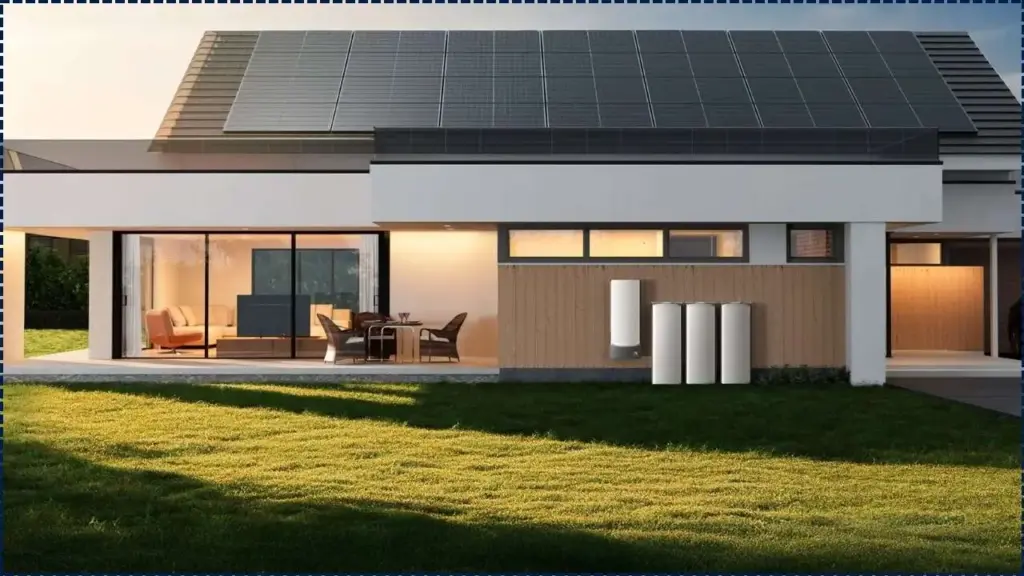
Each system offers distinct advantages in capacity, scalability, integration, and cost. This article compares them in detail to help homeowners make an informed choice.
Tesla Powerwall 3 vs Enphase IQ
| Key Fact | Tesla Powerwall 3 | Enphase IQ |
|---|---|---|
| Usable Capacity | ~13.5 kWh per unit | 5–10 kWh per module, modular |
| Continuous Output | ~11.5 kW | ~7.08 kW per module, scalable |
| Warranty | 10 years | 15 years |
| Integration | Built-in inverter, Tesla app ecosystem | Microinverter integration with Enphase solar, Enlighten monitoring |
| Typical Installed Cost | $12,000–$16,000 per unit | $8,500–$11,000 per module |
Tesla Powerwall 3 and Enphase IQ batteries offer compelling options for U.S. homeowners in 2026. Tesla provides higher single-unit capacity and integrated backup for whole-home applications, while Enphase offers modularity, long warranties, and granular solar integration. Both enhance energy independence, solar ROI, and grid resilience.
Overview of Tesla Powerwall 3
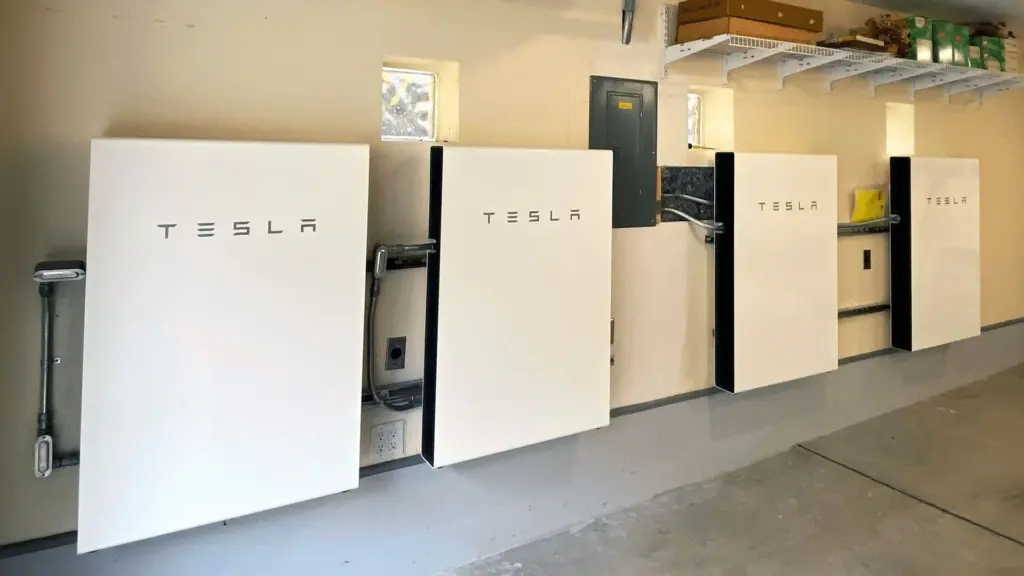
Tesla Powerwall 3 is designed for high-capacity, whole-home energy storage.
Key Features
- Usable Capacity: 13.5 kWh per unit, ideal for full-home backup.
- Continuous Output: 11.5 kW supports high-demand appliances.
- Built-in Inverter: Simplifies installation and integrates with Tesla solar.
- App & Monitoring: Tesla app provides remote control, backup prep, and performance analytics.
- Warranty: 10 years, with guaranteed capacity retention.
Pros
- Supports whole-home backup with fewer units.
- Integrated inverter reduces installation complexity.
- User-friendly app ecosystem with automation.
Cons
- Higher upfront cost.
- Slightly shorter warranty compared to competitors.
Overview of Enphase IQ Battery
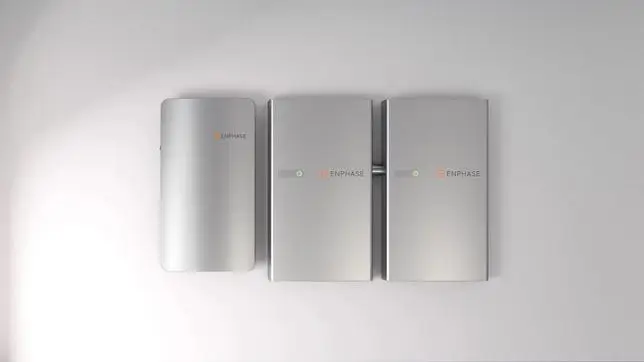
Enphase IQ emphasizes modular design and integration with microinverter solar systems.
Key Features
- Usable Capacity: 5–10 kWh per module; scalable to ~80 kWh with multiple units.
- Continuous Output: 7.08 kW per module; scalable when stacking units.
- Integration: Works seamlessly with Enphase microinverters; panel-level monitoring via Enlighten.
- Warranty: 15 years for 10C units.
Pros
- Modular and expandable.
- Longer warranty enhances lifecycle assurance.
- Optimized for panel-level monitoring and energy efficiency.
Cons
- Lower per-unit power; full-home backup requires multiple modules.
- Costs can rise when scaling to match Tesla Powerwall 3’s capacity.
Financial Analysis and ROI Scenarios
Homeowners should evaluate payback periods and savings potential when choosing a battery:
| Battery | Scenario | Estimated Savings/Year | Payback Period |
|---|---|---|---|
| Tesla Powerwall 3 | 13.5 kWh for whole-home backup | $1,500–$2,000 | 7–10 years |
| Enphase IQ | 10 kWh modular, 2 modules | $1,000–$1,400 | 8–12 years |
Assumptions: Average U.S. home, solar PV generating 8–10 kWh/day, typical electricity rates, and no standalone federal incentives post-2025.
Takeaway: Tesla offers higher capacity per unit with shorter payback if fewer units suffice; Enphase provides flexibility and lower initial cost with modular expansion.
Performance, Reliability, and Integration
Tesla Powerwall 3
- High power output suitable for full-home backup.
- Integrated inverter simplifies system design.
- Ideal for households with large appliances or energy-intensive HVAC.
Enphase IQ Battery
- Focuses on scalability and microinverter optimization.
- Panel-level monitoring allows granular management, useful for shaded roofs or complex layouts.
- Integrates seamlessly with Enphase solar systems and smart energy applications.
Energy Optimization Tips
Homeowners can maximize battery ROI with strategic usage:
- Shift high-energy loads (dishwasher, laundry) to solar production hours.
- Charge EVs during peak solar generation for maximum self-consumption.
- Use app automation to prepare for grid outages or peak pricing periods.
These strategies reduce reliance on lower-cost exported energy and increase overall savings.
Regional Considerations
- California & Northeast: High solar penetration; Powerwall 3 can cover full-home backup.
- Texas & Florida: Net billing adjustments make storage + self-consumption more valuable.
- Midwest & Southeast: Lower adoption rates; Enphase IQ modularity allows smaller initial investment.
Environmental Impact
- Both batteries use lithium iron phosphate (LFP) chemistry, which is safer and more recyclable than traditional lithium-ion.
- Reduces reliance on fossil-fuel-powered electricity, especially when paired with solar.
- Lifecycle and recycling plans are improving, but proper disposal and recycling are critical for sustainability.
EV Integration
Battery storage can double as EV charging support:

- Tesla Powerwall 3 integrates seamlessly with Tesla EVs for smart charging.
- Enphase IQ supports AC-coupled EV charging, adaptable for multiple EV brands.
- Optimizing charge/discharge schedules reduces electricity costs and grid strain.
Forward-Looking Industry Trends
- Virtual Power Plants (VPPs): Aggregated home batteries provide grid support during peak demand.
- Smart Grid Integration: Both Tesla and Enphase systems can participate in demand response programs.
- Hybrid Storage Systems: Growing interest in pairing batteries with generators or larger solar farms for resilience.
Related Links
Why Alberta is Canada’s Solar Powerhouse: The Surprising Success in the Frozen North
Australia’s Green Hydrogen Vision: Exporting ‘Liquid Sunshine’ to the World in 2026
Final Verdict – Which Battery Is Best for 2026?
Tesla Powerwall 3:
- High capacity, simpler full-home backup, integrated Tesla ecosystem.
- Best for homeowners prioritizing whole-home resilience and high power output.
Enphase IQ:
- Modular, longer warranty, microinverter integration.
- Best for homeowners seeking flexibility, incremental expansion, and panel-level monitoring.
Recommendation: Your choice depends on home energy needs, solar configuration, and budget.
FAQs
Which battery is better for full-home backup?
Tesla Powerwall 3 due to higher capacity and continuous output.
Can Enphase IQ expand later?
Yes, modular units allow gradual scaling.
Do federal incentives apply in 2026?
Most standalone battery credits expired in 2025; check state programs.
Which integrates better with solar?
Enphase IQ for Enphase microinverter systems; Tesla is better with Tesla solar.