Cities worldwide are experimenting with The Solar Sidewalk solar sidewalks and smart pavements, embedding photovoltaic panels directly into roads and walkways. Advocates say these systems could transform everyday infrastructure into distributed energy generators for electric vehicles and smart city networks.
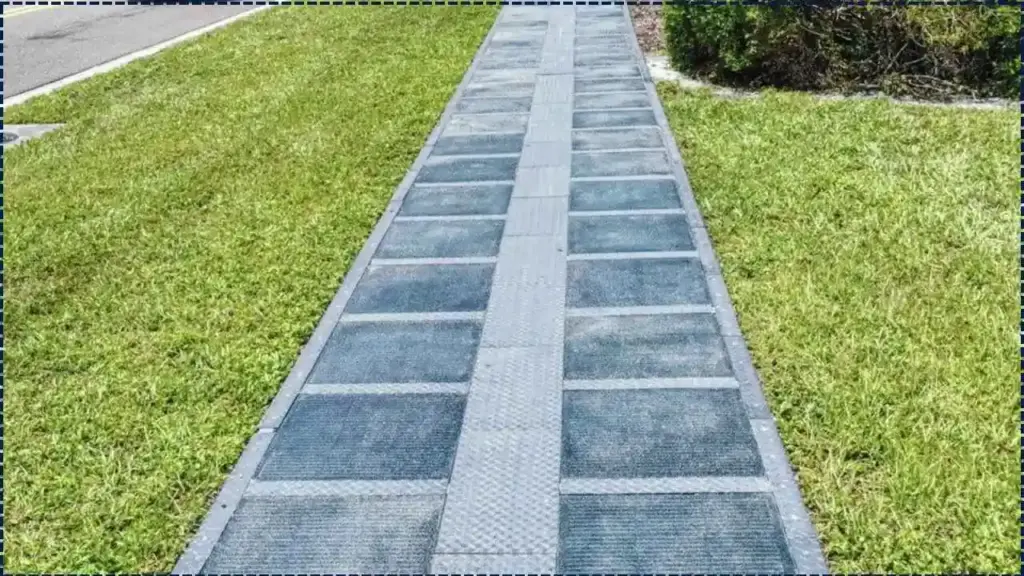
Yet engineers and economists caution that durability, efficiency, and cost remain significant barriers to large-scale adoption.
The Solar Sidewalk
| Key Fact | Detail / Statistic |
|---|---|
| First solar road | Solar bike path opened in Krommenie, Netherlands in 2014 |
| Infrastructure concept | Solar pavements combine photovoltaic cells and road surfaces |
| Efficiency limitations | Flat road-embedded panels generate less electricity than angled rooftop solar |
| Urban potential | Roads and pavements cover large portions of urban land area |
The Rise of The Solar Sidewalk Technology
The concept behind solar sidewalks is simple: convert roads and walkways into renewable power generators.
Traditional solar installations rely on rooftops or solar farms located outside cities. Solar pavement technology instead embeds photovoltaic cells directly into infrastructure already exposed to sunlight.
Researchers say the potential scale is enormous. Urban environments contain thousands of kilometers of roads, sidewalks, and parking lots that receive sunlight daily.
According to infrastructure studies from the University of Minnesota’s Institute on the Environment, transportation surfaces occupy a significant portion of land in modern cities. Converting even a small fraction of those surfaces into solar generators could expand renewable electricity production.
“Urban infrastructure represents a largely untapped opportunity for distributed energy generation,” the institute noted in research on solar roadway concepts.
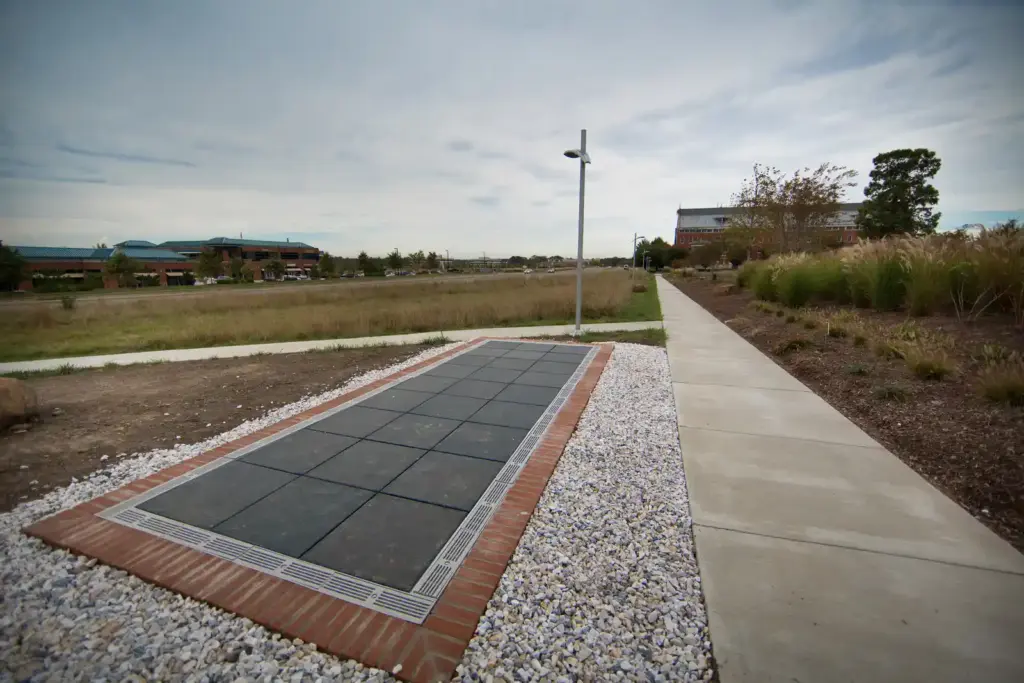
How Solar Sidewalks Work
Smart pavement systems combine photovoltaic technology with structural engineering.
Surface Layer
The top layer is made from reinforced transparent material, typically tempered glass or specialized composite surfaces. This layer must balance two requirements: it must allow sunlight to reach the solar cells while remaining strong enough to support pedestrians, bicycles, and sometimes vehicles.
Photovoltaic Layer
Beneath the surface lies a layer of solar cells, wiring, and electronic circuitry that converts sunlight into electricity. These cells operate using the same photovoltaic principles as rooftop solar panels.
Structural and Electrical Base
The base layer contains electrical conduits, drainage systems, and structural supports.
Electricity produced by the panels can feed into nearby infrastructure such as:
- street lighting
- traffic signals
- public buildings
- electric vehicle charging stations
Some designs also include embedded sensors capable of collecting traffic data or environmental measurements.
Early Experiments in Solar Pavements
Several countries have tested solar road technology through pilot projects.
The Netherlands: SolaRoad
In 2014, engineers in the Netherlands built one of the world’s first solar bike paths in Krommenie. The project embedded solar panels beneath a protective surface along a bicycle lane. The system successfully generated electricity and demonstrated the concept’s technical feasibility.
However, the path later experienced structural wear, highlighting durability challenges.
France: Wattway Solar Road
France launched a solar road project called Wattway, installing photovoltaic panels within a rural roadway in Normandy.
The pilot project aimed to test how solar panels could function under real traffic conditions.Although the system generated electricity, maintenance costs were higher than expected.
South Korea: Solar Highway Bike Lane
South Korea adopted a different approach by installing solar panels above a bicycle lane along a major highway.
The elevated design generates electricity while shading cyclists, demonstrating a hybrid approach that avoids embedding panels directly in the road.
Potential Benefits for Electric Cities
Supporters say solar pavements could support the growing energy needs of modern cities.
Distributed Renewable Energy
Solar sidewalks could generate electricity close to where it is consumed. Distributed energy systems reduce reliance on centralized power plants and can improve grid resilience.
Powering Urban Infrastructure
Electricity produced by smart pavements could support infrastructure such as:

- street lighting systems
- traffic management networks
- surveillance cameras
- electric vehicle charging stations
This localized generation could help cities manage growing electricity demand.
Smart City Integration
Solar pavements often include sensors and LED lighting capable of communicating with smart city networks. These systems could display dynamic road markings, warn drivers of hazards, or provide data on traffic patterns.
Energy Efficiency Challenges
Despite its potential, solar pavement technology faces inherent efficiency limitations. Solar panels typically produce maximum electricity when angled toward the sun. Road-embedded panels must remain flat to function as pavements.
Flat panels capture less sunlight throughout the day compared with optimally angled installations. Vehicles, dust, snow, and shading from nearby buildings can further reduce energy output. As a result, traditional solar installations on rooftops or solar farms often produce electricity more efficiently.
The Cost and Maintenance Problem
Solar pavements are significantly more expensive than traditional road construction. Installing photovoltaic cells within roads requires advanced materials, protective layers, and specialized engineering.
Maintenance also becomes more complex. If a panel fails, repairs must be performed without compromising the structural integrity of the road.
Infrastructure experts say conventional roads are relatively simple to maintain, whereas solar pavement repairs may require replacing modular panels. These cost considerations have slowed widespread adoption.
Materials Science and Engineering Challenges
Durability remains one of the largest technical obstacles.
Road surfaces must endure:
- heavy vehicle loads
- extreme temperature fluctuations
- moisture infiltration
- debris impacts
Solar pavement materials must therefore combine transparency, strength, and skid resistance.
Researchers are investigating advanced glass composites, transparent concrete, and polymer materials designed to improve durability while maintaining light transmission.
Environmental Impact and Lifecycle Analysis
Supporters argue that solar pavements could reduce carbon emissions by generating renewable electricity within cities. However, lifecycle analyses must consider the environmental impact of manufacturing and maintaining specialized pavement materials.
Some studies suggest that the energy required to manufacture solar pavement systems may initially offset part of the electricity they generate. Over time, however, the renewable electricity produced could compensate for these emissions.
Government Policies and Pilot Programs
Many solar pavement projects are funded through government innovation programs. Cities experimenting with the technology often view it as a research and development effort rather than immediate large-scale infrastructure.
National governments and regional authorities support pilot projects to evaluate:
- technical feasibility
- cost performance
- durability under traffic conditions
Such programs help researchers refine the technology before widespread adoption.

Integration with Electric Vehicles
One potential future application of smart pavements involves wireless charging for electric vehicles. Some experimental systems use inductive charging technology embedded within roads.
This technology could allow electric vehicles to charge while driving, reducing the need for stationary charging infrastructure.
Although still in early development, researchers believe such systems could eventually support electric transportation networks.

Solar Sidewalks vs Other Smart City Energy Solutions
Urban planners are exploring several ways to integrate renewable energy into city infrastructure.
These include:
- rooftop solar installations
- solar canopies above parking lots
- solar panels along highway corridors
- building-integrated photovoltaics
Many analysts believe these approaches currently provide greater efficiency than road-embedded panels. Nevertheless, solar pavements remain an attractive concept because they utilize surfaces already built into urban environments.
Related Links
Game-Changing Breakthrough in Sodium-Ion Battery Research Unveiled
Green Breakthrough: Poland Crosses Historic 50% Renewable Energy Milestone
Future Research and Technological Development
Researchers continue to explore ways to improve solar pavement systems.
Areas of active development include:
- higher-efficiency photovoltaic cells
- stronger transparent materials
- modular panel systems that simplify repairs
- integrated energy storage technologies
Advances in materials science and solar technology could gradually improve the economic feasibility of smart pavements.
Solar sidewalks remain an ambitious infrastructure concept rather than a widespread solution. Yet as cities seek new ways to generate clean electricity and power electric transportation systems, integrating renewable energy into everyday surfaces may play a growing role in the urban energy landscape.
FAQs
What is a solar sidewalk?
A solar sidewalk is a pavement system embedded with photovoltaic panels that generate electricity while functioning as a walkway or road.
Are solar roads already used today?
Yes. Several pilot projects exist in Europe and Asia, though most remain experimental.
Why are solar pavements less efficient than rooftop solar?
Because road panels must lie flat, they cannot be positioned at optimal angles to capture sunlight.
Could solar roads charge electric vehicles?
Some experimental designs explore inductive charging technology embedded within roads.