

The market outlook for renewable energy stocks remains a focal point for investors as global clean energy demand expands and capital inflows exceed $780 billion in 2025 alone. Meanwhile, shifting policy landscapes and firm‑level performance are shaping differentiated opportunities.

Analysts now highlight specific renewable energy names worth watching for potential long‑term growth and resilience amid sector volatility.
Top 3 Renewable Energy Stocks
| Key Fact | Detail |
|---|---|
| Clean energy investment | Global investment in renewables reached ~$780 billion in 2025 |
| Market performance | Renewable energy equities display mixed returns in 2025 |
| Sector growth expectations | Renewables expected to remain central to energy transition plans |
Global Renewable Energy Market Dynamics
Renewable energy has shifted from niche investor interest to a core component of global investment strategies. Analysts at Morningstar noted that the Morningstar Global Renewable Energy Index delivered a 10 % gain in 2025 compared with broader markets.
Structural drivers include declining costs for wind and solar technologies, rising electricity consumption driven by electrification, and long‑term policy commitments to reduce carbon emissions.
According to industry forecasters, installed renewable capacity is projected to grow steadily in the coming decade, underpinning the sector’s long‑term outlook. At the same time, near‑term volatility has emerged as a defining characteristic of renewable energy equities.
Some solar stocks plunged sharply in early 2026 following mixed earnings reports and changing policy expectations, highlighting the need for selective investment approaches even within growth sectors.
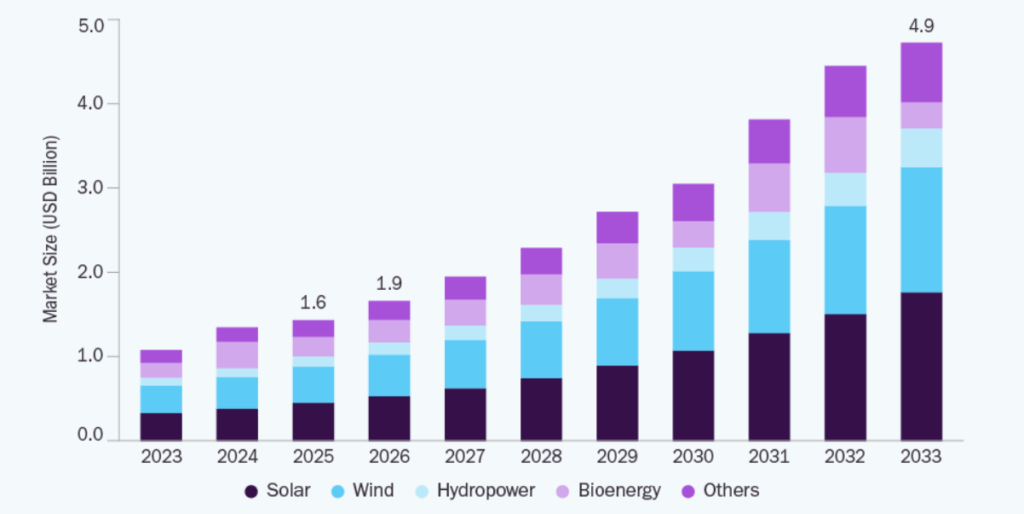
Top Renewable Energy Stocks to Watch in the Current Market Outlook
In the evolving clean energy landscape, a subset of renewable energy companies stands out for their scale, growth prospects, or differentiated business models. The following three names combine global relevance with established track records or unique exposure to renewable infrastructure build‑out.
NextEra Energy (NYSE: NEE)
NextEra Energy is one of the largest renewable energy utilities worldwide and is widely regarded as a bellwether for clean energy investment. Its renewables division continues to expand, adding gigawatts of solar and wind capacity each year while maintaining a diversified portfolio of long‑term power contracts.
In late 2025, NextEra reported stronger‑than‑expected quarterly profits in part due to its renewables business and rising power demand linked to data centers and electrification trends.
Analysts appreciate NextEra’s size and utility‑scale project backlog as stabilizing factors. Its diversified earnings base — combining regulated utility revenues with merchant power generation — helps mitigate some cyclical risks inherent in renewable markets.
Dividend growth and shareholder return metrics have historically been attractive compared with other energy sub‑sectors. For investors focused on the market outlook, NextEra’s integration of storage and renewable generation positions the company to benefit from the broader energy transition.
First Solar (NASDAQ: FSLR)
First Solar is a leading manufacturer of utility‑scale photovoltaic modules, with a global footprint and a substantial backlog of contracted installations. Industry observers note the company’s strong performance in 2025, marked by a notable year‑to‑date return and robust revenue growth supported by global demand.
Goldman Sachs has highlighted First Solar and similar names as attractive positions amid the ongoing energy shift, underscoring their role in driving supply chain capacity and revenue visibility.
Investors looking at the market outlook may view First Solar as a stock with more direct exposure to hardware demand and installation timelines. As component costs continue to moderate and utilities accelerate solar adoption, companies with both project pipelines and manufacturing expertise could capture outsized growth.

अब AC चलाओ बिना बिजली बिल की टेंशन! आ गई है धूप से चलने वाली Solar AC – गर्मी में और तेज चलेगी
ReNew Energy Global (NASDAQ: RNW)
ReNew Energy Global stands out as a major renewable energy producer based in India with global listing exposure. Its portfolio includes thousands of megawatts of wind, solar, and hybrid power projects.
In late 2025, ReNew signed a significant partnership with Google to build a 150‑megawatt solar project in Rajasthan, India, reflecting demand from corporate buyers for long‑term clean power agreements.
This diversified generation mix and active project pipeline align with India’s broader energy goals, including its target of reaching 500 GW of non‑fossil‑fuel capacity by 2030, creating a supportive backdrop for growth.
For investors considering the market outlook in emerging markets, ReNew’s combination of scale, contract visibility, and exposure to Asia’s expanding power needs makes it a stock worth watching.
Regional Market Considerations
While global names dominate headlines, regional renewable energy markets — particularly in India — also offer potential opportunities. India’s renewable capacity has grown rapidly, reaching roughly 184.6 GW by early 2026 and continuing to expand with supportive policy drivers and investment.
Popular renewable energy and solar stocks listed on Indian exchanges include Adani Green Energy Ltd, Tata Power Company Ltd, and JSW Energy Ltd, each with distinct market positioning and exposure to domestic and international demand.
Analysts caution that investors should closely monitor regulatory shifts and material cost pressures, as domestic stocks can be more sensitive to national policy changes and global supply trends.
Market Risks and Near-Term Challenges
Despite strong long-term growth fundamentals, the renewable energy market outlook is not without risks. Recent episodes of volatility in solar equities — including steep share price declines for some industry players following mixed guidance — underscore sector sensitivity to earnings expectations and demand cycles.
Additionally, uneven federal incentives and policy frameworks in major markets have at times weighed on investor sentiment, illustrating how changes in regulatory support can influence stock performance across different geographies.
Investors must balance sector growth prospects with these near-term uncertainties, particularly in capital‑intensive areas like solar manufacturing and project financing.

How Analysts Evaluate Renewable Energy Stocks
Professional analysts typically assess renewable energy stocks based on multiple criteria, including:
Revenue and earnings growth: Companies with stable and predictable revenue streams, often from long‑term power contracts, may offer resilience.
Backlog and project pipeline: A large pipeline of approved and contracted projects can enhance visibility into future cash flows.
Geographic diversification: Operating across multiple markets can reduce reliance on any single regulatory environment.
Balance sheet strength: Firms with manageable debt levels and consistent cash flow are better positioned to withstand volatility.
These factors help investors interpret the market outlook and determine which renewable energy stocks may be suitable for their portfolios.

Related Links
The 10-Year Trap: Why Cheap “Tier-1” Solar Panels are Failing Homeowners in High-Heat Zones
The “Salt” Revolution: Why Sodium-Ion Batteries are Killing the Lithium Monopoly in Home Storage
The market outlook for renewable energy stocks reflects a blend of structural growth and near‑term variability. Companies with diversified portfolios, strong project backlogs, and stable financial performance appear best positioned to capture opportunities as energy systems transition.
For investors, a selective approach grounded in thorough analysis may help navigate both risks and opportunities in this expanding sector.
FAQs
What drives renewable energy stock performance?
Renewable energy stocks are influenced by demand growth, policy support, technology costs, and company‑specific factors like earnings and project pipelines.
Are renewable stocks a stable investment?
While long‑term demand fundamentals remain strong, renewable energy equities can be volatile in the short term, especially when policy frameworks shift.
Which companies lead the renewable energy market?
Major global players include NextEra Energy, First Solar, and ReNew Energy Global. Regional markets also feature significant renewable names, especially in India.