
The UK government’s 0% VAT relief on solar panels remains in place through 2026, but uncertainty surrounds its future beyond March 2027.
With no confirmed extension from HM Treasury, industry leaders warn that ending the tax break could slow renewable adoption just as demand for clean energy is accelerating.
Treasury on Solar Taxation
| Key Fact | Detail |
|---|---|
| VAT Rate | 0% on solar installations |
| End Date | Scheduled for March 2027 |
| Likely Post-Policy Rate | 5% VAT |
| Extension Status | Not confirmed (2026) |
0% VAT Relief on Solar Panels: Policy Overview
The 0% VAT relief on solar panels was introduced in April 2022 as part of a wider effort to reduce energy bills and support the UK’s transition to renewable energy. The policy allows households to install solar systems without paying VAT when installation and materials are supplied together.
It also applies to other energy-saving technologies such as insulation and heat pumps. According to official Treasury policy, the relief is temporary and scheduled to end on 31 March 2027, after which VAT is expected to revert to the reduced rate of 5%.
Treasury Position in 2026: Cautious and Undecided
As of 2026, HM Treasury has not issued a formal decision on extending the VAT relief. Official guidance continues to present the policy as a temporary measure.However, recent actions suggest ongoing review:
- Expansion of eligible technologies such as battery storage.
- Continued emphasis on clean energy investment.
- Alignment with broader net-zero commitments.
A UK-based energy economist noted that “the Treasury is likely assessing whether the market still requires tax incentives or can sustain growth independently.”
Fiscal Context: Why Extension Is Not Guaranteed
The decision to extend or end the VAT relief is closely tied to broader fiscal considerations.
Key Factors Influencing Treasury Decisions:
- Pressure to increase public revenues.
- Balancing subsidies with long-term tax policy.
- Competing funding priorities such as healthcare and infrastructure.
Tax incentives, by design, are often temporary. Government officials may view the solar market as increasingly mature, reducing the need for continued tax relief.
Solar Adoption Trends: Has the Policy Worked?
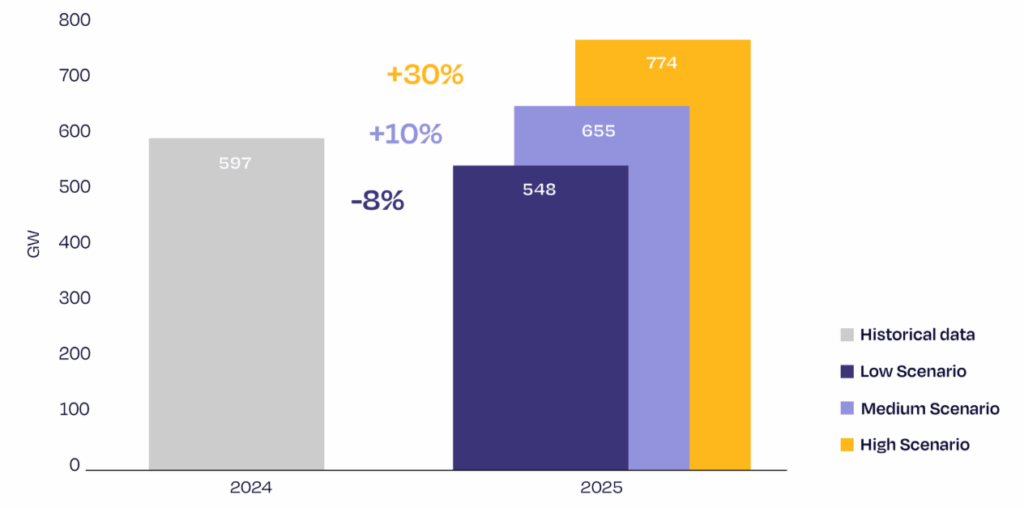
Since the introduction of the 0% VAT rate, solar adoption in the UK has increased significantly.
Observed Trends
- Rising installation rates in residential properties.
- Increased consumer awareness of energy independence.
- Strong demand during periods of high electricity prices.
Energy analysts suggest that VAT relief has played a measurable role in reducing financial barriers. “Lower upfront costs have been a key driver of adoption,” said an energy market researcher. “Removing that incentive could slow momentum.”
Industry Perspective: Demand for Policy Certainty
Renewable energy companies are calling for clarity well before the 2027 deadline.
Industry Concerns
- Uncertainty may delay consumer decisions.
- Investment planning becomes more difficult.
- Workforce and supply chain stability may be affected.
A senior executive from a UK solar installation firm stated that “clear policy signals are essential for maintaining market confidence.”
Consumer Case Scenario: Real-World Impact
Consider a typical household evaluating solar installation in 2026:
- Installation cost: £11,000.
- VAT at 0%: £0 additional cost.
- VAT at 5% (post-2027): ~£550 increase.
While the increase may seem modest, it can influence affordability, especially when combined with other household expenses. Behavioral research shows that upfront costs are one of the most significant barriers to renewable adoption.
Interaction with Other Energy Policies
The VAT relief operates alongside several UK government schemes:
- ECO4 (Energy Company Obligation).
- Boiler Upgrade Scheme.
- Great British Insulation Scheme.
These programs target different groups:
- ECO4 supports low-income households.
- VAT relief benefits broader homeowners.
Together, they form a multi-layered strategy to accelerate decarbonization.
Risks and Misconceptions
Common Misunderstandings
- “Solar will become unaffordable after 2027”
→ Costs may rise slightly, but long-term savings remain strong. - “VAT relief applies to all purchases”
→ It generally applies only to supply-and-install services. - “The policy will definitely end”
→ No final decision has been announced.
Experts advise consumers to rely on verified government information rather than speculation.
Policy Debate: Extend or Phase Out?
Arguments for Extension
- Supports continued growth in renewable adoption.
- Helps households manage energy costs.
- Aligns with climate targets.
Arguments Against Extension
- Reduces tax revenue.
- May no longer be necessary as market matures.
- Temporary policies are not designed to be permanent.
Energy economists suggest the outcome will depend on both fiscal conditions and political priorities.
Global Comparison: How Other Countries Handle Solar Taxation
The UK’s VAT relief policy is part of a broader international trend. In Europe:
- Some countries have reduced VAT to zero.
- Others use direct subsidies or rebates.
These approaches reflect different strategies for encouraging renewable energy adoption.
What Households Should Do in 2026
Experts recommend that consumers:
- Consider installing solar before the 2027 deadline.
- Compare installer quotes carefully.
- Verify eligibility for additional schemes.
- Plan early due to installation lead times.
One key insight: demand may increase as the deadline approaches, potentially creating delays.
Future Outlook: Beyond 2027
If the VAT relief ends:
- Solar adoption may slow temporarily
- Financing options may become more important
- Other incentives could be introduced
However, long-term trends remain positive due to:
- Falling technology costs
- Rising energy prices
- Increased environmental awareness
“The direction of travel is clear,” said an energy analyst. “The question is how quickly adoption continues.”
Related Links
Solar for New Builds: A 2026 Guide for UK Property Developers and Home Buyers
Earning 20p/kWh: How to Qualify for the Highest UK Solar Export Tariffs This Spring
As the UK approaches the 2027 deadline, the future of the 0% VAT relief on solar panels remains uncertain. While the policy has supported rapid growth in renewable adoption, its continuation will depend on fiscal priorities, market maturity, and climate ambitions, leaving households and industry awaiting clearer direction from the Treasury.
FAQs
Is the 0% VAT relief still available in 2026?
Yes, it remains active until March 2027.
Will it definitely end in 2027?
Not necessarily. No final decision has been made.
How much could costs increase?
Approximately 5% of installation cost.
Does VAT relief apply to batteries?
In many cases, yes, if installed alongside solar systems.