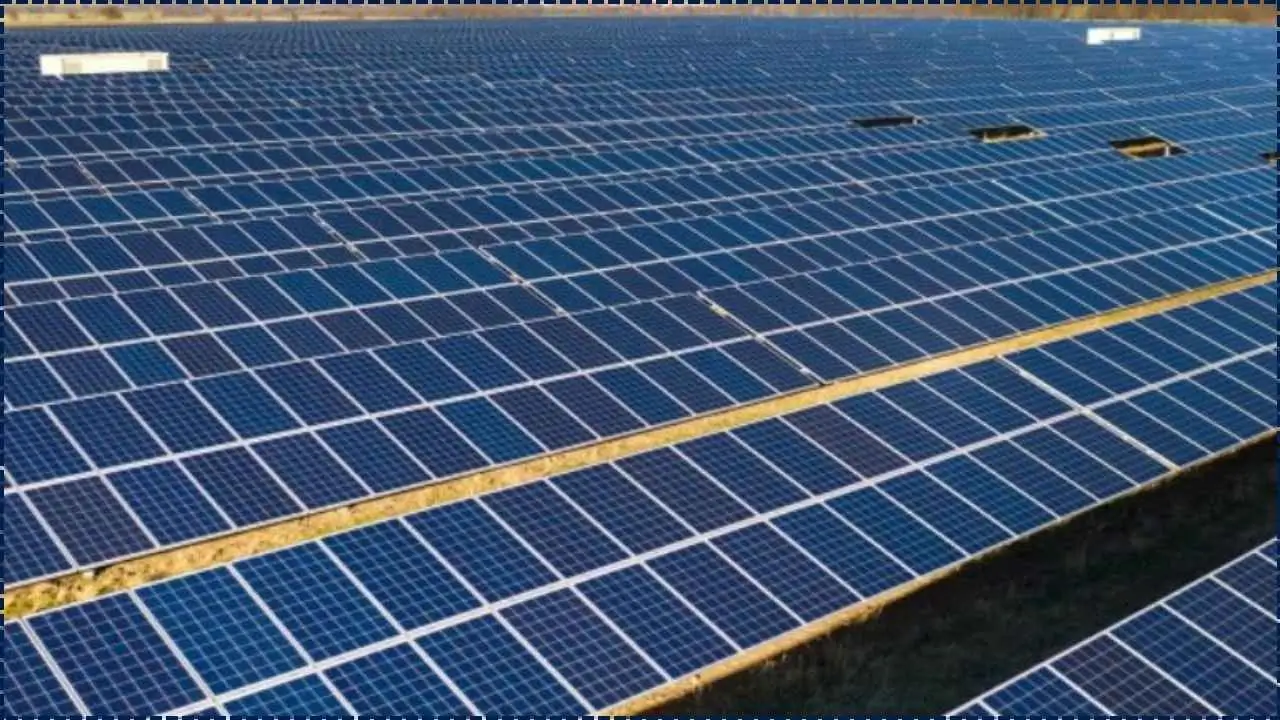

Uttarakhand has crossed the 1 gigawatt (GW) mark in installed solar capacity in 2026, according to data released by the Uttarakhand Renewable Energy Development Agency (UREDA). The Uttarakhand Crosses 1GW Solar milestone marks a significant step in the state’s energy diversification strategy and aligns with India’s national target of expanding non-fossil fuel capacity.
Officials say the achievement reflects steady policy implementation, rising rooftop adoption, and increased private participation.
Uttarakhand Crosses 1GW Solar Milestone: Crossing the 1GW Threshold
The Uttarakhand Crosses 1GW Solar achievement places Uttarakhand among India’s growing list of solar-enabled states. Government data indicates total installed solar capacity has exceeded 1,000 megawatts, including utility-scale, rooftop, and distributed projects.
Chief Minister Pushkar Singh Dhami described the development as a reflection of Uttarakhand’s commitment to sustainable growth. In an official statement issued through the state information department, Dhami said the milestone supports both energy security and environmental goals.
“This is not merely a capacity figure, but an indicator of our long-term transition toward clean energy,” the statement said.
The state, traditionally reliant on hydropower due to its river systems, has steadily diversified into solar energy over the past decade.
How Uttarakhand Built Its Solar Base
Utility-Scale Solar Parks
Large solar parks in districts such as Udham Singh Nagar and Haridwar have contributed substantially to the state’s capacity. These districts offer relatively flat terrain compared to the mountainous interior.
Projects have been developed through competitive bidding and public-private partnerships. According to UREDA, utility-scale plants account for several hundred megawatts of total installed capacity.
These installations feed electricity into the state grid, supporting peak demand during summer months.
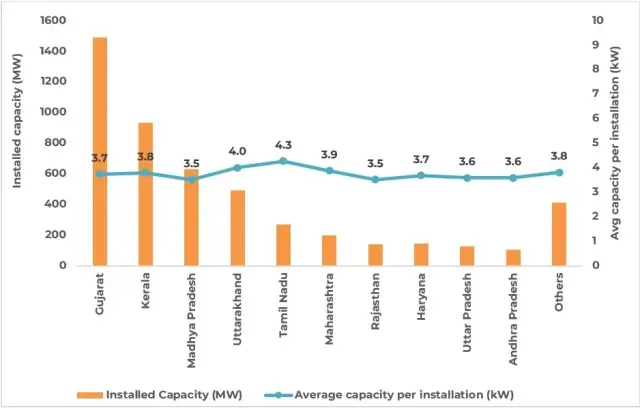
Rooftop Solar Expansion Under National Schemes
Rooftop solar installations have grown significantly in urban and semi-urban centres, including Dehradun, Haldwani, and Roorkee.
The expansion has been supported by the Ministry of New and Renewable Energy (MNRE) under schemes such as the PM Surya Ghar: Muft Bijli Yojana. The programme provides subsidies to encourage household-level adoption of rooftop systems.
Officials say schools, hospitals, and government buildings have also integrated rooftop solar as part of state-level clean energy initiatives.
Solar for Remote and Mountain Communities
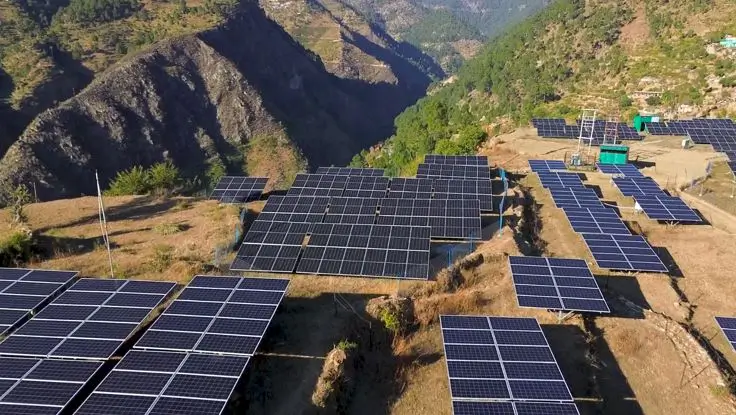
A less visible but significant component of Uttarakhand’s solar expansion involves decentralised solar systems in remote hill villages. Off-grid and mini-grid solar systems have been deployed in areas where extending traditional grid infrastructure is technically challenging or financially costly.
According to state energy department data, decentralised systems have improved reliability for households and small enterprises in high-altitude regions.
Energy access experts say such distributed models reduce transmission losses and improve local resilience during extreme weather.
Institutional and Policy Framework
UREDA serves as the nodal agency for renewable energy implementation in the state. It coordinates project approvals, technical assessments, and awareness campaigns.
At the national level, India has committed to achieving 500GW of non-fossil fuel capacity by 2030. Solar energy represents the largest contributor toward that target.
Energy policy analyst Dr. Arunabha Ghosh, Chief Executive Officer of the Council on Energy, Environment and Water (CEEW), has previously noted that state-level execution is central to achieving national renewable goals.
“States are the laboratories of India’s energy transition,” Ghosh has said in public forums. “Implementation capacity determines long-term success.”
Economic Impact and Local Employment
State authorities report that the solar sector has generated employment across installation, operations, logistics, and technical services.
Skill development programmes have trained technicians to support the growing renewable ecosystem. According to state officials, the solar expansion has created new opportunities for small contractors and local entrepreneurs.
Industry representatives say distributed solar has enabled micro-enterprises, particularly in semi-urban markets.
Financial institutions have also introduced green financing products to support household and commercial adoption.
Environmental and Climate Context
Uttarakhand is considered ecologically sensitive due to its Himalayan geography. The state has experienced floods, landslides, and extreme rainfall events in recent years.
The India Meteorological Department (IMD) has reported increasing temperature trends across northern India. Climate scientists warn that mountain ecosystems are particularly vulnerable to warming.
Solar energy reduces dependence on coal-based power generation, which remains a major source of India’s electricity supply. According to the International Energy Agency (IEA), renewable expansion is critical for India to meet its climate commitments.
By crossing the 1GW mark, Uttarakhand contributes to India’s nationally determined contributions under the Paris Agreement.
Grid Integration and Storage Needs
Experts caution that renewable milestones must be accompanied by infrastructure upgrades. Solar generation is intermittent, peaking during daylight hours. The Central Electricity Authority (CEA) has emphasised the importance of grid modernisation and storage integration.
Energy storage capacity in Uttarakhand remains limited, though pilot battery and pumped-storage projects have been proposed.
Analysts say improved forecasting systems and flexible grid management will be necessary as renewable penetration increases.
Comparison with National Leaders
While states such as Rajasthan and Gujarat lead India’s solar rankings with multi-gigawatt installations, Uttarakhand’s achievement is notable due to geographic constraints.
Mountainous terrain limits large-scale land availability. As a result, the state has relied more heavily on distributed and mid-scale installations.
Energy researchers say Uttarakhand’s model demonstrates that even smaller or terrain-challenged states can scale renewable energy through diversified approaches.
Balancing Solar and Hydropower
Hydropower remains a cornerstone of Uttarakhand’s energy mix. The state’s rivers have historically powered major hydroelectric plants.
Energy planners say solar complements hydropower by diversifying generation sources. Solar output peaks during summer, while hydropower output varies based on water availability. This combination can improve overall grid stability if managed effectively.
Future Expansion Plans
State officials indicate that additional solar capacity is under development. Rooftop targets have been expanded under updated state policies.
Industry observers say sustained investment, transparent regulation, and financial support mechanisms will determine whether Uttarakhand can continue expanding its renewable base.
Energy analysts also emphasise the importance of battery storage, smart grid technology, and demand-side management.
Related Links
Get Certified by Govt of India! Join the ‘Surya Mitra’ Program for Free Training and Solar Jobs.
Uttarakhand’s crossing of the 1GW solar capacity threshold in 2026 marks a significant milestone in its renewable energy transition. The Uttarakhand Crosses 1GW Solar development reflects coordinated policy action, diversified project deployment, and increasing public participation.
While challenges remain in grid integration and storage, the state’s progress illustrates how terrain-constrained regions can contribute meaningfully to India’s clean energy ambitions.
The coming years will determine whether Uttarakhand can build on this foundation and deepen its role in the national renewable landscape.