As India expands renewable energy capacity while safeguarding agricultural land, Vertical Solar: Solar Panels in the Middle of Farms; The ‘Vertical’ Model for Space Saving has emerged as a potential solution.
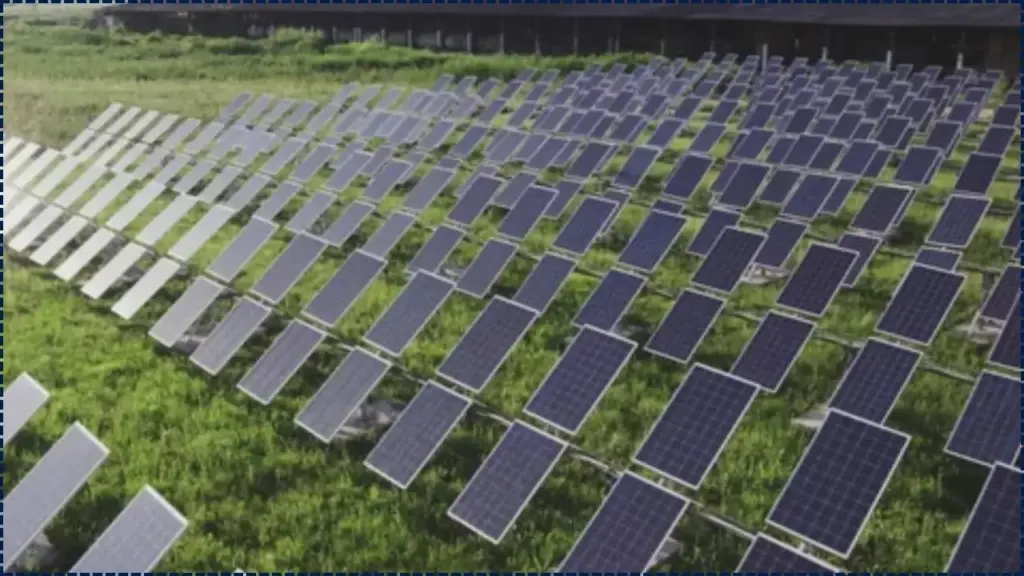
By placing upright solar panels between crop rows, developers aim to generate electricity without displacing farming activity, addressing growing concerns over land competition between food production and clean energy infrastructure.
What Is Vertical Solar?
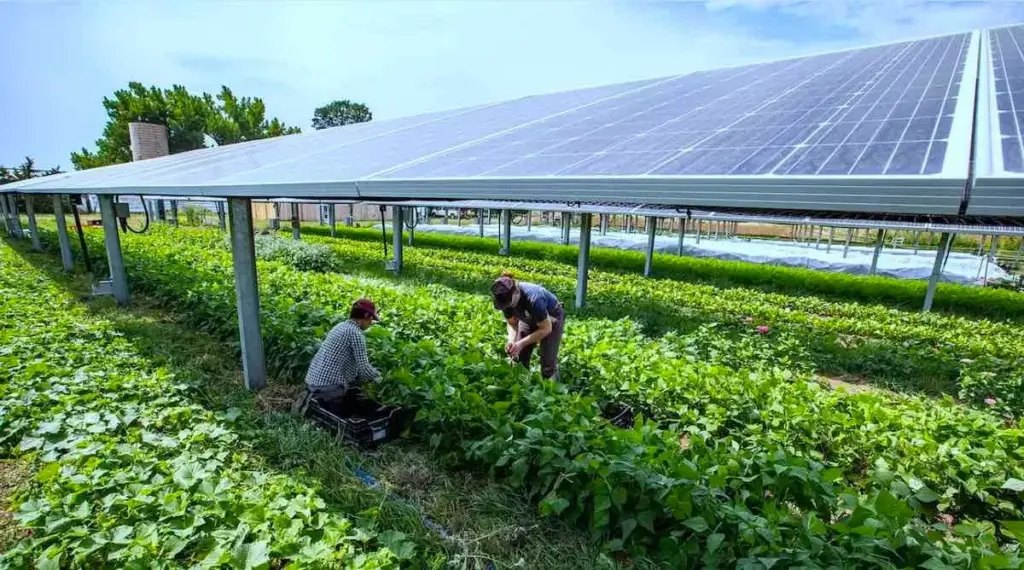
Vertical solar refers to photovoltaic panels mounted upright rather than tilted toward the sun at traditional angles. When installed within active farmland, these systems form part of agrivoltaics — a model that integrates agricultural production and solar power generation on the same land parcel.
Unlike conventional ground-mounted solar farms, which can occupy extensive horizontal space, vertical arrays are installed in rows between crops, minimising land coverage.
According to the National Renewable Energy Laboratory (NREL) in the United States, agrivoltaic systems can increase “land equivalent ratio” by enabling combined energy and crop production from a single site.
Why the Vertical Model Is Attracting Policy Interest
India has committed to achieving 500 gigawatts of non-fossil energy capacity by 2030. Utility-scale solar expansion requires large tracts of land, often in rural regions.
Simultaneously, agricultural land remains central to food security and rural livelihoods. Land-use conflicts have intensified in some states where solar parks overlap with productive farmland. The vertical solar model seeks to reduce this tension.
An official from the Ministry of New and Renewable Energy (MNRE) recently stated at a renewable energy forum that “dual-use models like agrivoltaics allow us to pursue solar growth without undermining agricultural output.”
How Vertical Solar Panels Function
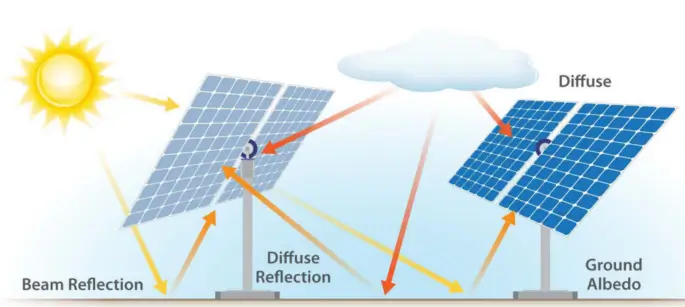
Vertical installations frequently use bifacial photovoltaic modules capable of capturing light from both sides. Panels are often arranged in north-south orientation, allowing sunlight to strike one side in the morning and the opposite side in the evening.
This configuration can produce a flatter generation curve across the day, potentially aligning better with electricity demand patterns.
Because panels are upright, dust accumulation may be lower than on tilted systems, which could reduce cleaning frequency in arid environments.
Researchers at European solar institutes have reported that vertical systems may experience lower soiling losses compared to conventional arrays.
Crop Performance and Microclimate Effects
The agricultural impact of vertical solar depends on crop selection and spacing. Partial shading can reduce soil temperature and evaporation rates, potentially conserving water in hot climates.
Studies conducted by the Fraunhofer Institute for Solar Energy Systems in Germany have shown that certain crops, including leafy vegetables and shade-tolerant plants, can maintain or slightly increase yields under controlled shading conditions.
However, high-light crops such as wheat or maize may require greater spacing to prevent yield loss. The Indian Council of Agricultural Research (ICAR) has begun exploratory discussions on agrivoltaic trials suited to Indian cropping patterns.
An ICAR agronomist noted during a recent seminar that “site-specific crop trials are essential before large-scale deployment.”
Water Management and Climate Adaptation
India faces rising temperatures and variable rainfall patterns linked to climate change. Vertical solar systems can moderate field temperatures and reduce evapotranspiration rates. This microclimate regulation may reduce irrigation demand in water-stressed regions.
Researchers studying agrivoltaic systems in semi-arid climates report improved soil moisture retention beneath panels. These attributes have positioned vertical solar as a potential climate adaptation tool alongside its mitigation benefits.
Economic Implications for Farmers
Vertical solar introduces new revenue channels.
Farmers may:
- Sell electricity directly to distribution companies under decentralised solar schemes.
- Lease portions of their land for solar infrastructure while continuing cultivation.
- Reduce on-farm energy expenses for irrigation and storage.
Under programmes such as PM-KUSUM, farmers can install decentralised solar systems and receive payment for surplus power exported to the grid. Energy economists argue that diversified revenue can stabilise farm incomes in regions prone to climate shocks.
However, installation costs remain a barrier. Vertical solar systems often require specialised mounting structures, increasing capital expenditure compared to conventional arrays. Access to subsidies and concessional loans will likely influence adoption rates.
Cost Modelling and Financial Returns
Initial capital costs for vertical solar can exceed those of standard ground-mounted systems due to additional structural reinforcement and spacing requirements. However, proponents argue that avoided land acquisition costs and continued agricultural revenue may offset higher installation expenses.
Financial viability depends on:
- Electricity tariffs
- Crop yield stability
- Maintenance costs
- Financing rates
Infrastructure consultants suggest that long-term return on investment improves when panels are integrated into high-value horticulture or greenhouse crops.
Grid Integration and Rural Infrastructure
Distributed solar injection into rural grids requires stable transmission infrastructure. The Central Electricity Authority (CEA) has highlighted the need for grid upgrades to accommodate rising distributed renewable energy.
Voltage regulation and load balancing become critical when multiple decentralised systems feed into local networks. Smart metering and storage integration may enhance reliability.
Biodiversity and Environmental Impact
Unlike large solar parks that may replace natural habitats, vertical agrivoltaics preserve existing agricultural ecosystems. However, installation may alter soil compaction and field biodiversity.
Environmental assessments must evaluate long-term ecological effects.Researchers emphasise that vertical solar should align with sustainable farming practices, including soil conservation and integrated pest management.
Comparison with Conventional Solar Parks
Conventional solar parks often require dedicated land parcels and fencing. Vertical solar systems maintain active farmland, reducing land conversion pressure.
However, utility-scale parks may achieve higher pure electricity yield per hectare compared to dual-use systems. The trade-off lies between maximum energy production and balanced land productivity.
International Case Studies
Germany and France have operational agrivoltaic pilots integrating vertical arrays with vineyards and vegetable farms. Japan has deployed agrivoltaics above rice paddies, though mostly in elevated configurations.
These international experiences demonstrate feasibility but also underscore the importance of tailored crop and climate adaptation. India’s conditions — including high solar irradiance and diverse cropping systems — require customised research.
Risks and Long-Term Scalability
Despite optimism, several risks remain:
- Limited Indian field data on vertical agrivoltaics
- Financing barriers for smallholder farmers
- Regulatory ambiguity regarding land classification
- Potential resistance from traditional farming communities
Long-term scalability depends on clear policy frameworks and demonstrated economic viability. Experts suggest pilot projects in diverse agro-climatic zones before widespread adoption.
Policy Outlook
India’s renewable roadmap increasingly acknowledges distributed generation and dual land use. MNRE officials have signalled interest in integrating agrivoltaic guidelines into future policy revisions.
State governments may play a critical role through incentives and agricultural extension services. Public-private partnerships could accelerate demonstration projects.
Related Links
Vertical solar represents an innovative approach to reconciling renewable energy expansion with agricultural preservation. By installing upright panels between crops, the model seeks to maximise land productivity and create new income streams without sacrificing food security.
While promising, its long-term success depends on rigorous field research, cost competitiveness and supportive regulatory frameworks.
As India balances clean energy targets with agricultural resilience, vertical solar may emerge as a strategic tool in aligning environmental and rural economic priorities.