The WA Residential Battery Scheme is offering households in Western Australia up to $7,500 in combined state and federal incentives to install home battery systems, aiming to reduce electricity costs, support renewable energy adoption, and improve grid stability across both metropolitan and regional areas.
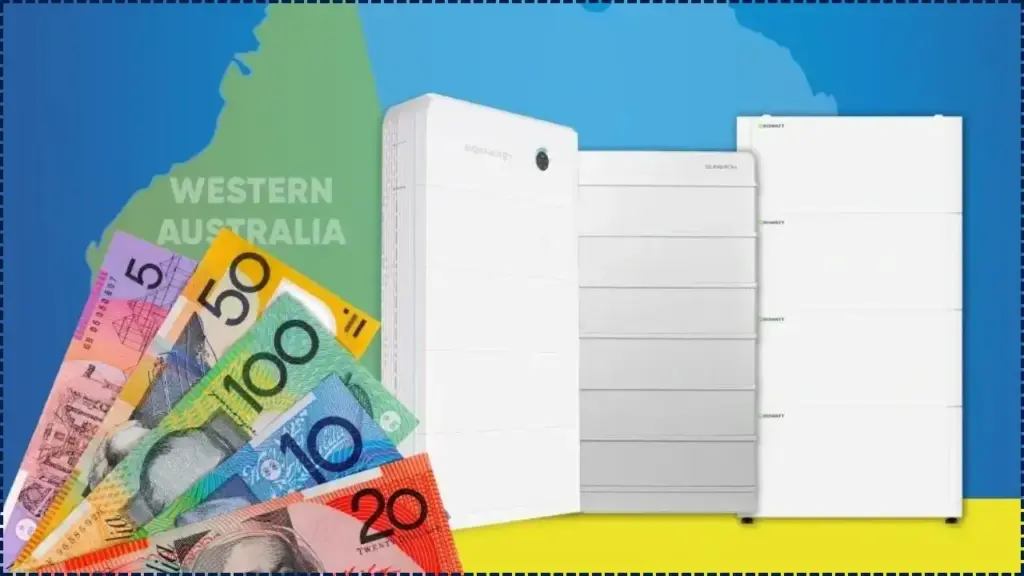
WA Residential Battery Scheme
| Key Fact | Detail / Statistic |
|---|---|
| Maximum savings | Up to $7,500 (regional households) |
| Metro incentive cap | Around $5,000 |
| Loan program | Up to $10,000 interest-free |
| Key requirement | Mandatory VPP participation |
The WA Residential Battery Scheme represents a significant policy shift toward decentralized energy systems. By combining financial incentives with grid integration requirements, the program aims to balance household savings with broader energy stability goals.
Its long-term success will depend on adoption rates, consumer awareness, and the evolving role of battery technology in Australia’s energy landscape.
WA Residential Battery Scheme: A Strategic Shift in Energy Policy
The Western Australian government has launched the WA Residential Battery Scheme as part of a broader strategy to modernize the electricity system and reduce reliance on fossil fuels.
The initiative is designed to complement Australia’s already high rooftop solar adoption rate by addressing a key limitation: the lack of affordable energy storage.
Officials say the scheme aims to help households store excess solar power generated during the day and use it during peak evening periods, reducing both grid strain and electricity bills.
How the Financial Incentives Work
Layered Subsidy Model
The scheme combines:
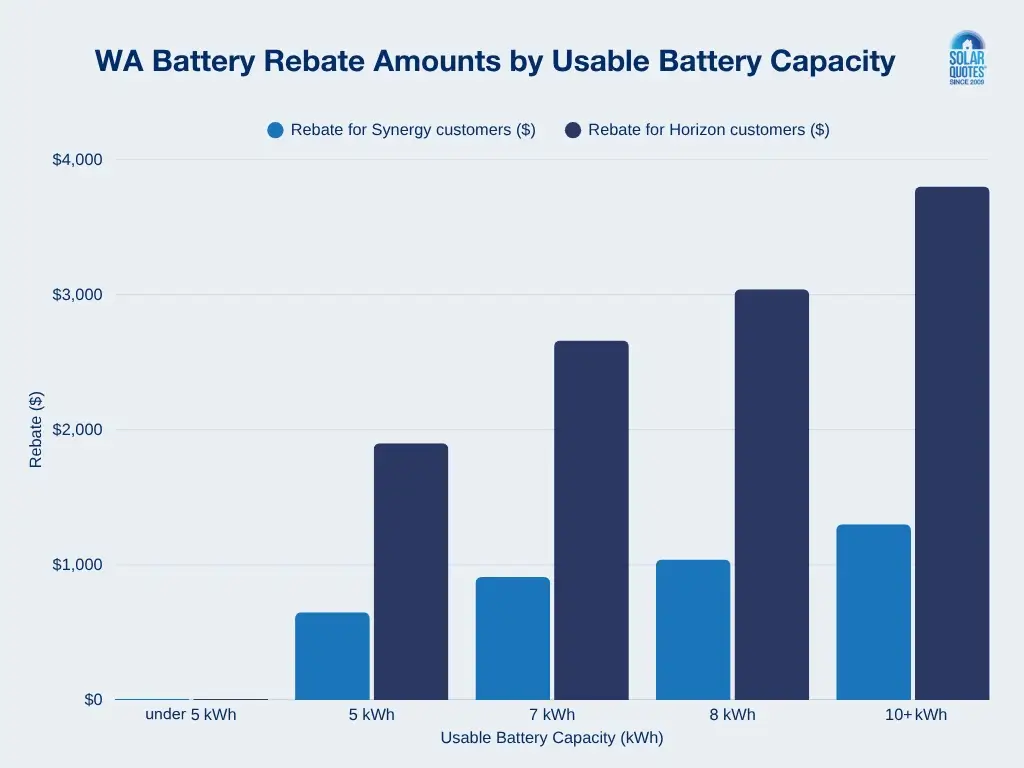
- State government rebates, calculated per kilowatt-hour (kWh) of battery capacity.
- Federal incentives, which reduce upfront installation costs.
Under current guidelines:
- Synergy customers (metro areas) can receive up to $5,000.
- Horizon Power customers (regional areas) can receive up to $7,500.
The higher regional support reflects increased infrastructure costs and the strategic importance of localized energy systems.
Economic Impact on Households
Cost Reduction and Payback Period
Battery systems in Australia typically range between $8,000 and $15,000 depending on size and brand. With subsidies applied:
- A $12,000 system could drop to roughly $5,000–$7,000.
- Payback periods may shorten to 5–8 years, depending on energy usage.
Energy economists say this significantly improves the financial case for battery adoption, especially when paired with rooftop solar.
Why Regional WA Receives Higher Incentives
Regional areas served by Horizon Power face unique challenges:
- Long-distance transmission costs.
- Dependence on diesel or gas generation.
- Higher per-unit electricity costs.
By incentivizing battery installations, the government aims to:
- Reduce fuel dependency.
- Increase energy independence.
- Stabilize isolated microgrids.
A policy analyst at an Australian energy think tank noted that “distributed battery systems can effectively replace costly infrastructure upgrades in remote areas.”
Virtual Power Plants: A Central Requirement
Participation in a Virtual Power Plant (VPP) is mandatory under the scheme.
How VPPs Work
A VPP aggregates energy stored in residential batteries and coordinates its release to the grid when needed. This allows:
- Peak demand management.
- Reduced risk of outages.
- Improved integration of renewable energy.
Households may also receive financial incentives for contributing stored energy. However, consumer groups caution that VPP agreements can vary, and homeowners should carefully review terms related to control and compensation.
The popular government scheme is about to penalise households wanting bigger battery systems. Here’s what you need to know. Read more: pic.twitter.com/j1DqYydIQ5
— The Australian (@australian) April 2, 2026
Interest-Free Loans Broaden Access
To ensure affordability, the scheme includes:
- Loans up to $10,000.
- Zero interest.
- Repayment periods of up to 10 years.
The loans are targeted at households earning below approximately $210,000 annually. Energy policy experts say this financing model is critical to increasing adoption among middle-income households who may otherwise be unable to afford upfront costs.
Installer Market and Supply Chain Considerations
The scheme is expected to stimulate demand across the solar and battery installation sector.
Industry stakeholders anticipate:
- Increased hiring of certified installers.
- Greater demand for battery brands such as Tesla, LG Energy Solution, and Sonnen.
- Potential supply constraints if uptake exceeds projections.
Regulators have emphasized that installations must be carried out by approved providers to ensure safety and compliance.
Consumer Risks and Considerations
Despite strong incentives, experts highlight several factors consumers should evaluate:
1. Battery Lifespan
Most lithium-ion batteries last 10–15 years, with gradual capacity decline.
2. VPP Limitations
Participation may restrict how and when stored energy is used.
3. Warranty Conditions
Different manufacturers offer varying warranties and performance guarantees.
4. Installation Quality
Improper installation can reduce efficiency or pose safety risks.
Consumer advocacy groups recommend obtaining multiple quotes and verifying installer credentials.
Global Context: How WA Compares
Western Australia’s scheme aligns with global trends toward residential energy storage.
International Comparisons
- United States: Federal tax credits for battery systems.
- Germany: Subsidized loans and grants for energy storage.
- United Kingdom: Emerging incentives linked to smart grids.
Experts say WA’s mandatory VPP requirement is relatively unique and reflects the state’s focus on grid integration rather than just individual savings.
Environmental Impact
The scheme is expected to contribute to:
- Lower greenhouse gas emissions.
- Reduced reliance on coal and gas-fired generation.
- Increased efficiency of renewable energy use.
Energy researchers estimate that widespread battery adoption could significantly reduce peak demand emissions over time.
Policy Outlook and Future Expansion
Government officials have indicated that the scheme may evolve based on:
- Uptake rates.
- Technological advancements.
- Market conditions.
Future phases could include:
- Expanded eligibility.
- Increased funding.
- Integration with electric vehicle charging systems.
Related Links
Real Estate Value: Does Installing Solar with Government Loans Increase Your Home’s Resale Price?
Snow vs. Solar: Top 2026 Tools to Clear Your Panels Without Voiding Your Warranty
Public and Industry Reaction
Initial responses to the scheme have been largely positive. Renewable energy groups describe it as a “critical step” in modernizing the energy system, while some critics argue that:
- The subsidy may not fully offset high upfront costs.
- Mandatory VPP participation could deter some homeowners.
Despite these concerns, early demand signals suggest strong interest, particularly in regional communities.
FAQs
Who qualifies for the scheme?
Households connected to Synergy or Horizon Power with approved battery systems and VPP participation.
How much can I save?
Up to $5,000 in metro areas and $7,500 in regional areas.
Is solar required?
Not always mandatory, but strongly recommended for maximum benefit.
What is a VPP?
A system that connects home batteries to the grid for coordinated energy use.