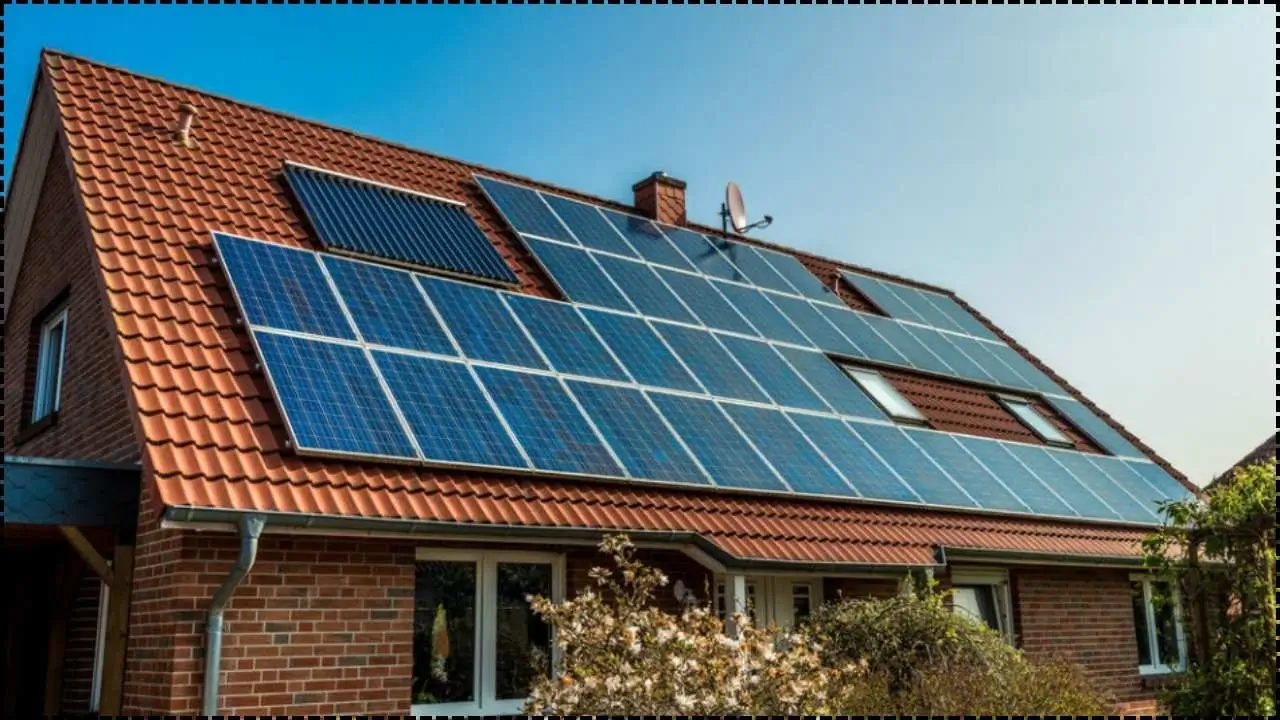

Homeowners with rooftop solar panels may be able to earn additional income by selling carbon credits from solar, a system that converts avoided greenhouse gas emissions into tradable environmental assets.

As voluntary carbon markets expand and corporations pursue net-zero targets, aggregators are bundling residential solar output into certified carbon credits. Experts say the opportunity exists, but it requires careful evaluation of rules, costs, and market risks.
Understanding Earn Extra Cash from Your Roof: Carbon Credits from Solar Explained
Carbon credits represent verified reductions in greenhouse gas emissions. One credit equals one metric ton of carbon dioxide equivalent (CO₂e). When solar panels generate electricity, they reduce demand for fossil-fuel-based power plants.
If the displaced grid electricity would have emitted carbon dioxide, the solar system effectively avoids those emissions. Under recognized carbon accounting frameworks, those avoided emissions can be converted into carbon credits and sold.
According to the U.S. Environmental Protection Agency (EPA), electricity generation accounts for roughly one-quarter of U.S. greenhouse gas emissions. Distributed rooftop solar reduces emissions at the source by lowering reliance on carbon-intensive generation.
However, not every solar system automatically qualifies for credit issuance. Eligibility depends on verification standards and carbon registry rules.
How Emissions Become Tradable Credits
The conversion process follows several steps:
- Measure annual solar electricity production (in kWh).
- Apply the regional grid emissions factor.
- Calculate avoided emissions in metric tons.
- Submit verified data to a carbon registry.
- Issue credits into a certified registry account.
For example:
- A 7 kW residential solar system may generate 10,000 kWh annually.
- If the regional grid emits 0.45 kg CO₂ per kWh, the system avoids approximately 4.5 metric tons of emissions per year.
- That translates into roughly four to five carbon credits annually.
Verification must be conducted by accredited third-party auditors under recognized methodologies.
Voluntary Carbon Markets: Where Most Residential Credits Are Sold
Most homeowners who participate do so through the voluntary carbon market. According to the World Bank’s State and Trends of Carbon Pricing Report, voluntary markets have grown as corporations commit to net-zero goals.
Companies purchase credits to offset emissions they cannot eliminate directly.
Recognized registries include:
- Verified Carbon Standard (VCS) by Verra
- Gold Standard
- American Carbon Registry (ACR)
Each registry has strict documentation requirements to prevent double counting or exaggerated claims. Compliance markets, such as California’s Cap-and-Trade Program, are generally not accessible to individual homeowners unless credits are aggregated at scale.
The Role of Aggregators
Individual homes generate relatively small credit volumes. Transaction costs can exceed potential earnings. To address this, carbon project developers aggregate hundreds or thousands of residential systems into one bundled project.
Dr. Sarah Mills, a clean energy policy researcher at the University of Michigan, explains: “Aggregation reduces verification costs and creates enough scale to make carbon credit issuance financially viable.”
Aggregators typically:
- Collect production data
- Manage registry submission
- Pay verification costs
- Sell credits to corporate buyers
- Share revenue with homeowners
Revenue splits vary. Some contracts allocate 50% to 80% of credit proceeds to participants. Homeowners should review contracts carefully.
Revenue Expectations: Realistic Numbers
Carbon credit prices fluctuate significantly. According to market analysis from Ecosystem Marketplace:
- Voluntary carbon credit prices often range between $5 and $20 per metric ton.
- High-quality credits can trade above $20, but pricing varies widely by project type.
If a homeowner generates 4 credits annually and the price is $15 per credit:
Annual gross revenue = $60
After aggregator fees and verification costs, net income may fall to $30–$50 per year. Experts emphasize that carbon credit revenue should be viewed as supplemental. The primary financial return of rooftop solar remains bill savings and federal tax incentives.
Additionality: A Key Integrity Question
A central issue in carbon markets is “additionality.” For credits to be valid, the emissions reduction must not have occurred without carbon credit revenue.

Some critics argue that residential solar installations are already financially attractive due to tax incentives. Therefore, credits may not meet strict additionality standards.
Carbon registries address this through conservative methodologies and project baselines.
Mark Trexler, a carbon markets consultant and former Intergovernmental Panel on Climate Change (IPCC) contributor, notes: “The integrity of carbon markets depends on rigorous accounting. High-quality registries apply stringent tests to ensure credibility.”
Renewable Energy Certificates vs Carbon Credits
Homeowners should distinguish between Renewable Energy Certificates (RECs) and carbon credits. A REC represents one megawatt-hour of renewable electricity generation.
A carbon credit represents one metric ton of avoided emissions.
According to the National Renewable Energy Laboratory (NREL), environmental attributes cannot be sold twice. If a homeowner sells RECs, they may not be eligible to claim carbon credits under certain programs.
Clear documentation is critical.
Tax and Legal Considerations
Carbon credit income may be taxable. The Internal Revenue Service (IRS) treats income from environmental credit sales as taxable in most cases.
Homeowners should:
- Consult tax professionals
- Review state-specific regulations
- Evaluate contract obligations carefully
Some agreements assign environmental rights to installers or financiers. Ownership must be clarified before participation.
Financial Sensitivity Analysis
Revenue depends heavily on:
- Regional grid carbon intensity
- Solar system size
- Market credit price
- Contract terms
If credit prices fall to $7 per ton, annual earnings could be cut in half. If prices rise above $20 per ton, revenue increases proportionally.
Carbon markets remain volatile, and prices fluctuate based on corporate demand and policy developments.
Corporate Demand Driving Market Growth
Major corporations including Microsoft, Amazon, and Google have committed to net-zero emissions. According to corporate sustainability disclosures, many companies rely partly on carbon credits to meet interim targets.
This demand underpins voluntary market growth. However, corporations increasingly prioritize high-quality credits with strong verification and social impact benefits. Residential solar projects must meet these quality standards to maintain market value.
Risks and Consumer Protection
Homeowners should consider:
- Long-term contracts restricting environmental claims
- Data privacy concerns related to energy monitoring
- Changing regulatory frameworks
- Market downturns affecting price
Before enrolling, homeowners should:
- Verify registry accreditation.
- Understand revenue sharing terms.
- Confirm ownership of environmental attributes.
- Review exit clauses.
- Consult financial and tax advisors.
Transparency is essential.
Environmental Impact Beyond Income
Even modest credit revenue reflects measurable emissions reductions. According to the International Energy Agency (IEA), distributed solar plays a crucial role in decarbonizing electricity systems.
A typical residential system can offset 3–5 metric tons of CO₂ annually. Over 25 years, that equates to more than 100 metric tons of avoided emissions.Carbon markets provide a mechanism to quantify and monetize that contribution.
Is Selling Carbon Credits Worth It?
For most homeowners, carbon credit income will not replace primary earnings or dramatically change solar economics.
It may, however:
- Offset maintenance costs
- Provide incremental annual income
- Increase total lifetime solar return
Financial advisors suggest viewing carbon credit participation as an optional enhancement rather than the primary motivation for installing solar. As digital monitoring improves and registry processes become more automated, participation may become more streamlined.
Related Links
Solar Trees: High Power in Low Space; Smart ‘Solar Trees’ for Parks and Streets
Selling carbon credits from solar presents a legitimate but modest opportunity for homeowners. Participation typically requires aggregation, third-party verification, and careful contract review.
While earnings are often limited, carbon credit markets provide a formal mechanism to reward distributed clean energy production. As voluntary markets mature and regulatory clarity improves, residential solar could play a growing role in climate finance systems.
FAQs
Can any homeowner sell carbon credits from solar?
Most must participate through an aggregator registered with a recognized carbon registry.
How much can I realistically earn?
Typically between $30 and $100 per year depending on system size and market prices.
Will selling credits affect my solar tax credit?
Generally no, but income from credit sales may be taxable.
Can I sell both RECs and carbon credits?
Often not. Environmental attributes usually cannot be double counted.