
As France seeks to accelerate its transition to renewable energy, the ‘Prime à l’investissement’ provides homeowners with significant financial incentives for installing photovoltaic (solar panel) systems.
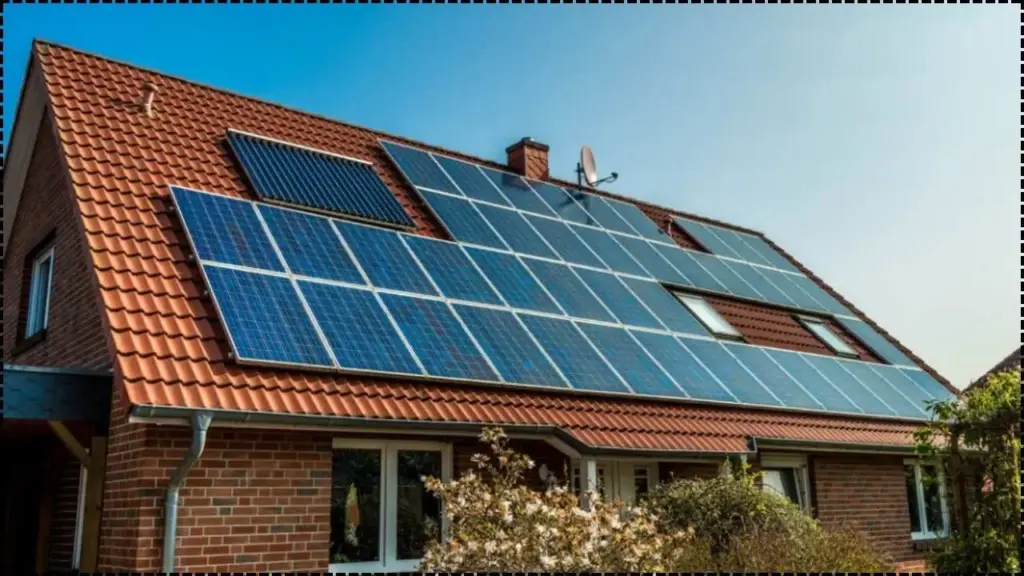
Effective from 2026, this new solar bonus encourages individuals to take part in the country’s clean energy transition by providing direct financial support and tax benefits for photovoltaic installations.
France Solar Bonus 2026
| Key Fact | Detail/Statistic |
|---|---|
| Prime à l’investissement | One-time bonus for installing solar systems |
| VAT Reduction | Reduced VAT on solar systems |
| Feed-in Tariff | Income from surplus solar energy sales |
What is the ‘Prime à l’investissement’?
The ‘Prime à l’investissement’ is a new solar incentive introduced by the French government in 2026 to encourage homeowners to install photovoltaic (solar panel) systems.
Unlike previous schemes, which focused on tax deductions or credits, the prime is a one‑time financial payment based on the size of the installed system and its contribution to energy production.
Key Features of the Prime
- Paid once after the system is installed and connected to the grid.
- Amount varies depending on the size of the solar system, with typical payments ranging from €240 for smaller systems (3 kW) to higher amounts for larger setups.
- The prime is meant to promote self-consumption of the solar energy produced, while also contributing to France’s overall green energy goals.
How Much Can You Earn from the ‘Prime à l’investissement’?
The prime depends on the installed capacity of the system. For example, a 3 kW solar system might earn a one‑time payment of around €240, while a 9 kW system could earn up to €720. Larger installations (over 36 kW) may receive even higher premiums.
The exact rate varies according to the capacity installed and specific contract details, but this investment bonus can significantly reduce the initial installation cost for homeowners.
Complementary Incentives: VAT Reduction and Feed-in Tariffs
While the ‘Prime à l’investissement’ is a notable incentive, France also continues to offer several other important financial benefits for solar installations:
VAT Reduction
Homeowners can benefit from reduced VAT on the installation of solar panels:
- 5.5% VAT applies to residential solar systems below 9 kW installed on private property, lowering upfront costs significantly.
- This reduction makes solar systems more affordable by cutting the tax burden on installation work, which can be a major part of the total cost.
Feed-in Tariffs (TARIF d’ACHAT)
In addition to the prime, homeowners who produce surplus energy can sell it back to the grid at a fixed feed-in tariff (TARIF d’ACHAT), which provides an ongoing income stream from energy sales.

- Selling surplus electricity can earn between €0.04 and €0.073 per kWh depending on the system size and contract terms.
- This program is designed to promote solar energy self-consumption while rewarding users for providing the grid with excess renewable energy.
- Long-term contracts (often 20 years) help stabilize the financial returns for homeowners.
Eligibility: Who Can Access These Incentives?
To be eligible for the ‘Prime à l’investissement’ and other solar incentives, homeowners must meet several requirements:
- System Size: The system must be designed for self-consumption. This means the energy generated should be primarily used by the homeowner. Surplus energy can be sold, but this should not be the primary use of the system.
- Installer Certification: The installation must be carried out by a RGE-certified (Reconnu Garant de l’Environnement) installer to qualify for financial incentives, ensuring quality installation and compliance with energy efficiency standards.
- Grid Connection: The system must be connected to the grid in compliance with local grid codes to allow for net metering and surplus energy sales.
Other Financial Support Programs
While the ‘Prime à l’investissement’ is a key benefit, several other financial support programs exist to assist homeowners in transitioning to solar energy:
- Eco-PTZ (Eco-Zéro-Interest Loan): This interest-free loan can be used in conjunction with the solar incentives for energy efficiency projects.
- MaPrimeRénov’: A program that assists with energy renovations and may be applicable if solar panels are part of broader energy upgrades.
These additional programs help reduce the financial burden for individuals seeking to make their homes more energy-efficient and sustainable.
Advantages of Installing Solar in France in 2026
While the previous Superbonus incentives have largely been phased out, France’s new solar incentives still provide attractive financial returns. Here are the main benefits of installing solar panels in 2026:
- Low Upfront Costs: Through the reduced VAT and Prime à l’investissement, the initial cost of installation is much lower than in previous years, especially for residential systems.
- Ongoing Earnings: Selling surplus energy at feed-in tariffs provides an ongoing stream of income that can offset installation costs over time.
- Long-Term Energy Savings: Solar panels provide long-term savings by reducing dependence on traditional electricity providers, which can help households avoid rising energy prices.
- Environmental Benefits: Solar energy reduces carbon emissions, contributing to France’s renewable energy goals and your home’s energy independence.
How Much Can You Save with Solar Panels in 2026?
To understand the financial return of installing solar panels in France in 2026, consider this simplified example:
| System Size | Investment Bonus | VAT Reduction | Annual Surplus Revenue (via grid) |
|---|---|---|---|
| 3 kW | ~€240 | 5.5% VAT | ~€100–€200/year |
| 6 kW | ~€480 | 5.5% VAT | ~€250–€500/year |
| 9 kW | ~€720 | 5.5% VAT | ~€500–€1,000/year |
Note: Earnings from surplus sales depend on the electricity price, system performance, and consumption patterns.
Related Links
Poland’s Mój Prąd 7.0: New 2026 Grants for Solar, Heat Pumps, and Energy Storage
Austria’s EAG Grant 2026: Secure Your Funding for Solar Systems Up to 20kWp
Steps to Install Solar Panels in France
To take advantage of these incentives, follow these steps:
- Select a Certified Installer: Ensure that the installation is carried out by an RGE-certified installer to qualify for the ‘Prime à l’investissement’ and other incentives.
- Apply for the ‘Prime à l’investissement’: After installation, apply for the one-time bonus.
- Set Up Net Metering or Surplus Sales: Ensure your system is connected to the grid, and consider signing a feed-in tariff agreement.
- Maintain Your System: Regular maintenance and monitoring will ensure that your solar system continues to operate efficiently and maximize savings.
FAQs
How much does the ‘Prime à l’investissement’ cover?
The prime offers a one-time bonus based on the size of your solar system, ranging from €240 for small installations to higher amounts for larger systems.
Can I still sell surplus solar energy?
Yes, under the feed-in tariff program, you can sell excess energy back to the grid and earn €0.04–€0.073/kWh.
Who can install solar panels under these incentives?
The installation must be carried out by a RGE-certified installer to qualify for the ‘Prime à l’investissement’ and other incentives.