
For electric vehicle (EV) owners, pairing a solar energy system with a home EV charger is an innovative way to charge your car for free. With the right components, installation approach, and energy management strategy, a solar-powered EV charger can let you fill up your EV with clean energy from the sun while reducing reliance on the grid.
This step-by-step guide explains how to integrate solar panels with an EV charger, reducing energy costs and increasing sustainability.
Charge Your EV for Free
| Key Fact | Detail/Statistic |
|---|---|
| Charging Speed | A Level 2 charger adds about 25-44 miles of range per hour. |
| Solar Energy Production | Solar panels generate approximately 1 kWh per 100 square feet of space. |
| Cost Savings | With a well-designed system, solar charging could save over $1,000/year on energy bills. |
How Solar + EV Charger Combos Work
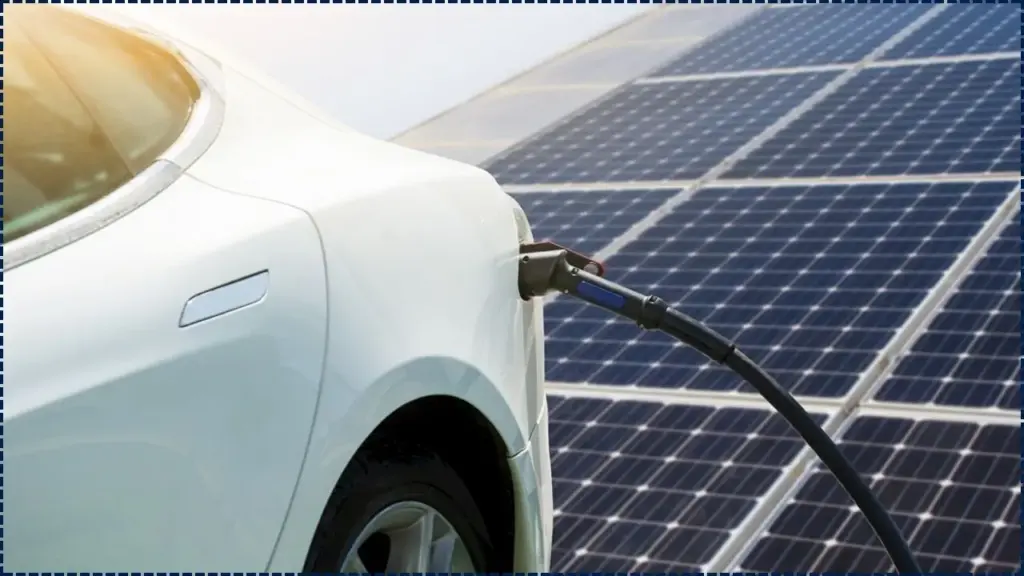
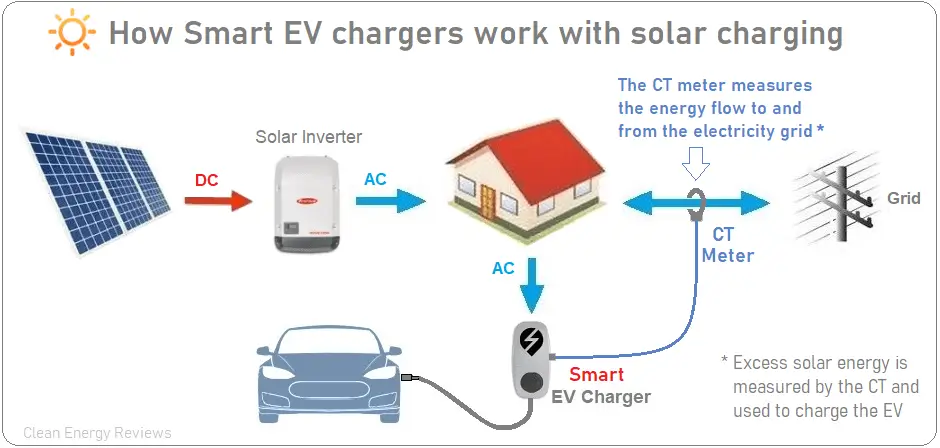
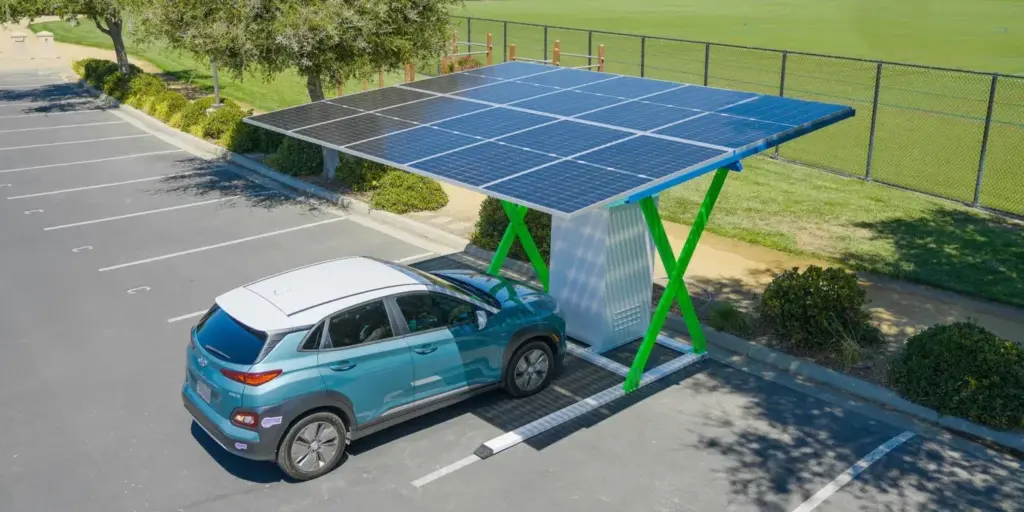
Integrating solar power with an electric vehicle charger means using solar panels to generate electricity, which is then used to charge your EV. This system works through several components, including solar panels, an inverter, and a Level 2 EV charger (240V), which can handle the energy demand of modern electric cars.
Key Components:
- Solar Panels: These panels convert sunlight into direct current (DC) electricity. The amount of energy generated depends on the number of panels, their size, and the amount of sunlight your location receives.
- Inverter: This device converts the DC electricity generated by the solar panels into alternating current (AC), which is used in most home appliances and EV chargers.
- EV Charger: The Level 2 charger provides faster charging compared to a Level 1 charger, typically found in standard home outlets. It can charge your car much more efficiently and quickly, adding about 25-44 miles of range per hour of charging.
- Battery Storage (Optional): You can also add a home battery storage system that stores excess solar energy for use when the sun isn’t shining. This allows you to charge your EV even during cloudy days or at night.
By integrating these components, you can charge your EV with free electricity from your solar system, potentially cutting your transportation costs to zero.
Guide to Setting Up a Solar-Powered EV Charger
1. Determine Your Solar and Charging Needs
Before you begin, assess your electricity consumption and vehicle charging needs. This involves evaluating how much electricity your home uses in general and how much your electric vehicle requires.
- Estimate your daily mileage: On average, most drivers use about 30-40 miles per day. Determine how many kWh your car uses per mile to calculate your daily energy consumption for charging. For example, if your EV uses about 0.25 kWh per mile, and you drive 30 miles per day, you’ll need 7.5 kWh per day.
- Assess your roof space for solar panels: The average solar panel produces about 250-300 watts per panel. Depending on your area’s sunlight, about 10-15 panels should be enough to power your daily charging needs.
2. Choose the Right Solar System
Selecting the right solar panel system is crucial to ensure it meets your needs for both home electricity and EV charging. You’ll need a solar PV system that is large enough to cover both your typical energy usage and your EV charging demands.
- Grid-tied systems: These are the most common and allow excess solar energy to be sent back to the grid for credits through net metering. This allows you to draw from the grid when solar generation is insufficient.
- Off-grid systems: These are suitable for remote locations, although they require a battery storage system to ensure energy availability when the sun isn’t shining.
- Hybrid systems: Combine solar with battery storage for greater flexibility and independence from the grid. This setup ensures you have stored energy to charge your EV even when solar production is low.
3. Choose the Right EV Charger
You’ll need to install a Level 2 charger (240V), which is ideal for home EV charging. These chargers can typically provide up to 25-44 miles of range per hour, significantly faster than Level 1 chargers (120V).
When choosing a charger, consider:
- Charging speed: Some chargers offer adjustable charging rates, which can be important if you want to prioritize solar energy usage during peak sunlight hours.
- Smart features: Many modern chargers come with Wi-Fi connectivity, enabling you to track your charging via apps, schedule charging times, and monitor energy use.
Make sure your charger is compatible with your vehicle and can be integrated with your solar energy system.

4. Install the Solar System and EV Charger
After selecting your system and charger, it’s time to install everything. You will need the help of professional installers to ensure everything is set up safely and efficiently.
- Solar panels are typically installed on your roof, though ground mounts may be used if roof space is limited.
- The inverter is usually placed in your garage or basement, connected to your main electrical panel.
- EV charger installation usually involves a dedicated 240V circuit, ideally installed in a garage or carport, close to your vehicle’s parking spot.
Ensure that the electrical panel can handle the load of both the solar system and the EV charger. Depending on your home’s setup, you may need to upgrade your panel.
5. Monitor Energy Use and Manage Charging
Once everything is installed, it’s important to monitor energy consumption and manage your system to ensure you’re maximizing your solar energy output.
- Monitor solar production: Many solar inverters and home energy management systems offer apps that let you track your solar system’s energy production in real time.
- Track EV charging: Modern EV chargers offer smart features that allow you to set timers, adjust charging speeds, and optimize charging times to coincide with solar generation.
- Energy storage: If you’ve included a battery storage system, ensure it’s storing enough energy for nighttime charging.
With an integrated solar + EV charger combo, you can even automate the system to ensure your EV charges only with excess solar energy, maximizing savings.
Financial Considerations: Costs, Incentives, and Savings
Initial Costs of Solar EV Charging Systems
Setting up a solar-powered EV charging system can have significant upfront costs, but the savings in the long run are substantial. On average:
- Solar system costs range from $10,000 to $25,000 for a typical home installation.
- EV chargers can cost between $400 to $700, plus installation.
- Battery storage systems (if included) can add $5,000–$10,000 depending on capacity.
However, there are numerous financial incentives available to reduce these costs:

- Federal Tax Credit: The Investment Tax Credit (ITC) offers up to 30% off solar system costs, including EV chargers and storage.
- State rebates: Many states offer additional rebates for home solar and EV charging.
- Utility incentives: Some utilities offer rebates for EV chargers, battery storage, or solar installations.
Long-term Savings
The main savings come from reducing your reliance on the grid. On average, EV owners can save up to $1,000 per year on fuel by charging their vehicles with solar power instead of grid electricity. Additionally, over time, your solar system may completely offset its initial cost through electricity savings.
Related Links
Environmental Benefits
One of the most compelling reasons to install a solar-powered EV charger is the environmental impact.
- Carbon Emissions: By using solar energy to charge your EV, you reduce your carbon footprint by eliminating the need for fossil fuel-based electricity. Depending on the region’s grid mix, this could save 3–5 tons of CO₂ annually.
- Sustainable Living: Charging your car with the sun’s energy aligns with broader sustainability goals, helping reduce dependence on nonrenewable energy sources and contributing to reducing climate change impacts.
Setting up a solar-powered EV charger combo is a wise investment that can pay off over time, offering free and sustainable energy for your electric vehicle.
While the initial costs may seem high, significant savings on energy bills, combined with government incentives and the potential for a sustainable, carbon-free future, make this a smart choice for homeowners looking to reduce their energy costs and environmental impact.