

The electric scooter market has expanded rapidly in recent years, driven by rising fuel costs, urban congestion, and growing interest in low-emission transport. Into this competitive landscape enters the Solar P1 Pro, a high-powered electric scooter that advertises a top speed of 50 miles per hour and a price point near $1,999.
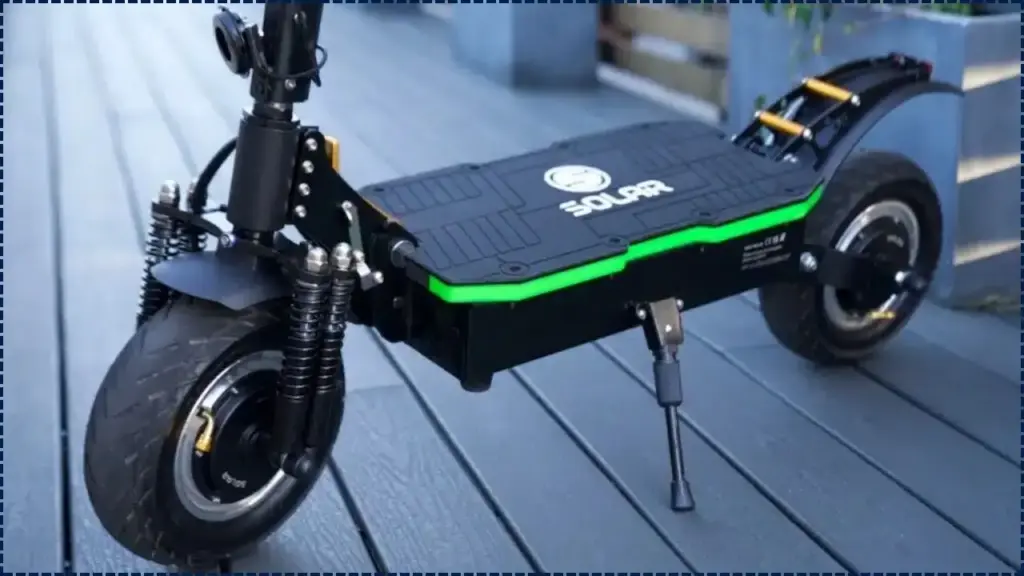
The The Solar P1 Pro Scooter combination of performance and affordability positions the model in a unique segment between commuter scooters and entry-level electric motorcycles.
Manufactured by Solar Scooters, the P1 Pro is designed for riders seeking higher speed and extended range without crossing into motorcycle territory. Its specifications — dual 2,000-watt motors, a 60V lithium-ion battery, and hydraulic disc brakes — place it among the most powerful scooters available under $2,500.
The Solar P1 Pro Scooter
| Feature | Detail |
|---|---|
| Top Speed | Up to 50 mph |
| Motor Power | Dual 2,000W (4,000W peak) |
| Battery | 60V 26Ah lithium-ion |
| Estimated Range | Up to 50 miles |
| Brakes | Dual hydraulic disc |
| Price | Approximately $1,999 |
| Weight | ~90 lbs |
| Max Rider Capacity | 330 lbs |
The Solar P1 Pro Scooter: A New Tier of Electric Scooter Performance
Most electric scooters marketed in the United States fall into two broad categories: lightweight commuter models capped at 15–25 mph, and high-performance units exceeding 40 mph but priced above $3,000. The Solar P1 Pro attempts to bridge that gap.
With a claimed 50 mph top speed, the scooter approaches performance levels associated with low-displacement gas-powered scooters or small electric motorcycles. However, it remains classified as an electric scooter in its design, lacking features such as VIN registration, turn signals, or full motorcycle suspension systems.
Independent reviewers from outlets including Rider Guide and Electric Scooter Guide have confirmed that the P1 Pro achieves speeds near its advertised maximum under controlled conditions, though real-world performance varies by rider weight and terrain.
The Engineering Behind the Speed
Dual Motor System
The P1 Pro uses two brushless 2,000-watt motors mounted in each wheel. Dual motor systems improve acceleration and hill climbing by distributing torque across both wheels.
This setup enables faster takeoff compared to single-motor scooters and helps maintain performance on inclines.
Battery Architecture
The 60V 26Ah lithium-ion battery pack uses high-density cells commonly found in mid-tier electric mobility products. At full charge, the scooter advertises up to 50 miles of range, though sustained high-speed riding typically reduces that figure significantly. Charging time ranges from 8 to 10 hours using a standard charger.
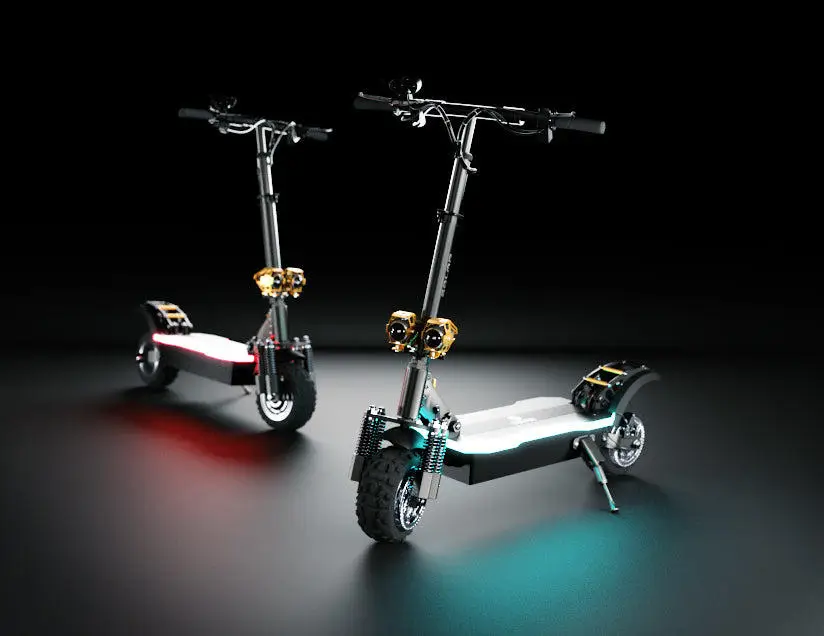
Safety Considerations at Higher Speeds
Speed capability introduces safety considerations. According to data from the U.S. Consumer Product Safety Commission (CPSC), e-scooter injuries have increased in recent years, particularly in urban areas. At 50 mph, protective gear becomes essential.
The P1 Pro includes hydraulic disc brakes, which offer stronger stopping power than cable-operated mechanical systems. The braking system is designed to manage higher speeds, though stopping distance still depends heavily on rider skill and road conditions.
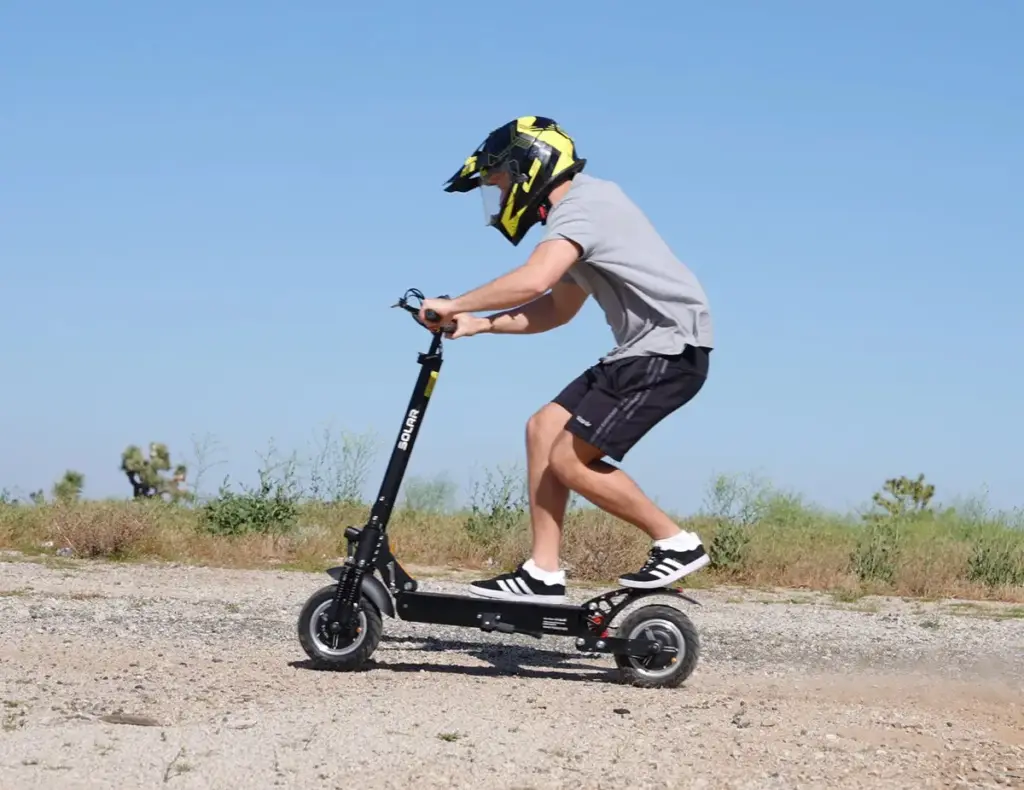
Transportation safety analysts note that riders operating scooters at speeds above 30 mph should wear full-face helmets and protective gear typically associated with motorcycle riding.
Legal and Regulatory Landscape
E-scooter regulations vary widely across U.S. states and municipalities. In many jurisdictions, electric scooters are legally limited to 15–20 mph for public road use. A scooter capable of 50 mph may exceed legal limits for standard scooter classification.
In some states, vehicles capable of exceeding 30 mph may require registration or fall under moped classifications. Prospective buyers are advised to verify local laws before operating high-performance scooters on public roads.
Transportation policy expert Dr. Michael Manville of UCLA has previously noted that micromobility regulation often lags behind technological capability, creating gray areas for high-powered models.
Total Cost of Ownership
Upfront vs. Operating Costs
At $1,999, the P1 Pro is less expensive than most electric motorcycles but more costly than entry-level commuter scooters.

However, operating costs remain low:
- Electricity per charge typically costs under $2 in most U.S. markets
- Maintenance is limited to brake pads, tires, and battery health
- No fuel costs or oil changes
Compared to gas scooters, the electric model reduces long-term fuel expenses and emissions.
Environmental Impact
Zero Tailpipe Emissions
The Solar P1 Pro produces no direct tailpipe emissions. For urban commuters, this reduces localized air pollution compared to gasoline-powered two-wheelers.
However, environmental impact depends on electricity sources. In regions where power grids rely heavily on renewables, lifecycle emissions are significantly lower.
Battery Lifecycle and Recycling
Lithium-ion batteries typically last between 500 and 1,000 charge cycles. At average commuting rates, this can equate to several years of use.
Battery recycling remains an evolving sector in the United States. Industry experts stress the importance of proper recycling to minimize environmental impact from battery disposal.
Market Context: Where the P1 Pro Fits
The global micromobility market is projected to grow steadily over the next decade, according to research from McKinsey & Company and Deloitte.
While most growth focuses on shared urban scooters and commuter models, a niche segment of high-performance scooters is expanding among enthusiasts and suburban commuters.
The P1 Pro competes with models such as:
- Dualtron Thunder
- Kaabo Wolf Warrior
- Zero 10X
However, those models typically retail for $2,500 to $3,500. Solar Scooters appears to target riders who want speed without entering premium price territory.
Practical Considerations
Weight and Portability
At approximately 90 pounds, the P1 Pro is heavier than many commuter scooters. It may not be ideal for users who need to carry their scooter up stairs or onto public transit.
Warranty and Durability
The manufacturer offers limited warranty coverage on battery and motor components, though buyers should confirm exact terms at purchase. Durability over multi-year use remains dependent on riding conditions and maintenance.
Insurance and Liability
Unlike electric bicycles, electric scooters are not universally covered by standard homeowners or renters insurance policies. Some insurance providers classify high-speed scooters similarly to mopeds. Riders may need separate coverage in certain states.
Consumer Tradeoffs
The P1 Pro offers significant advantages:
- High speed
- Competitive price
- Strong braking system
- Long advertised range
However, tradeoffs include:
- Regulatory uncertainty
- Weight
- Reduced portability
- Potential insurance complexity
Consumers must weigh speed against practicality.
The Broader Micromobility Debate
Urban planners continue debating how high-speed scooters fit into city transportation systems. Micromobility advocates argue that electric scooters reduce congestion and emissions. Critics caution that infrastructure has not kept pace with higher-powered devices.
The Solar P1 Pro represents a growing category of personal electric vehicles that challenge traditional transportation classifications.
Related Links
Solar Biohybrids: A 94% Efficient Solution for Nuclear-Tainted Water
The Solar P1 Pro occupies a distinct niche in the electric mobility market. With a 50 mph capability and a sub-$2,000 price tag, it pushes performance boundaries while remaining accessible compared to electric motorcycles.
Whether it becomes a mainstream commuter tool or remains an enthusiast device may depend on regulation, infrastructure, and rider adoption.
As micromobility continues evolving, the balance between speed, sustainability, and safety will shape how devices like the P1 Pro integrate into American transportation systems.