A new engineering design could change how industries treat one of their most difficult waste streams. Researchers have developed a solar moving-bed pyrolysis reactor capable of purifying industrial waste salts using concentrated solar energy instead of fossil fuels.
The concept, described in the peer-reviewed journal Energy Conversion and Management, combines solar thermal technology with a continuous moving-bed reactor to break down organic contaminants in waste salts. Scientists say the design could reduce energy use and carbon emissions in a process that traditionally requires extremely high temperatures generated by fossil fuels.
Industrial waste salts are produced by sectors ranging from petrochemicals to pharmaceuticals. Treating them safely remains costly and energy-intensive. The new reactor design suggests that renewable heat sources—particularly concentrated solar energy—could provide a cleaner alternative while enabling salt recycling and reducing hazardous waste disposal.
Waste Salt Treatment Breakthrough
| Key Fact | Detail |
|---|---|
| Technology | Solar moving-bed pyrolysis reactor for waste salt purification |
| Solar system | Uses planar mirrors and parabolic trough concentrators |
| Organic removal | Residual contamination reduced to <2 percent |
| Daily processing | Up to ~82 kg/day under peak solar conditions |
The Global Challenge of Waste Salt
The need for better waste-salt treatment technologies is growing rapidly. Industrial chemical processes generate vast quantities of salt byproducts. These salts often contain organic compounds, heavy metals, or other pollutants that make them unsuitable for direct disposal.
According to environmental engineering studies, millions of tons of waste salt are generated each year worldwide, particularly in chemical manufacturing and pharmaceutical production. The waste typically accumulates during wastewater treatment and solvent recovery operations.
Improper disposal can contaminate soil and water resources. As a result, regulatory authorities in many countries require companies to treat contaminated salt before disposal or reuse. Traditional disposal options include:
- Landfilling
- Incineration
- Thermal treatment such as pyrolysis
Each of these methods has drawbacks, including high cost, large energy consumption, and environmental risks.
How Pyrolysis Removes Contaminants
Pyrolysis is one of the most widely used methods for treating organic-contaminated salt waste. The process involves heating materials to temperatures typically between 400 °C and 800 °C in the absence of oxygen. Under these conditions, organic contaminants break down into smaller molecules that can be removed as gases or condensed liquids.
Pyrolysis can remove more than 99 percent of organic compounds, leaving behind purified inorganic salt that may be reused in industrial processes.
However, achieving these high temperatures requires large energy inputs. Conventional pyrolysis reactors are powered by fossil fuels such as natural gas, increasing operational costs and greenhouse-gas emissions.
This challenge has prompted researchers to explore renewable alternatives.
Waste Salt Treatment Breakthrough: Solar Moving-Bed Pyrolysis Reactor
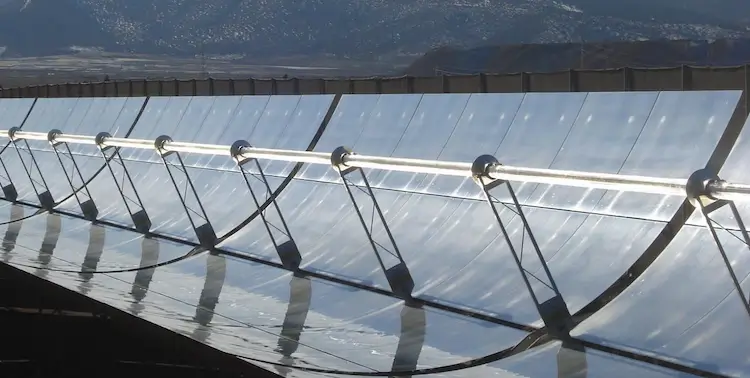
The solar moving-bed pyrolysis reactor offers one such alternative. Instead of burning fossil fuels, the system uses concentrated sunlight to generate the heat needed for pyrolysis reactions. The reactor integrates three major components:
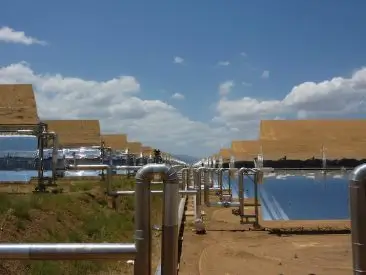
- Solar Concentration System: Planar mirrors and parabolic trough concentrators reflect and focus sunlight onto the reactor chamber.
- Moving-Bed Reactor Chamber: Waste salt flows downward through a vertical reactor column where it is heated by the concentrated solar energy.
- Thermal Recovery System: Waste heat from the process is captured and reused to improve energy efficiency.
Because the reactor operates in a continuous flow mode, untreated salt enters the top while purified salt exits the bottom. This design allows steady industrial processing rather than batch-based treatment cycles.
Engineering Innovations Behind the Reactor
One of the most notable aspects of the reactor design is its integration of solar thermal technology with a rotating reactor chamber. The rotating mechanism helps distribute heat evenly around the reactor, reducing temperature gradients that could otherwise damage equipment or reduce reaction efficiency.
Researchers also implemented a counter-current heat exchange system, allowing heat from outgoing treated salt to preheat incoming waste salt. Engineering simulations suggest that this design significantly improves thermal efficiency and helps maintain stable reactor temperatures even as solar radiation fluctuates.
Performance Results From the Study
Researchers modeled the reactor’s performance under various environmental conditions. Under peak solar conditions, the system achieved:
- 82.66 kg of waste salt processing per day in summer
- 42.17 kg per day during winter months
Seasonal variation reflects changes in solar radiation intensity. The study also found that raising the reactor inlet temperature by 200 Kelvin increased daily throughput by roughly 39 percent. Adding heat recovery improved processing capacity by up to 40 percent, highlighting the importance of thermal integration in solar-driven chemical reactors.
Expert Perspectives on Solar Pyrolysis
Experts say the technology reflects broader efforts to decarbonize industrial heat systems. “Industrial heat accounts for a large share of global energy consumption,” said Dr. Daniel M. Kammen, an energy systems researcher at the University of California, Berkeley, in previous analyses of renewable heat technologies.

“Solar thermal processes offer a pathway to replace fossil fuels in high-temperature applications.” Environmental engineers note that solar-powered reactors could also help reduce the environmental impact of hazardous waste treatment.
“Combining renewable energy with waste management technologies is an important step toward sustainable industrial systems,” said Dr. Wei Zhang, a chemical engineering researcher specializing in thermochemical processes.
Comparing Solar Pyrolysis With Conventional Methods
The solar moving-bed pyrolysis reactor differs significantly from conventional waste-salt treatment technologies.
| Method | Energy Source | Environmental Impact |
|---|---|---|
| Incineration | Fossil fuels | High emissions |
| Landfill disposal | Minimal energy | Long-term contamination risk |
| Conventional pyrolysis | Fossil fuel heating | High energy cost |
| Solar pyrolysis | Concentrated sunlight | Low carbon emissions |
While solar pyrolysis offers environmental advantages, its economic feasibility depends on several factors, including solar irradiance, equipment cost, and operational scale.
Economic Considerations
The cost of installing solar thermal systems remains a key challenge. Large solar concentrators and reactor systems require significant upfront investment. However, operating costs may be lower because sunlight provides free thermal energy.
Economists studying solar thermal technology suggest that long-term cost savings may offset the initial capital investment, especially in regions with strong sunlight.
Industries located in sun-rich regions such as the Middle East, North Africa, and parts of the southwestern United States could be particularly well-suited to solar pyrolysis systems.
Policy and Environmental Implications
Governments worldwide are introducing stricter regulations on industrial waste disposal and carbon emissions. Technologies that reduce emissions while treating hazardous waste could help industries comply with environmental regulations.
Solar-powered waste treatment could also support broader circular economy strategies, in which industrial waste materials are recycled and reused rather than discarded.
In the case of waste salt, purification may allow recovered salts to be reused in manufacturing processes, reducing the need for new raw materials.
Challenges to Large-Scale Deployment
Despite its promise, several obstacles remain before solar pyrolysis can be widely adopted.
Solar Variability
Solar radiation fluctuates due to weather and seasonal changes. Continuous industrial processes may require thermal storage systems or backup heating.
Reactor Scaling
The prototype reactor processes tens of kilograms per day. Industrial plants may require systems capable of processing hundreds or thousands of kilograms daily.
Infrastructure Requirements
Large solar concentrator arrays require space and precise engineering, which may limit deployment in densely industrialized areas. Researchers say future designs could integrate thermal energy storage or hybrid heating systems to maintain stable temperatures during cloudy periods.
Expanding the Use of Solar Thermochemical Systems
The solar moving-bed pyrolysis reactor is part of a growing field known as solar thermochemical engineering. Researchers are exploring similar solar-driven systems for:
- Hydrogen production
- Biomass gasification
- Carbon capture processes
- Waste-to-fuel conversion
These technologies aim to replace fossil-fuel heat sources with renewable energy while maintaining high-temperature industrial reactions.
Future Research Directions
The next step for researchers is to validate the reactor design in pilot-scale demonstration plants. Future studies will likely focus on:
- Improving optical concentrator efficiency
- Integrating thermal storage systems
- Scaling reactor throughput
- Testing long-term operational reliability
If successful, the technology could become part of a new generation of renewable industrial reactors.
Related Links
Ripples in Spacetime: Can a 100-Solar-Mass Black Hole Merger Trigger Gamma-Ray Flashes?
The Battle for Plug-in Solar: Why Utilities Are Resisting Easy-to-Use Home Systems
The development of a solar moving-bed pyrolysis reactor illustrates how renewable energy can transform traditionally fossil-fuel-intensive industrial processes. While engineering challenges remain, researchers believe solar-powered waste treatment could help industries reduce emissions, recover valuable materials, and move toward more sustainable production systems.
FAQs
What is waste salt?
Waste salt is a byproduct of industrial chemical processes that often contains organic pollutants or other contaminants.
What does pyrolysis do?
Pyrolysis uses high temperatures without oxygen to break down organic materials into simpler compounds.
Why use solar energy for pyrolysis?
Solar thermal systems provide high temperatures without burning fossil fuels, reducing emissions.
What is a moving-bed reactor?
It is a reactor where solid materials move continuously through a heated chamber for steady processing.