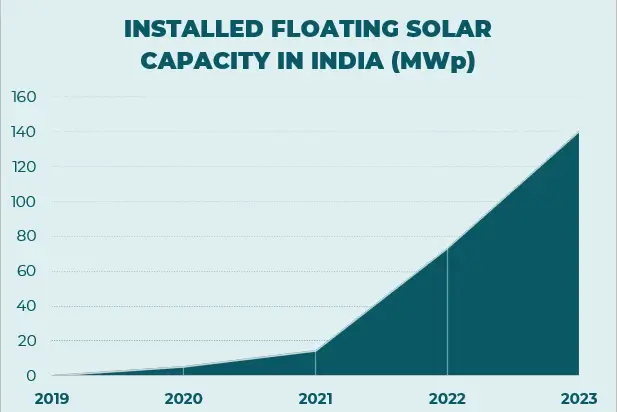
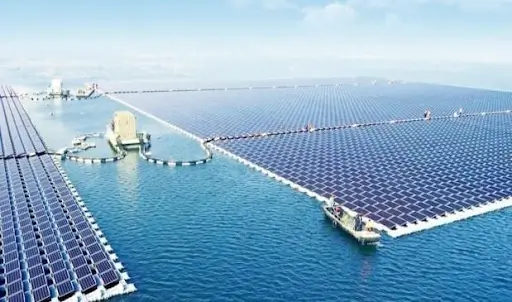
India is rapidly expanding floating solar farms, installing millions of panels on reservoirs and water bodies to increase renewable energy capacity without using scarce land.
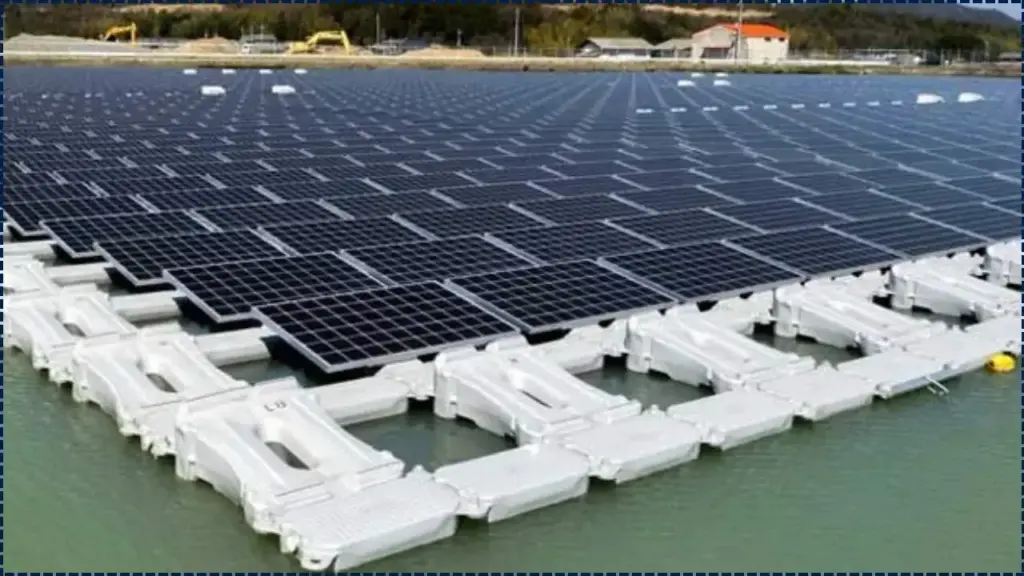
Supported by government policy, falling solar costs, and rising electricity demand, the technology is emerging as a key solution for balancing energy expansion with environmental and land-use constraints.
Floating Solar Farms in India: A Strategic Response to Land Scarcity
The expansion of Floating Solar Farms—floating solar farms—**reflects India’s effort to overcome one of the biggest barriers to renewable energy growth: land availability.
Large-scale solar parks require significant land, often leading to conflicts with agriculture and local communities. Floating solar systems, deployed on reservoirs and dams, eliminate the need for land acquisition.
According to the Ministry of New and Renewable Energy (MNRE), states have been encouraged to identify water bodies for solar deployment, signalling strong policy backing. India’s growing electricity demand, driven by industrialisation and urbanisation, further reinforces the need for scalable solutions that minimise land use.
How Floating Solar Systems Work
Floating solar installations consist of photovoltaic panels mounted on buoyant structures anchored to the bottom or edges of water bodies.
Core Components
- Floating platforms made of durable polymer materials
- Anchoring systems to stabilise panels
- Electrical connections linking to onshore substations
These systems are designed to adapt to changing water levels, ensuring stable operation across seasons.
Efficiency Gains, Water Conservation, and Performance
Floating solar offers measurable operational advantages over land-based systems.
Cooling Effect Enhances Efficiency
Panels on water operate at lower temperatures, improving efficiency and electricity output compared to ground-mounted systems.
Water Conservation
Floating panels reduce evaporation by covering portions of reservoirs. This benefit is particularly valuable in regions facing water scarcity.
Reduced Dust and Soiling
Water-based installations experience less dust accumulation, reducing cleaning requirements and maintenance costs.
Solar-Hydro Hybrid Systems: A Key Advantage
One of the most significant advantages of floating solar is its integration with hydropower infrastructure.
Complementary Energy Generation
Floating solar can be installed on reservoirs associated with hydroelectric plants, enabling hybrid energy systems.
- Solar generates power during the day
- Hydropower provides flexibility and storage
This combination improves grid stability and allows better utilisation of existing transmission infrastructure. Energy experts describe solar-hydro hybrids as a critical innovation for renewable integration.
Major Projects Driving India’s Floating Solar Expansion
India has launched several large-scale floating solar projects.
Omkareshwar Floating Solar Park (Madhya Pradesh)
With a planned capacity of 600 MW, this project is expected to be one of the largest globally.
Ramagundam Floating Solar Plant (Telangana)
Developed by National Thermal Power Corporation (NTPC), this 100 MW project demonstrates integration with existing energy infrastructure.
State-Level Expansion
States including Uttar Pradesh, Maharashtra, and Kerala are developing projects on reservoirs, irrigation systems, and dams. These projects indicate a transition from pilot initiatives to large-scale deployment.
Tariffs, Bidding Trends, and Cost Evolution
Floating solar tariffs have been gradually declining as the technology matures.
Cost Comparison
Floating solar projects typically cost more upfront due to:
- Floating structures
- Anchoring systems
- Installation complexity
However, competitive bidding has reduced tariffs over time.
Long-Term Cost Outlook
Analysts expect costs to decline further as:
- Manufacturing scales
- Technology improves
- Supply chains mature
In some cases, savings from avoided land acquisition offset higher capital costs.
Private Sector and Investment Participation
Private developers are playing a significant role in scaling floating solar.
Key Participants
- Independent power producers (IPPs)
- Engineering, procurement, and construction (EPC) firms
- International investors
Public-private partnerships are increasingly used to finance large projects. Investment interest is driven by:
- Strong policy support
- Growing demand for renewable energy
- Long-term power purchase agreements
Engineering, Installation, and Maintenance Challenges
Floating solar projects involve unique technical challenges.
Engineering Complexity
- Designing stable anchoring systems
- Managing wind and wave loads
- Ensuring electrical safety over water
Maintenance Considerations
- Accessing panels via boats or floating walkways
- Monitoring structural integrity
- Managing corrosion risks
Despite these challenges, operators report lower dust-related maintenance compared to land systems.
Environmental and Biodiversity Considerations
Floating solar projects have both environmental benefits and risks.
Benefits
- Reduced land disturbance
- Lower carbon emissions
- Water conservation
Risks
- Impact on aquatic ecosystems
- Reduced sunlight penetration affecting algae and fish
- Disruption to fishing activities
Environmental experts emphasise the need for site-specific assessments and stakeholder consultation.
Climate Resilience and Extreme Weather Risks
Floating solar systems must withstand environmental stress.
Key Risks
- High winds and storms
- Flooding and fluctuating water levels
- Long-term material degradation
Developers are incorporating advanced materials and flexible anchoring systems to improve resilience.
Energy Storage Integration
Floating solar is increasingly being combined with battery storage systems.
Benefits of Integration
- Smoothing power output
- Enhancing grid stability
- Enabling energy use during non-sunny hours
Energy storage is expected to play a critical role in maximising the value of floating solar installations.
Community Impact and Social Considerations
Floating solar projects can create economic opportunities, including local employment and infrastructure development. However, concerns from fishing communities and local stakeholders must be addressed. Experts stress that inclusive planning and fair compensation are essential for long-term success.
Global Context: India’s Position in Floating Solar
Floating solar is gaining traction worldwide, particularly in countries with land constraints. India is well positioned due to:
- Large number of reservoirs
- High solar irradiation
- Strong policy support
Studies suggest that even partial utilisation of India’s reservoirs could generate substantial electricity capacity.
Related Links
Bifacial Solar Technology: How Snow Reflection Can Boost Energy Yield by 30%
Silicon is Out? Why Perovskite Tandem Cells are Breaking Efficiency Records in 2026
Future Outlook: Scaling Floating Solar Across India
Floating solar is expected to grow significantly over the next decade.
Key Drivers
- Government policy support
- Falling technology costs
- Increasing energy demand
- Climate commitments
Industry analysts predict that floating solar could become a mainstream component of India’s renewable energy mix.
Floating solar farms are emerging as a practical and scalable solution to India’s energy and land challenges. By utilising reservoirs and integrating with existing infrastructure, the technology offers a pathway to expand renewable capacity efficiently.
As projects scale and technology advances, floating solar is set to play a central role in India’s clean energy future.