China’s solar industry, the backbone of global renewable energy supply, is entering a period of slower growth as domestic reforms, trade tensions, and weak demand reshape the market.
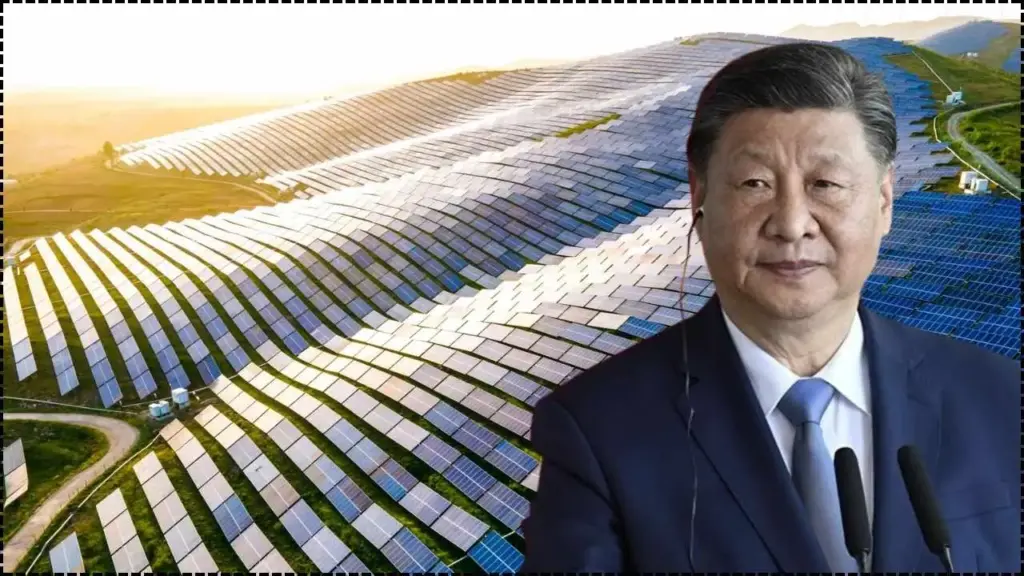
The China slowdown is already affecting global supply chains, pricing, and clean energy goals, raising concerns among governments and investors worldwide.
World’s Biggest Solar Producer
| Key Fact | Detail |
|---|---|
| Global dominance | China produces over 80% of solar components |
| Overcapacity | Output capacity nearly double global demand |
| Price crash | Solar module prices fell over 50% in recent years |
| Policy shift | Subsidies reduced, expansion controlled |
The China slowdown marks a turning point in the global solar industry. While it introduces uncertainty, it also signals a shift toward a more diversified and resilient energy system. The outcome will shape the future of clean energy worldwide.
China Slowdown Reshapes the Global Solar Landscape
For years, China’s solar industry expanded at an extraordinary pace, driving down global prices and making solar power widely accessible. Today, that rapid growth is slowing.
The China slowdown reflects a shift from aggressive expansion to controlled development. Analysts say this transition is driven by both internal policy changes and external geopolitical pressures.
“China built the world’s solar backbone, but now it must stabilize it,” said an energy economist at a leading policy institute.
Overcapacity and Price Wars Hit Industry Profits
Supply Glut Forces Market Correction
Chinese manufacturers are producing far more solar panels than the world can use. This oversupply has triggered intense price competition. Major firms like LONGi Green Energy and Trina Solar have reported declining margins as prices continue to fall.
Some smaller manufacturers are operating at losses or shutting down entirely. “Overcapacity is the single biggest challenge facing the sector,” said a senior analyst at BloombergNEF. “It’s forcing consolidation.”
Beijing’s Policy Shift Signals a New Phase
From Growth to Stability
China’s government is stepping in to control the market. Authorities have reduced subsidies, tightened approvals for new factories, and discouraged excessive expansion. This marks a major shift from earlier policies that fueled rapid growth.
Officials say the goal is to create a more sustainable industry. However, these measures are also slowing investment and production growth.
Trade Wars and Energy Security Redefine Markets
Global Push to Reduce Dependence on China
Countries are increasingly prioritizing energy independence. The United States has introduced incentives for domestic manufacturing through policies like the Inflation Reduction Act. Europe is also investing heavily in local solar production.
At the same time, China is considering restrictions on exporting key solar manufacturing technologies. “This is no longer just about energy—it’s about strategic control,” said a policy expert at the Council on Foreign Relations.
Supply Chain Breakdown: Why China Still Matters
China dominates every stage of solar production:
- Polysilicon (raw material).
- Wafers.
- Cells.
- Finished modules.
Even as countries attempt to diversify, most still rely on Chinese upstream components. “Replacing China in the supply chain is extremely difficult,” said an industry consultant. “It will take years, not months.”
Impact on India, U.S., and Europe
India
India is expanding its solar manufacturing capacity but still depends heavily on Chinese imports. The slowdown may create opportunities for domestic growth, but also risks supply disruptions.
United States
The U.S. is accelerating domestic production. However, higher costs compared to China may slow deployment in the short term.
Europe
Europe is investing in local manufacturing but faces challenges due to higher energy and labor costs.
Financial Markets and Industry Shakeout
The China slowdown is also affecting global markets. Solar company stocks have become volatile as investors react to falling prices and uncertain demand. Analysts expect consolidation, with stronger firms acquiring weaker competitors.
“Only the most efficient players will survive,” said a market strategist.
Jobs and Economic Consequences
The slowdown is beginning to affect employment in China’s solar sector. Factory closures and reduced production are leading to job losses in some regions.
At the same time, new jobs are being created in other countries as manufacturing shifts. This redistribution of jobs reflects a broader realignment of the global energy economy.
Related Links
AI-Optimized Sun Tracking: How Machine Learning is Boosting Solar Farm Yield by 15%
This One Solar Tax Credit Could Save You Over $7,500 — But Most Americans Don’t Even Know It Exists!
Climate Goals at Risk—or Opportunity?
Solar energy is critical to global climate targets. Any disruption in supply or increase in costs could slow progress.
However, some experts argue that diversification could strengthen the system in the long run. “A more distributed supply chain may be less efficient, but it’s more resilient,” said a renewable energy expert.
What Comes Next
China is unlikely to lose its dominant position soon. However, its role is evolving. Tahe industry is moving toward a more balanced model, with slower growth and greater global participation. “The China slowdown is not a collapse,” said an industry analyst. “It’s a reset.”
FAQs
Q1: Why is China slowing its solar production?
Due to overcapacity, policy changes, and global trade pressures.
Q2: Will solar prices increase globally?
Possibly in the long term if supply chains fragment.
Q3: Can other countries replace China?
Not quickly. China still dominates key parts of the supply chain.