
India’s renewable energy expansion is entering a decisive phase. Under the evolving Floating vs. Ground-Mounted strategy, policymakers are increasingly turning to floating solar systems on reservoirs to complement ground-mounted installations.
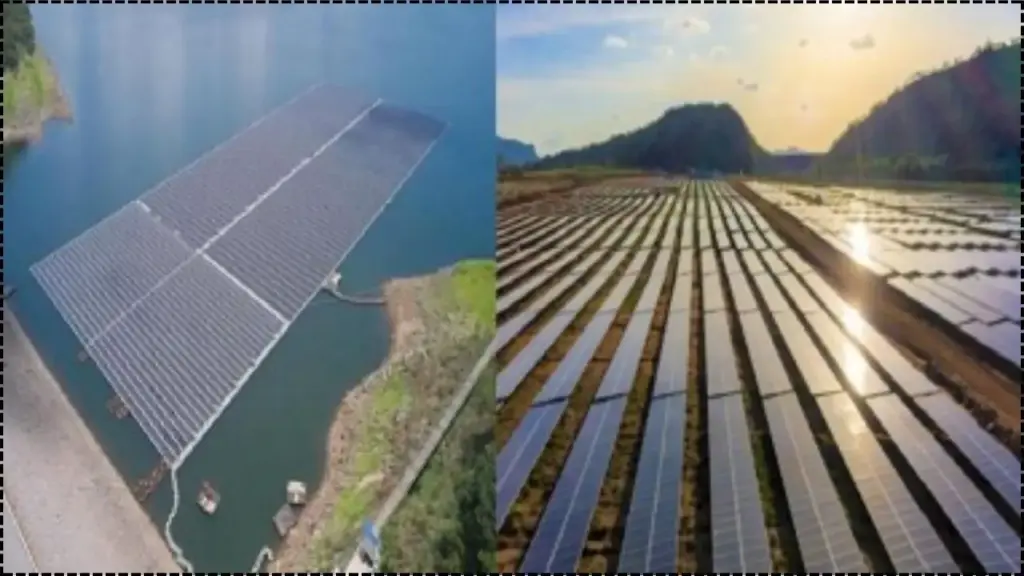
This shift is driven by land constraints, efficiency gains, and the need to accelerate capacity addition to meet India’s 2030 clean energy targets.
India’s Renewable Targets and Structural Constraints
India has committed to achieving 500 GW of non-fossil fuel capacity by 2030, requiring rapid deployment of solar infrastructure at scale. However, land availability is emerging as a critical constraint. Large-scale solar parks require thousands of acres, often leading to:
- Land acquisition delays.
- Competing land-use priorities.
- Environmental and social concerns.
These constraints are pushing policymakers toward alternative deployment models, particularly floating solar.
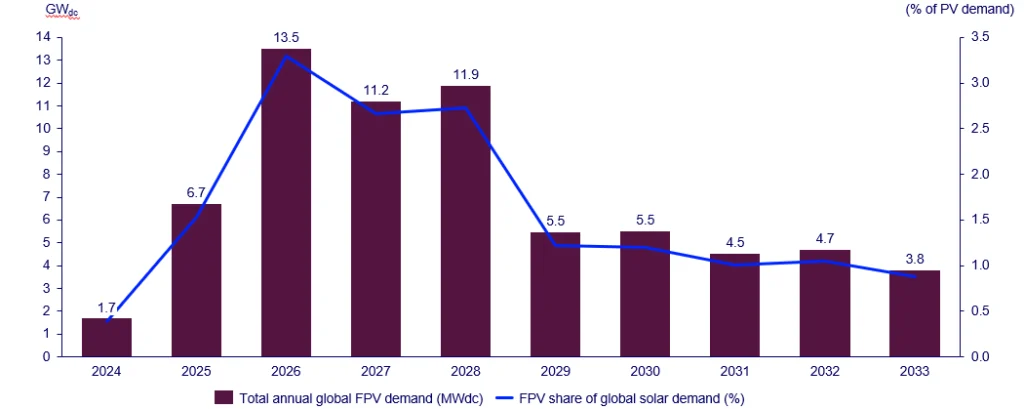
Understanding Floating vs. Ground-Mounted: Floating vs Ground-Mounted Solar
The Floating vs. Ground-Mounted debate reflects two complementary solar deployment strategies.
Ground-Mounted Solar Systems
Ground-mounted solar remains the backbone of India’s renewable capacity.
Strengths:
- Lower capital cost.
- Mature ecosystem.
- Ease of scaling.
Limitations:
- High land requirement.
- Environmental footprint.
- Regulatory hurdles in land acquisition.
Floating Solar Systems
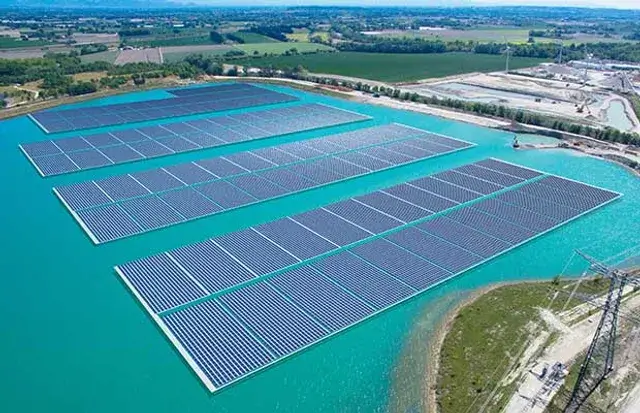
Floating solar systems use buoyant platforms to install panels on water bodies such as reservoirs and dams.
Strengths
- No land requirement..
- Higher efficiency due to cooling.
- Reduced evaporation losses.
- Integration with existing infrastructure.
Limitations
- Higher upfront costs.
- Technical complexity.
- Site-specific constraints.
Why Reservoirs Are Emerging as a Strategic Frontier
Solving Land Scarcity
Reservoirs offer large, underutilised surfaces that can host solar installations without competing with agriculture or urban land use. India’s extensive network of dams and reservoirs creates a significant opportunity for floating solar deployment.
Efficiency Gains and Performance Benefits
Floating solar panels benefit from natural cooling, which improves performance by approximately 5–15% compared to land-based systems. Lower operating temperatures reduce energy losses and extend equipment lifespan.
Water Conservation and Resource Efficiency
Floating solar installations can significantly reduce evaporation, helping conserve water in reservoirs used for irrigation and drinking supply. This dual-use model enhances overall resource efficiency.
Hybridisation with Hydropower
Floating solar can be integrated with hydropower plants, creating hybrid systems that improve reliability. These systems:
- Share grid infrastructure.
- Balance intermittent solar output.
- Enhance energy dispatch flexibility.
Energy experts consider such hybridisation critical for future grid stability.
Real-World Deployment and Scaling Potential
India has already begun scaling floating solar projects across multiple states.
Key Projects
- Ramagundam Floating Solar Project.
- Rihand Reservoir Solar Installation.
- Omkareshwar Floating Solar Project.
These projects demonstrate technical feasibility and scalability across different geographies.
Untapped Potential and Strategic Importance
Research suggests that India could generate up to 280 GW of electricity from floating solar across its reservoirs. This represents a substantial share of the country’s future renewable capacity. Despite this, current deployment remains limited, highlighting a large untapped opportunity.
Grid Economics and System Value
Floating solar offers unique advantages in terms of grid economics.
Key Benefits
- Reduced transmission losses through proximity to hydropower infrastructure.
- Better utilisation of existing substations.
- Improved load balancing.
These factors contribute to lower system-wide costs, even if project-level costs are higher.
Energy Storage and Future Integration
Floating solar systems are increasingly being considered alongside battery storage solutions.
This combination can:
- Provide firm power supply.
- Reduce intermittency.
- Support peak demand.
Energy storage integration is expected to play a critical role in scaling renewable energy systems.
Financing and Investment Trends
Floating solar projects typically cost more than ground-mounted systems due to specialised equipment. However, investors are showing growing interest due to:
- Long-term efficiency gains.
- Reduced land acquisition risks.
- Policy support.
Green financing instruments and infrastructure funds are expected to play a key role in scaling deployment.
Environmental and Biodiversity Considerations
While floating solar reduces land impact, it introduces new environmental considerations.
Potential Impacts
- Reduced sunlight penetration in water.
- Changes in aquatic ecosystems.
- Effects on biodiversity.
Experts recommend site-specific environmental assessments to minimise risks.
Climate Resilience and Adaptation Benefits
Floating solar systems can enhance climate resilience.
They are less exposed to:
- Dust accumulation.
- Land degradation.
- Heat stress.
However, they must be engineered to withstand:
- Extreme weather events.
- Water level fluctuations.
Resilient design will be essential in a changing climate.
Regulatory and Policy Challenges
Despite growing interest, regulatory frameworks for floating solar are still evolving.
Key Issues
- Lack of standardised guidelines.
- Approval processes across multiple agencies.
- Environmental clearance requirements.
Policymakers are working to streamline approvals and provide clarity to developers.
Global Comparisons and Lessons
Countries such as China, Japan, and South Korea have advanced floating solar deployment.
Key lessons include:
- Importance of policy support.
- Need for technological innovation.
- Role of public-private partnerships.
India is adapting these lessons to its own context.
Social and Community Impact
Floating solar projects generally face fewer land conflicts but still require community engagement.
Key Concerns
- Impact on fishing activities.
- Access to water resources.
- Local employment opportunities.
Inclusive planning can help ensure equitable outcomes.
Industry Challenges and Technology Gaps
Floating solar remains a relatively new sector with several challenges:
- Limited domestic manufacturing capacity.
- Lack of standardisation.
- Higher maintenance complexity.
Addressing these gaps will be essential for scaling the industry.
Strategic Role in India’s 2030 Targets
Floating solar is emerging as a critical complement to ground-mounted systems.
Combined Strategy
- Ground-mounted solar provides scale.
- Floating solar optimises resource utilisation.
Together, they can accelerate India’s progress toward its renewable energy goals.
Related Links
Hybrid Hydro-Solar: How Dam Reservoirs are Doubling as Massive Solar-Battery Hubs
Floating Solar Farms: How India’s Reservoirs are Becoming the New Powerhouses of Renewable Energy
What Lies Ahead
India’s renewable energy strategy is becoming increasingly diversified. Future developments may include:
- Large-scale deployment of floating solar.
- Integration with storage and hybrid systems.
- Expansion of domestic manufacturing.
- Enhanced policy support.
Experts believe floating solar could become a mainstream component of India’s energy mix within the next decade.
India’s transition to renewable energy is evolving beyond land-based solar projects. Floating solar installations on reservoirs represent a strategic shift that addresses land constraints while offering efficiency and environmental benefits.
If supported by strong policy frameworks, investment, and technological innovation, floating solar could play a decisive role in helping India meet its 2030 renewable energy targets and reshape its energy landscape.