
India’s government free solar panels scheme for BPL families—launched under the PM Surya Ghar: Muft Bijli Yojana—aims to expand rooftop solar power while reducing electricity costs for low-income households.
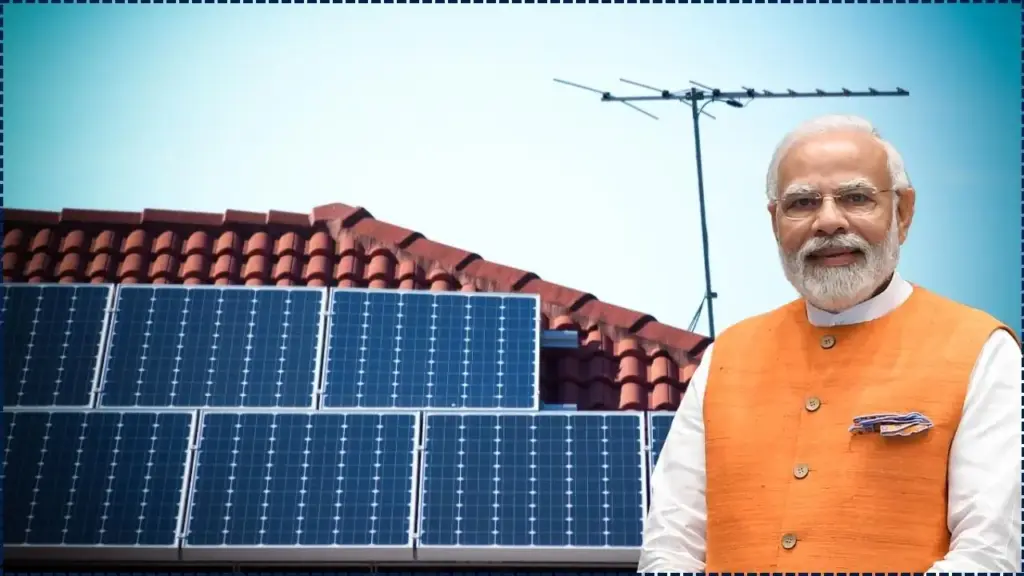
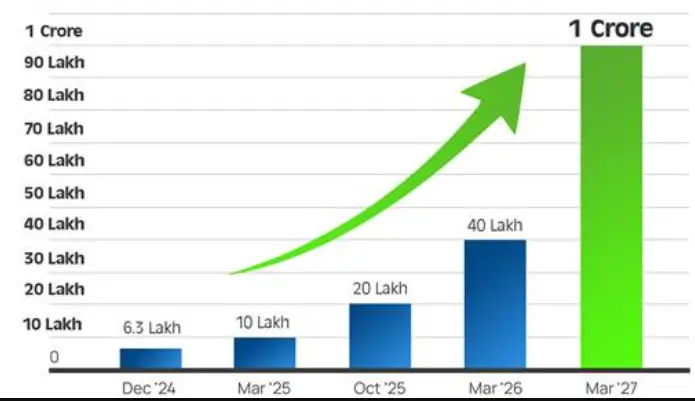
Announced in 2024, the programme seeks to install solar systems in 10 million homes nationwide, allowing families to generate clean electricity and potentially eliminate monthly power bills.
Government Free Solar Panels Scheme for BPL Families Explained
The initiative is part of India’s broader renewable energy transition. The government intends to accelerate rooftop solar adoption while ensuring that low-income households benefit from clean energy.
Prime Minister Narendra Modi announced the programme in February 2024, stating that the scheme would “empower households through solar energy while promoting sustainable development.”
According to the Ministry of New and Renewable Energy (MNRE), the programme has an estimated budget of ₹75,000 crore, making it one of India’s largest residential renewable energy initiatives. Officials say the programme supports two main goals:
- Expanding solar generation capacity across households.
- Reducing electricity expenses for economically weaker families.
India’s Renewable Energy Push and Why the Scheme Matters
India is the world’s third-largest consumer of electricity and has set ambitious climate targets.Under its commitments to the Paris Climate Agreement, India aims to reach 500 gigawatts of non-fossil fuel energy capacity by 2030, according to government policy documents.
Solar power is central to that plan. However, rooftop solar adoption has been slower than expected, especially among low-income households. High installation costs, limited awareness, and financing barriers have historically restricted participation.
Energy analyst Dr. Ajay Mathur, former head of the International Solar Alliance, has noted that rooftop solar expansion requires targeted government support. “Subsidy-driven programmes help reduce entry barriers for households that otherwise cannot afford the upfront cost,” Mathur said during a policy discussion at a renewable energy forum.
Key Features of the Government Free Solar Panels Scheme
The programme offers financial support to households installing rooftop solar systems.
Subsidy Structure
The government provides subsidies depending on system size:
| Solar Capacity | Government Subsidy |
|---|---|
| 1 kW | ₹30,000 |
| 2 kW | ₹60,000 |
| 3 kW | Up to ₹78,000 |
These subsidies reduce the initial installation cost substantially. In many cases, especially for low-income families, the remaining cost may be covered through additional state subsidies or low-interest loans.
Electricity Generation Potential
A typical rooftop system installed under the scheme can produce up to 300 units of electricity per month, according to MNRE estimates. For many households, this may be enough to cover most or all daily electricity needs.
Who Is Eligible to Apply?
The scheme is targeted at residential households, including those classified as Below Poverty Line (BPL). Key eligibility criteria include:
- Applicant must be an Indian citizen.
- Household must own a house with suitable rooftop space.
- A valid electricity connection must exist.
- Applicant must not have previously received a rooftop solar subsidy.
- Households may be required to show income documentation or ration card status to confirm eligibility under welfare programmes.
State governments may introduce additional eligibility rules based on local policies.
Application Guide
Register on the Official Portal
Applicants must first visit the official website:
Users must register using:
- Mobile number
- Electricity consumer number
- State and DISCOM details
An OTP verification process confirms the applicant’s identity.
Submit Application Details
Applicants must provide:
- Address details
- Rooftop information
- Electricity connection information
- Identity documents such as Aadhaar
Photos of the rooftop may also be required.
Technical Approval by DISCOM
The electricity distribution company (DISCOM) reviews the application to confirm that the property is suitable for solar installation.
Officials may inspect the site to evaluate:
- Roof strength
- Solar exposure
- Grid connectivity
Select an Approved Solar Vendor
After approval, applicants can select a government-registered solar installer from the portal. Only certified vendors are allowed to install systems under the scheme to ensure safety and quality standards.
Installation of Rooftop Solar System
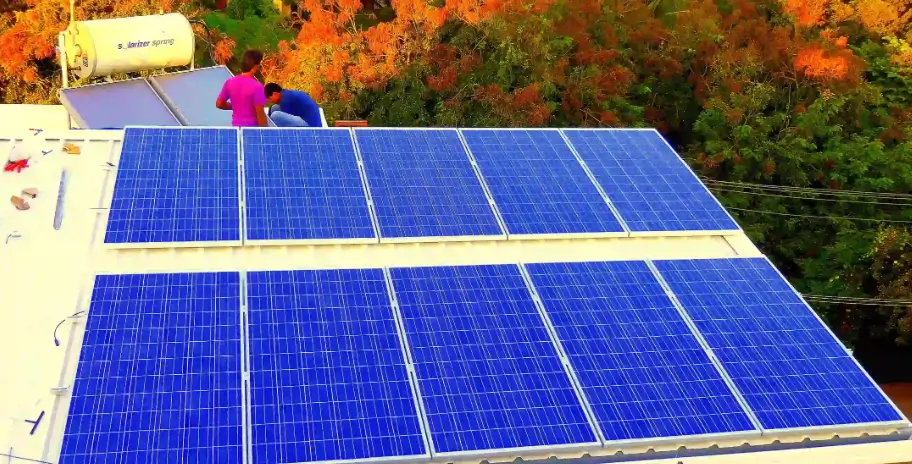
The vendor installs the solar panels, inverter, and wiring system. Installation typically takes several days to two weeks, depending on the location and system size.
Net Metering and Inspection
After installation:
- The DISCOM installs a net meter.
- Authorities inspect the installation.
Net metering allows households to export excess electricity to the grid.
Subsidy Transfer
Once installation is approved, the government transfers the subsidy directly to the applicant’s bank account through Direct Benefit Transfer (DBT). Officials say this process may take around 30 days.
Financial and Social Benefits for Low-Income Families
The scheme could significantly reduce household electricity expenses. Government estimates suggest households could save ₹15,000–₹18,000 annually on electricity bills.
In rural areas where energy access can be inconsistent, rooftop solar may also improve power reliability. Social development researchers note that affordable electricity can improve living conditions by enabling:
- Better lighting
- Use of appliances
- Access to digital services
Economic Impact and Job Creation
Beyond household benefits, the programme could stimulate employment in India’s renewable energy sector.
The Council on Energy, Environment and Water (CEEW) estimates that large-scale rooftop solar expansion could create hundreds of thousands of jobs in manufacturing, installation, and maintenance.
These jobs include:
- Solar technicians
- Electrical engineers
- Manufacturing workers
- System maintenance providers
Implementation Challenges
Despite its potential, experts say the scheme faces several challenges.
Awareness and Outreach
Many rural households remain unaware of rooftop solar programmes. Energy policy experts suggest stronger public awareness campaigns are necessary.
Financing Gaps
Although subsidies cover part of the cost, some households may still struggle with the remaining installation expenses. Financial institutions may need to offer affordable loans or micro-financing options.
Technical Capacity
Rapid installation across millions of homes will require trained technicians and reliable supply chains. India currently has around 11 gigawatts of rooftop solar capacity, according to government data, far below its long-term target.
Safety and Consumer Protection
Officials advise applicants to verify that solar vendors are registered on the official portal. Consumers should also ensure that installations include:
- Certified solar modules
- Government-approved inverters
- Proper electrical safety systems
This helps prevent faulty installations or fraudulent operators.
Related Links
NTPC Green Energy Share Price Target 2025, 2030, 2035, 2040, 2045 और 2050
Should You Invest in Solar Stocks Now? Expert Insights and Strategy
Future Outlook for Rooftop Solar in India
The rooftop solar programme could play a major role in India’s energy transition. If the government achieves its goal of 10 million solar rooftops, analysts say the programme could significantly expand distributed renewable power generation.
Energy experts believe such initiatives also reduce pressure on national power grids while supporting India’s climate commitments.
The government free solar panels scheme for BPL families marks a major step in India’s effort to expand renewable energy access and reduce electricity costs for low-income households. By combining subsidies, rooftop installations, and net-metering incentives, the programme aims to transform how households generate and consume electricity.
If implemented successfully, the initiative could improve energy security, reduce household expenses, and accelerate India’s transition toward a cleaner energy future.