
The Indian Renewable Energy Development Agency (IREDA) has called for a new policy framework to accelerate green infrastructure financing through the GIFT International Financial Services Centre (IFSC).
The agency emphasized that with adequate regulatory and policy support, GIFT IFSC can become a critical platform for mobilizing international capital to meet India’s renewable energy goals. The statement came during a roundtable hosted by IREDA and the Ministry of New and Renewable Energy (MNRE) earlier this week.
IREDA Urges New Policy Framework
| Key Issue | Detail |
|---|---|
| Call for Policy Support | IREDA urges government to craft enabling policies for GIFT IFSC green financing |
| Capital Mobilization Goal | Aim to leverage international funding for renewable energy projects |
| Green Infrastructure Focus | Promoting green bonds, offshore capital, and financing mechanisms |
| IREDA’s Global Reach | IREDA’s subsidiary, IGGEFIL, has sanctioned international green loans |
IREDA’s Push for Green Financing through GIFT IFSC
At the recent roundtable, Pradip Kumar Das, Chairman and Managing Director of IREDA, discussed the importance of GIFT IFSC as a critical lever for tapping global capital to finance India’s green infrastructure projects.
GIFT IFSC, located in Gujarat, is India’s first international financial services hub, offering a conducive regulatory environment to promote foreign investments in sectors like renewable energy, green hydrogen, and electric vehicle infrastructure.
Das highlighted that, despite significant domestic financing for India’s renewable energy sector, India’s clean energy goals require far larger inflows from international markets. The IREDA Global Green Energy Finance IFSC Ltd. (IGGEFIL), a subsidiary created specifically for this purpose, was set up to bridge this funding gap by enabling foreign investment and introducing new green financing tools such as green bonds and sustainability-linked financing.
“The GIFT IFSC is a unique platform with vast untapped potential to channel global capital for India’s renewable energy projects. However, we need an enabling policy framework that includes flexible taxation, risk-sharing mechanisms, and stronger regulatory clarity to attract investors,” Das said during his keynote address.
IREDA officials and industry leaders at the event urged policymakers to streamline rules related to green financing instruments at GIFT IFSC to encourage greater participation from institutional investors, multinational banks, and financial agencies.
Such efforts would provide India with affordable long-term capital for scaling renewable energy projects, including solar, wind, and hydro power.
The Role of GIFT IFSC in Green Financing
The International Financial Services Centres Authority (IFSCA), the body overseeing the development of GIFT IFSC, has created an international platform for Indian financial markets. GIFT IFSC offers a regulatory framework that supports a wide range of financial instruments and services, including capital markets, insurance, and asset management.
In recent years, GIFT IFSC has seen the establishment of a number of international firms that can now access India’s green energy market and related financing tools. IREDA’s strategy to promote green financing involves foreign institutional investors (FIIs) using GIFT IFSC as a gateway for funding projects such as green bonds and sustainability-linked loans.
By offering these financial products at lower costs, IREDA hopes to reduce the barriers for clean energy projects to secure financing at competitive rates. This is especially crucial as renewable energy projects, while environmentally beneficial, often require large upfront capital investments.
According to Sandeep Singh, a senior official at the International Finance Corporation (IFC), “Green finance tools like green bonds have a key role to play in unlocking capital for India’s renewable energy transition. The GIFT IFSC model is poised to be a game-changer for enabling cross-border capital flows into India’s clean energy ecosystem.”
IREDA’s Efforts to Mobilize Global Green Financing
IREDA has already made significant strides in facilitating international financing through IGGEFIL. In a recent development, IGGEFIL sanctioned its first international green loan of USD 22.5 million for a 100 MW solar project in Zambia.
This marks a major milestone for India’s green financing efforts through GIFT IFSC, as IREDA expands its influence beyond the domestic market.
This achievement highlights how IREDA’s subsidiary at GIFT IFSC is becoming an instrumental player in international green finance. IGGEFIL, along with other arms of IREDA, works to attract and channel international funding into India’s renewable energy sector.
In its push for global funding, IREDA also leverages India’s strong policy frameworks like the National Action Plan on Climate Change (NAPCC) and the National Electric Mobility Mission Plan (NEMMP), which provide assurances to foreign investors regarding regulatory stability and long-term viability.
India’s Renewable Energy Targets and Global Green Finance
India has set ambitious renewable energy targets, aiming to significantly expand solar, wind, and hydro capacity as part of its broader energy transition strategy. Government bodies and financial institutions are increasingly looking to attract global capital, including green bonds, sustainability-linked financing, and blended finance models.
Experts argue that green finance, facilitated through platforms like GIFT IFSC, will play a crucial role in achieving India’s ambitious goals. For instance, India aims to have 500 GW of non-fossil fuel-based power by 2030. This includes offshore wind farms, large solar parks, and green hydrogen infrastructure.
Global Collaboration: Leveraging International Expertise and Investment
IREDA’s push for policy reform through GIFT IFSC is not limited to domestic growth. The agency is looking toward global collaboration to bring in capital and expertise to India’s renewable energy sector. As the world turns its attention to climate finance, India’s initiatives at GIFT IFSC could serve as a blueprint for other developing nations looking to mobilize international financing for clean energy projects.
Looking forward, GIFT IFSC could become a hub for green energy investment, facilitating the flow of both debt and equity capital into India’s renewable energy and infrastructure projects.
As international development banks, such as the World Bank and Asian Infrastructure Investment Bank (AIIB), increasingly focus on funding sustainable energy, India’s GIFT IFSC is poised to become a global leader in green financial services.
Comparing GIFT IFSC to Other Global Green Finance Hubs
India’s GIFT IFSC is emerging as a major player in green financing. However, when compared with other international financial centres such as London’s Green Finance Institute or Singapore’s green bond market, GIFT IFSC’s ability to attract international capital remains a work in progress.
London, for example, has long been a hub for green bonds, while Singapore has gained prominence as a leader in sustainable investment in Southeast Asia.
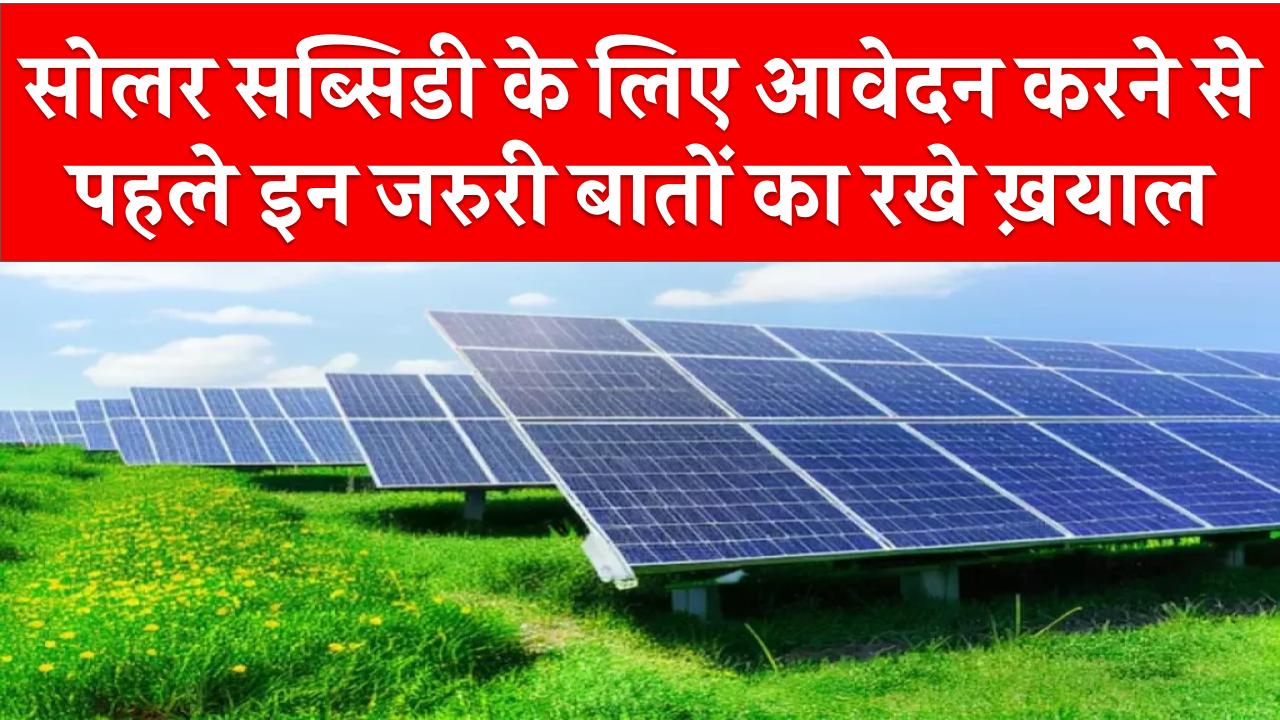
सोलर सब्सिडी के लिए आवेदन करने जा रहे हैं? इन 5 बातों का ध्यान नहीं रखा तो हो सकता है नुकसान
However, experts argue that India’s vast renewable potential, coupled with a growing domestic market, provides GIFT IFSC with a unique opportunity to not only tap foreign capital but also foster a sustainable financial ecosystem for green investments in emerging economies.
Risks and Mitigation Strategies in Green Financing
As India ramps up green infrastructure financing through GIFT IFSC, several risks need to be managed. These include currency fluctuations, policy unpredictability, and the credit risk of green projects.
To address these, IREDA has proposed a credit enhancement facility, which would act as a safeguard for foreign investors, reducing the perceived risks associated with India’s green energy sector.
IREDA is also working with global reinsurers and green bond guarantors to lower the cost of capital for projects, making them more attractive to foreign investors.
Related Links
Solar Revolution: India Hits Record 7.1 GW Rooftop Capacity in 2025
IREDA’s Vision for a Sustainable Future
As India’s energy transition accelerates, IREDA’s call for new policy reforms to facilitate green infrastructure financing underscores the importance of global capital flows in achieving India’s renewable energy targets.
By harnessing the potential of GIFT IFSC, India has a unique opportunity to attract foreign investments that can provide the necessary funds to meet the nation’s ambitious clean energy goals.
With appropriate policy reforms, GIFT IFSC could become a central pillar in India’s journey to a more sustainable and resilient energy future.