Community solar projects are emerging as one of the fastest-growing ways for Americans to access renewable energy without installing rooftop solar panels. By subscribing to a shared solar farm, households and businesses can receive electricity bill credits for clean energy produced elsewhere on the grid.
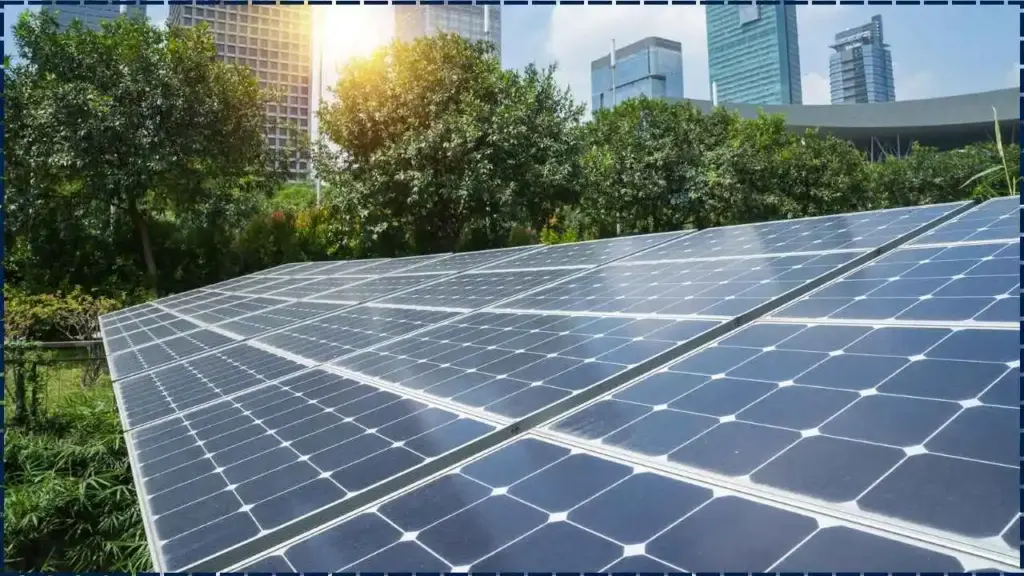
Energy analysts say the model is helping expand solar access to renters, apartment residents, and other customers who cannot install panels themselves.
Community Solar Projects
| Key Fact | Detail |
|---|---|
| U.S. capacity | More than 7.8 gigawatts of community solar installed nationwide |
| Solar access gap | About 42% of U.S. households cannot install rooftop solar |
| DOE expansion goal | Community solar could power 5 million homes by 2025–2030 |
| Typical savings | Subscribers often save 5–20% on electricity bills |
What Are Community Solar Projects?
Community solar projects—sometimes called shared solar or solar gardens—are solar power installations that supply electricity to multiple participants.
Instead of installing solar panels on their own property, participants subscribe to a portion of a nearby solar farm. Electricity generated by the installation flows into the local utility grid, and subscribers receive bill credits reflecting their share of the energy produced.
According to the U.S. Department of Energy, community solar allows multiple participants to benefit from a single solar facility, making renewable energy accessible to people who cannot install rooftop systems.
Energy researchers say the model expands the potential solar market significantly by allowing customers without suitable rooftops to participate.
A Brief History of Community Solar
Community solar programs began appearing in the United States in the early 2000s as policymakers looked for ways to expand renewable energy access. Early projects were small and often organized through local cooperatives or municipal utilities.
Over time, state governments introduced policies supporting shared solar development. States such as Colorado, Minnesota, and Massachusetts were among the first to create formal community solar programs.
By the mid-2020s, community solar had become one of the fastest-growing segments of the solar industry. The National Renewable Energy Laboratory (NREL) reports that dozens of states now have community solar installations, with thousands of projects operating nationwide.
Why Community Solar Is Growing
Several factors are driving the expansion of community solar projects.
Access for Renters and Apartments
A large portion of the U.S. population lives in rental housing or multifamily buildings where rooftop solar installation is difficult. Community solar programs allow renters and apartment residents to benefit from renewable energy without modifying their homes.
Lower Upfront Costs
Rooftop solar installations can cost tens of thousands of dollars before incentives. Community solar subscriptions typically require little or no upfront investment.
Flexible Participation
Participants often have the ability to transfer or cancel subscriptions if they move within the same utility territory.
Policy Support
Federal and state programs encouraging renewable energy have helped accelerate community solar deployment.
How Community Solar Billing Works
Community solar programs rely on a billing structure known as virtual net metering. Under this system, electricity generated by a solar farm is credited to multiple subscribers on their utility bills. A typical billing cycle may look like this:
- A solar farm produces electricity and sends it to the grid.
- The utility tracks each subscriber’s share of the energy produced.
- Participants receive bill credits reflecting that production.
- Subscribers pay a reduced price for solar electricity compared with traditional power.
Energy analysts say many community solar programs offer electricity discounts between 5% and 20%, depending on the project and location.
Who Can Participate
Community solar programs are designed to serve a broad range of participants. Eligible subscribers often include:
- Homeowners
- Renters
- Apartment residents
- Small businesses
- Schools and nonprofit organizations
This accessibility distinguishes community solar from rooftop solar, which generally requires home ownership and suitable roof conditions. According to energy researchers, community solar participation is significantly higher among renters than rooftop solar adoption.
Real Example: A Community Solar Subscriber
In Minnesota, one of the earliest states to adopt community solar policies, residents have used shared solar programs to reduce energy costs.
For example, Minneapolis resident Sarah Peterson subscribed to a local community solar project in 2023 after discovering that her apartment building could not support rooftop panels.
Peterson said her electricity bills dropped by roughly 10% after joining the program. “Community solar gave me a way to support renewable energy without owning a home,” she said.
Energy analysts say such programs demonstrate how community solar can expand access to clean electricity for households that otherwise might not benefit from solar energy.
Environmental Benefits
Community solar projects contribute to broader climate and environmental goals. Solar power produces electricity without burning fossil fuels, which reduces greenhouse gas emissions and air pollution. Large solar installations can generate enough electricity to power thousands of homes.
Environmental advocates say community solar also supports the transition to distributed energy systems, where electricity is produced closer to where it is consumed. This distributed approach can reduce transmission losses and improve grid resilience.
Economic Benefits for Communities
Community solar projects also create economic opportunities. Solar farms require workers for construction, electrical installation, engineering, and maintenance. Local governments can benefit from tax revenue generated by renewable energy projects.
Some programs also reserve a portion of project capacity for low- and moderate-income households, helping reduce energy costs for families with higher energy burdens. Energy equity advocates say these programs help ensure that the benefits of renewable energy are distributed more broadly.
Challenges Facing Community Solar
Despite rapid growth, the community solar sector faces several challenges.
Grid Connection Delays
Solar developers sometimes face long waiting periods to connect new projects to local electricity grids.
Policy Uncertainty
Changes in state incentives and federal programs can affect project financing.
Market Saturation in Some States
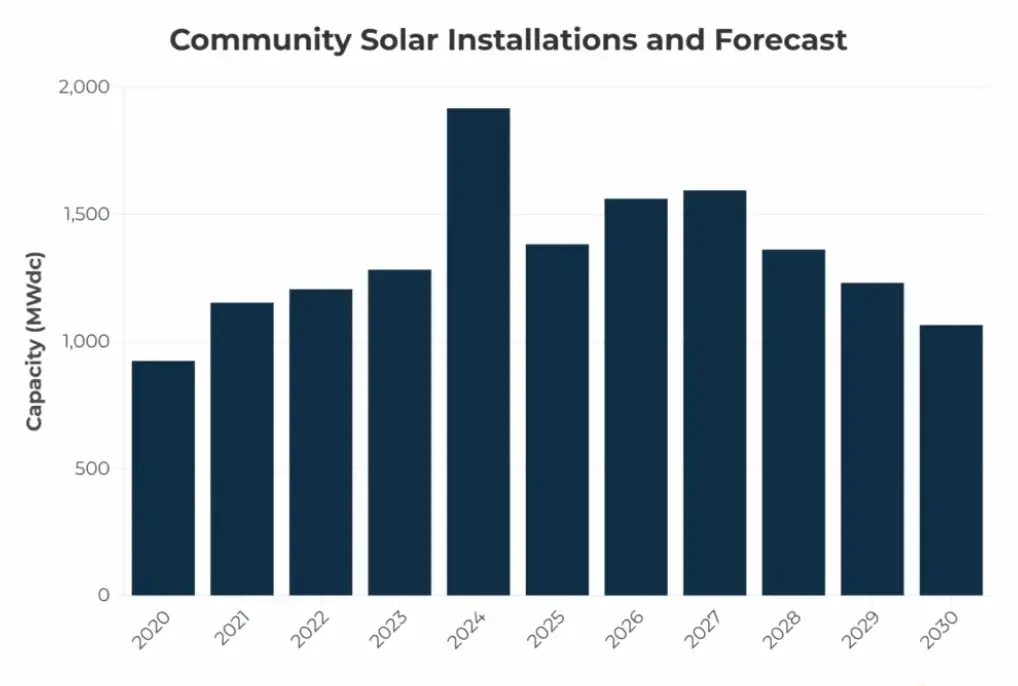
In regions with mature solar markets, developers may face competition for suitable project sites and grid capacity. Energy market analysis indicates that community solar development slowed in early 2025 following a record year in 2024, reflecting shifting policy incentives and market conditions.
Community Solar vs Other Renewable Energy Options
Consumers considering renewable energy may encounter several options.
| Energy Option | Installation Required | Typical Participant |
|---|---|---|
| Rooftop solar | Panels installed on roof | Homeowners |
| Community solar | No installation required | Renters and homeowners |
| Utility green energy programs | No installation required | Utility customers |
Community solar offers a middle ground between rooftop solar ownership and purchasing renewable electricity directly from utilities.
Future Outlook
Energy researchers expect community solar to play a major role in expanding renewable energy adoption. The National Community Solar Partnership, led by the Department of Energy, aims to enable community solar systems capable of powering five million households.
Industry analysts predict the sector could grow significantly during the next decade as electricity demand increases and renewable energy becomes a larger share of the power grid.
Advances in battery storage and grid management technologies may also enhance the value of community solar projects.
Related Links
Surging Gas Prices Countered by Germany’s Solar Boom: A Major Relief for Energy Costs
The “Solar for All” Initiative: Biden-Harris program expands to low-income households
Community solar projects are reshaping how Americans access renewable energy. By allowing households to benefit from shared solar farms without installing panels, these programs provide a practical pathway to clean electricity for millions of customers. As renewable energy demand continues to grow, community solar may become a central element of the country’s evolving energy landscape.
FAQs
What are community solar projects?
Community solar projects are shared solar installations that allow multiple customers to benefit from electricity produced by a single solar facility.
Do participants need solar panels at home?
No. Participants subscribe to a portion of a solar farm and receive bill credits for the electricity generated.
Who can participate in community solar?
Programs often allow renters, homeowners, businesses, and nonprofit organizations to participate.
How much money can subscribers save?
Savings vary but typically range from 5% to 20% on electricity bills depending on the program.