
India’s renewable energy sector is entering a pivotal phase as the government prepares to include solar cells under the Approved List of Models and Manufacturers (ALMM).
At the centre of the “The Tariff Shock” debate is a key concern: will this move increase solar tariffs by up to 50 paisa per unit and slow down project execution?
What Is Changing in the The Tariff Shock Policy?
The Approved List of Models and Manufacturers (ALMM), overseen by the Ministry of New and Renewable Energy (MNRE), ensures that only certified manufacturers supply solar equipment for government-backed projects.
Until now, the list applied mainly to modules. The proposed inclusion of solar cells represents a deeper intervention into the supply chain.
Policy Timeline and Implementation
- ALMM for modules was introduced in 2021.
- Reimposed in 2024 after a temporary suspension.
- Cell inclusion is expected to take effect from 2026.
Officials indicate that the move will be phased, though detailed guidelines are still evolving.
Why the 50 Paisa Tariff Increase Is Being Discussed
Cost Differential Between Domestic and Imported Cells
India relies heavily on imported solar cells, primarily from China. Domestic manufacturing, though expanding, remains costlier due to:
- Higher raw material and logistics costs.
- Limited economies of scale.
- Technology gaps in advanced cell types.
Industry analysts estimate domestic cells can be 20–40% more expensive than imports.
How Capex Translates Into Tariffs
Solar tariffs are determined through competitive bidding. Even small cost increases can significantly affect tariffs. Key estimates suggest:
- Capex increase: ₹5–10 million per MW.
- Tariff impact: ₹0.40–₹0.50 per unit.
This is substantial in a market where tariffs have historically fallen below ₹2.5/unit.
Financial Impact: IRR, LCOE and Investor Sentiment
Impact on Internal Rate of Return (IRR)
Developers typically target equity IRRs of 12–14%. A rise in capex without corresponding tariff increases could compress returns by 100–200 basis points.
Levelised Cost of Energy (LCOE)
The Levelised Cost of Energy (LCOE), a key metric in power pricing, is expected to rise in the short term due to:
- Higher module and cell costs.
- Financing risks linked to policy uncertainty.
Investor Perspective
Global investors have been attracted to India’s low-cost solar market. Any sustained tariff increase or policy unpredictability could:
- Reduce bid aggressiveness.
- Increase risk premiums.
- Shift capital to other markets.
Supply Constraints: A Transitional Bottleneck
Domestic Manufacturing Gap
India’s current solar cell capacity is estimated to be significantly below projected demand. Although capacity is expanding under the Production Linked Incentive (PLI) scheme, timelines remain tight.
Short-Term Risks
- Equipment shortages.
- Project delays.
- Increased procurement competition.
Industry participants warn that the transition phase will be critical in determining market stability.
Impact on Solar Auctions and DISCOM Behaviour
Auction Dynamics
Higher tariffs could alter bidding strategies:
- Developers may bid more conservatively.
- Fewer participants in auctions.
- Possible undersubscription of tenders.
DISCOM Concerns
State distribution companies (DISCOMs), already under financial stress, may hesitate to sign higher-cost power purchase agreements (PPAs). A senior DISCOM official noted that “any increase in tariffs must be carefully balanced against affordability for consumers and utilities.”
Government’s Strategic Objectives
Reducing Import Dependence
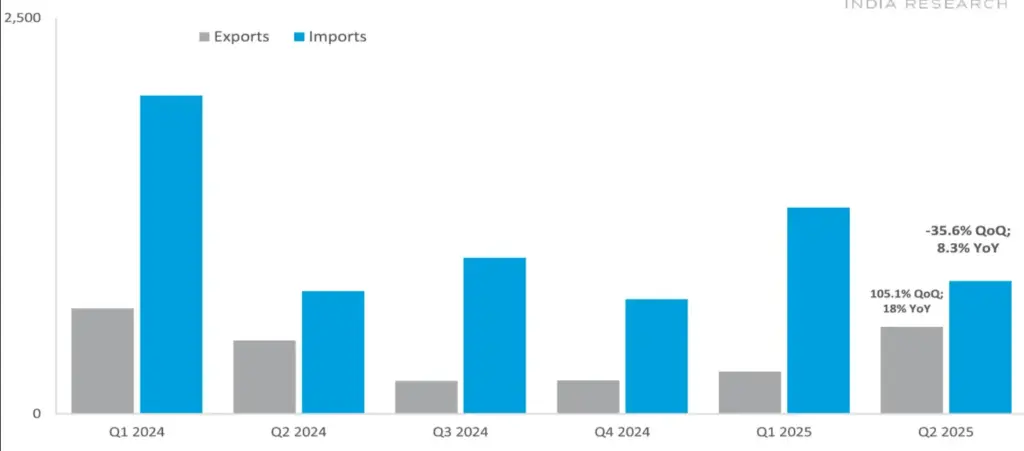
India imports a majority of its solar components. The ALMM expansion aims to:
- Strengthen domestic manufacturing.
- Reduce geopolitical risks.
- Improve supply chain resilience.
Alignment with Industrial Policy
The move complements initiatives such as:
- Production Linked Incentive (PLI) scheme.
- Basic Customs Duty (BCD) on imports.
- Domestic content requirements.
Officials argue that these measures collectively create a robust ecosystem for manufacturing growth.
Global Comparison: India Is Not Alone
Countries worldwide are adopting similar strategies:
- United States: Inflation Reduction Act offers subsidies for domestic manufacturing.
- European Union: Considering local content requirements.
- China: Maintains strong state-backed manufacturing dominance.
India’s approach reflects a global trend towards energy security and industrial self-reliance.
Industry Response: Diverging Views
Developers’ Concerns
Developers argue that:
- Timing is premature.
- Supply chain is not ready.
- Tariffs could rise sharply.
One industry executive said, “The risk is not just higher tariffs but also execution delays and reduced investor confidence.”
Manufacturers’ Optimism
Domestic manufacturers support the move, citing:
- Assured demand.
- Improved capacity utilisation.
- Long-term cost reduction through scale.
They argue that without policy support, India cannot compete with established global players.
Mitigation Strategies and Possible Solutions
Experts suggest several measures to reduce disruption:
Phased Implementation
Gradual rollout to allow manufacturers and developers to adjust.
Hybrid Procurement Models
Temporary allowance for partial imports during the transition.
Incentive Expansion
Enhanced financial support under PLI schemes.
Technology Partnerships
Encouraging joint ventures with global manufacturers.
Will the Tariff Shock Be Temporary?
Short-Term vs Long-Term Outlook
- Short-term: Higher tariffs and supply constraints.
- Medium-term: Stabilisation as capacity increases.
- Long-term: Potential cost reduction through scale and innovation.
Historical trends suggest that solar costs decline with manufacturing maturity.
Related Links
India’s ALMM Mandate 2026: Why All Solar Projects Must Now Use 100% Locally Made Cells
Balancing Competing Priorities
India faces a strategic balancing act:
| Objective | Challenge |
|---|---|
| Rapid renewable expansion | Keeping tariffs low |
| Domestic manufacturing growth | Managing short-term costs |
| Energy security | Ensuring investor confidence |
Policy success will depend on how effectively these competing priorities are managed.
The inclusion of solar cells under ALMM marks a significant shift in India’s renewable energy policy. While the possibility of a 50 paisa per unit tariff increase is credible, it is not inevitable.
The policy reflects a broader transition from cost-driven growth to strategic self-reliance. Its ultimate impact will depend on execution, industry response, and the pace of domestic capacity expansion. For now, the “The Tariff Shock” debate underscores a critical reality: India’s clean energy journey is entering a more complex, and potentially more expensive, phase.