

The cost of installing residential solar systems in the United States has effectively increased in 2026 following the expiration of a key federal tax incentive.

The Residential Clean Energy Credit, which previously covered up to 30% of installation costs, ended on December 31, 2025, altering the financial landscape for homeowners and slowing momentum in parts of the rooftop solar market.
Home Solar More Expensive in 2026
| Key Fact | Detail |
|---|---|
| Federal Incentive | 30% tax credit for residential solar |
| Expiration | Ended December 31, 2025 |
| Immediate Impact | Higher upfront homeowner costs |
| Remaining Options | Leasing, state incentives |
The end of the federal residential solar tax credit marks a turning point for the U.S. solar market. While the technology continues to advance and offer long-term savings, the loss of a 30% cost reduction has made solar effectively more expensive in 2026.
How the market evolves will depend on state policies, innovation, and consumer adaptation, as homeowners reassess the balance between upfront costs and long-term energy independence.
Home Solar More Expensive in 2026: Why Home Solar Is More Expensive in 2026
The Home Solar More Expensive in 2026, referring to rising effective costs of home solar, is largely driven by policy rather than technology.
For years, federal incentives played a central role in making solar financially accessible. The Residential Clean Energy Credit allowed homeowners to deduct 30% of total system costs—including equipment and installation—from federal taxes.
That incentive is now gone. Energy analysts say the removal represents a structural shift rather than a temporary fluctuation. “This is not about panel prices rising,” one industry analyst noted in a recent report. “It’s about the disappearance of a major subsidy that shaped consumer economics for decades.”
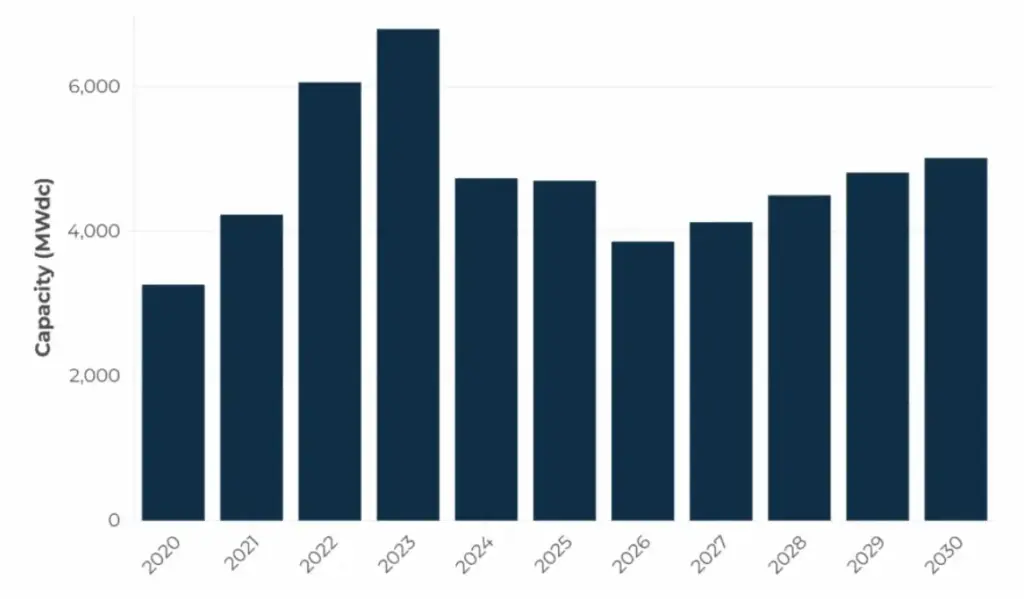
A Brief History of U.S. Solar Incentives
From Niche Policy to Market Driver
Federal solar incentives date back to the early 2000s, when adoption was minimal and costs were high. Over time:
- 2006: Investment Tax Credit (ITC) introduced.
- 2010s: Solar adoption accelerates nationwide.
- 2022: Expanded under climate legislation to 30%.
- 2025: Program abruptly ends for residential users.
This policy helped transform solar from a niche technology into a mainstream energy solution.Without it, the market must now rely more heavily on private financing and state-level support.
How Much More Expensive Is Solar in 2026?
Upfront Costs Increase Significantly
Before 2026:
- Average system cost: $18,000–$25,000.
- After 30% credit: ~$12,600–$17,500.
After 2026:
- Full cost applies with no federal reduction.
For many households, this difference can determine whether solar is financially feasible.
Payback Periods Extend
The financial return timeline has also shifted:
- Before: ~6–9 years in many states.
- After: ~9–14 years depending on electricity rates.
Longer payback periods may discourage adoption among cost-sensitive households.
Financing Solar in 2026: What Options Remain?
With the loss of federal incentives, financing plays a larger role.
1. Solar Loans
- Allow ownership.
- Higher long-term savings.
- Require credit approval.
2. Leases and Power Purchase Agreements (PPAs)
- Lower upfront cost.
- Provider owns system.
- Savings may be smaller.
3. Cash Purchases
- Highest upfront cost.
- Maximum long-term benefit.
Industry data suggests a growing shift toward leasing models, particularly among middle-income households.
States push streamlined home solar permitting to meet rising demand https://t.co/l6wghis5gg
— E&E News (@EENewsUpdates) April 14, 2026
Regional Differences: State Policies Now Matter More
The impact of the tax credit’s expiration varies widely by location.
Strong Incentive States
- California.
- New York.
- Massachusetts.
These states offer:
- Net metering.
- Rebates.
- Performance incentives.
Weaker Incentive States
- Limited or no rebates.
- Lower electricity prices.
- Reduced financial benefit from solar.
This geographic divide is expected to widen adoption gaps across the country.
Industry Impact: Growth Slows, Strategy Shifts
The residential solar industry is adjusting quickly.
Market Trends in 2026
- Increased marketing of leasing models.
- Slower installation growth in some regions.
- Greater focus on battery storage.
Some companies are restructuring operations, while others are expanding into commercial solar, where federal incentives still apply.
Consumer Perspective: A Typical Homeowner Case
Consider a homeowner in Texas:
- 2025: Installs solar for $21,000 → pays ~$14,700 after tax credit.
- 2026: Same system costs full $21,000.
Without the credit, monthly savings still exist—but the initial investment becomes harder to justify. This shift is especially significant for first-time buyers without access to low-interest financing.
Global Comparison: How the U.S. Stacks Up
The U.S. is not alone in adjusting solar incentives, but the abrupt nature of the 2025 policy shift stands out.
Other Countries
- Germany: Gradual subsidy reductions over years.
- China: Strong manufacturing support lowers system costs.
- India: Continued subsidies for residential adoption.
Compared to these markets, the U.S. transition is more sudden, increasing short-term uncertainty.
Environmental Implications
The policy change comes amid growing urgency around climate goals. Experts warn that reduced residential adoption could slow emissions reductions, particularly in suburban areas where rooftop solar plays a key role.
However, others argue that falling technology costs may offset some of the policy impact over time.

Risks and Considerations for Homeowners
Key Risks
- Longer return on investment.
- Policy uncertainty at state level.
- Changes in net metering rules.
Key Opportunities
- Rising electricity prices increase savings potential.
- Battery storage adds resilience.
- Property value increases in some markets.
Financial advisors recommend evaluating solar as a long-term asset rather than a short-term savings tool.

Related Links
The “Crop-Shield” Effect: How Agrivoltaics is Saving Water for Farmers While Generating Power
Tokenized Solar: Investing in Solar Farms via Fractions (NFTs/Tokens) – A New 2026 Trend
Future Outlook: What Happens Next?
The future of residential solar in the U.S. will likely depend on three factors:
1. State-Level Policy Expansion
States may introduce new incentives to fill the federal gap.
2. Technology Costs
Continued declines in panel and battery prices could improve affordability.
3. Energy Prices
Higher utility rates would strengthen the financial case for solar.
Industry forecasts suggest continued growth, but at a slower and more uneven pace than in previous years.
FAQs
Is solar still worth it?
Yes, but it depends more heavily on location, electricity costs, and financing.
Why did the tax credit end?
A policy shift in 2025 eliminated the incentive earlier than expected.
Are there any federal incentives left?
Not for direct residential ownership, though commercial credits still exist.
Will solar prices drop in the future?
Hardware costs may decline, but policy changes will remain a key factor.