
The Crop-Shield effect is emerging as a key feature of agrivoltaics in 2026, helping farmers reduce water loss while generating renewable energy.
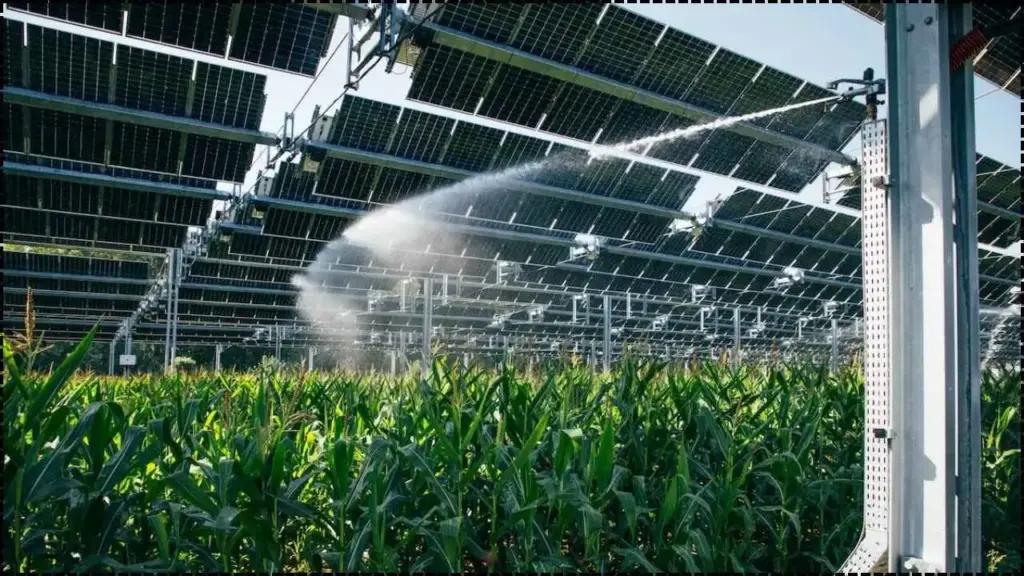
By installing solar panels above crops, these systems create a protective microclimate that lowers evaporation, improves soil moisture, and supports crop resilience in regions facing rising temperatures and water scarcity.
The “Crop-Shield” Effect
| Key Fact | Detail | Context |
|---|---|---|
| Water savings | 20–40% reduction in evaporation | Field trials |
| Yield impact | Stable or increased for some crops | Research findings |
| Land efficiency | Up to 70% productivity gain | Combined output |
| Adoption trend | Expanding globally in 2026 | Climate-driven |
The Crop-Shield effect underscores how agrivoltaics can address water scarcity while supporting energy generation. Although challenges remain, the approach offers a practical pathway toward more resilient agricultural systems.
As climate pressures intensify, integrating energy and agriculture may shift from innovation to necessity.
What Is the Crop-Shield Effect in Agrivoltaics?
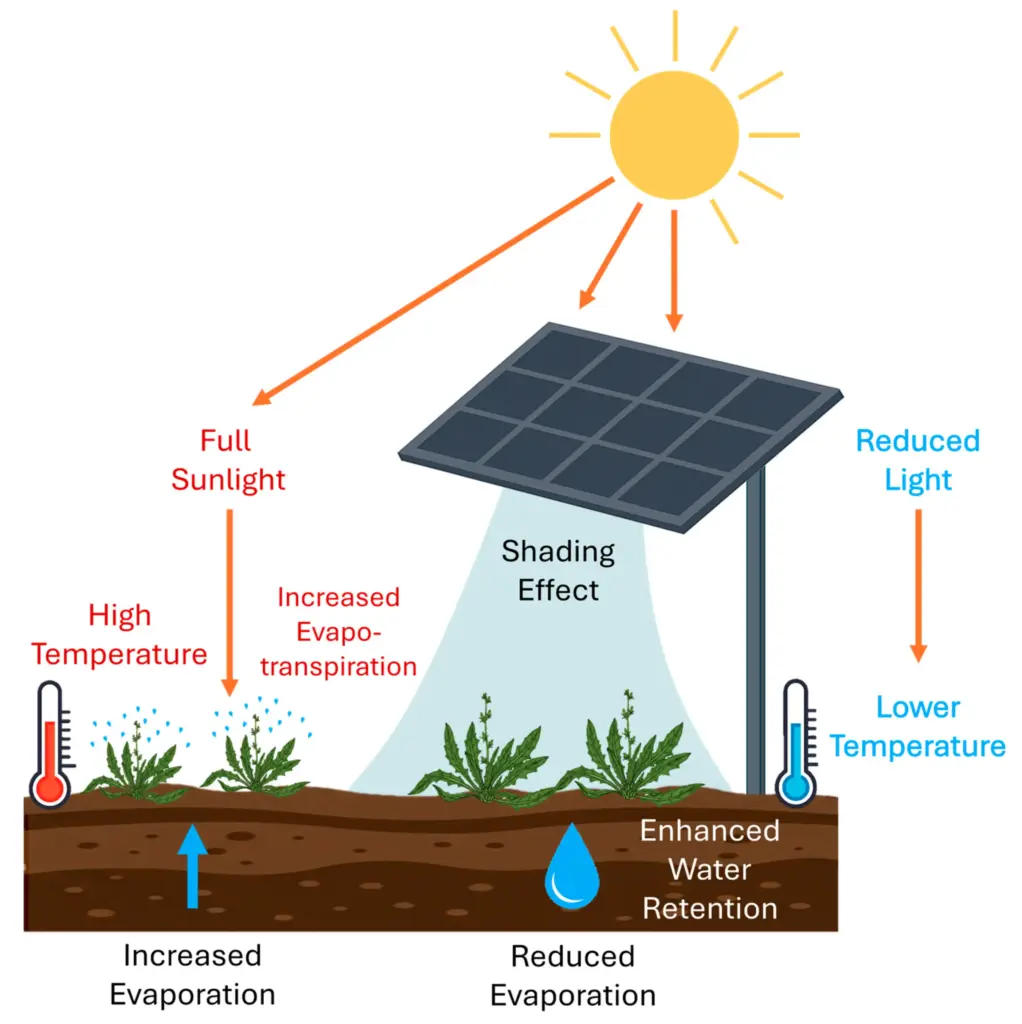
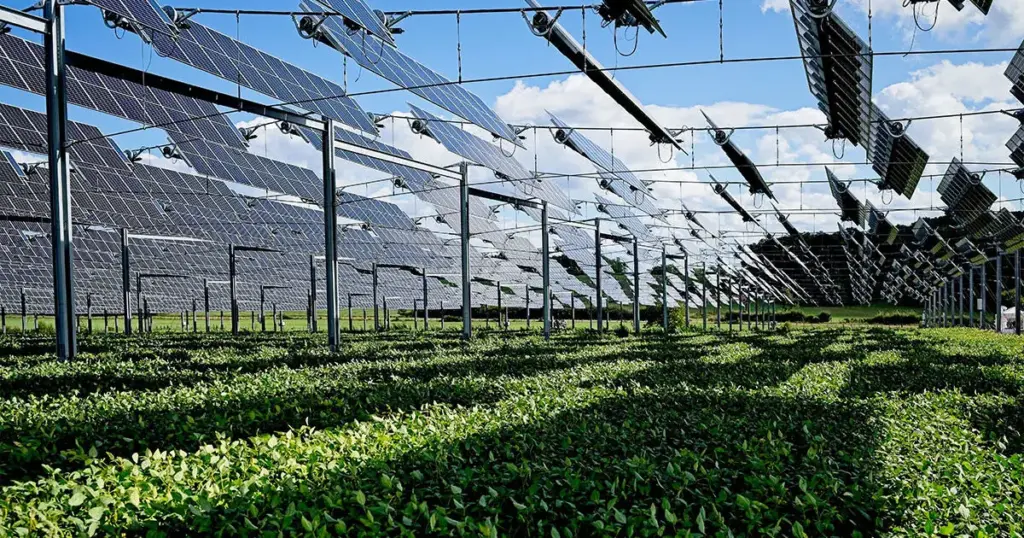
The Crop-Shield effect refers to the protective shading created by solar panels installed above farmland, reducing heat stress and water evaporation while allowing crops to grow underneath.
This concept is central to agrivoltaics, a system that combines agriculture and solar energy production on the same land. The approach addresses what experts describe as the “water–energy–food nexus,” where resource pressures are increasingly interconnected.
As outlined in the source brief , agrivoltaics aims to simultaneously improve water efficiency, enhance agricultural resilience, and expand renewable energy generation.
The Science Behind the Crop-Shield Effect
Microclimate Regulation
Solar panels reduce direct solar radiation, lowering soil and air temperatures beneath them. This creates a cooler, more stable environment for crops.
Reduced Evapotranspiration
Evapotranspiration—the combined loss of water through evaporation and plant transpiration—is significantly reduced under partial shading.
Plant Physiology Benefits
Moderate shading can:
- Reduce heat stress on plant leaves.
- Improve photosynthetic efficiency in certain crops.
- Lower water demand during peak sunlight hours.
Agricultural scientists note that excessive sunlight can actually limit productivity in hot climates, making controlled shading beneficial.
A Brief History: From Experiment to 2026 Trend
Agrivoltaics is not entirely new. The concept was first proposed in the early 1980s by German researchers exploring dual land use. However, adoption remained limited for decades due to high costs and technological constraints. Key turning points include:
- 2010s: Early pilot projects in Europe and Japan
- 2020–2024: Falling solar costs and climate pressures increase interest
- 2025–2026: Integration into climate policy and large-scale trials
Today, agrivoltaics is moving from experimental to early commercial deployment.
Evidence From Field Studies
Field trials across multiple regions have demonstrated measurable benefits:
- Water loss reductions of 20–40%.
- Soil moisture improvements during peak heat periods.
- Yield stability in drought conditions.
In desert environments, some studies have reported even higher water savings, particularly for vegetables and leafy crops. These findings suggest agrivoltaics may be especially valuable in water-stressed agricultural zones.
Crop Performance: Winners and Limitations
Crops That Benefit
- Leafy greens (spinach, lettuce).
- Tomatoes and peppers.
- Certain herbs.
These crops tolerate or benefit from partial shade.
Crops That May Struggle
- Wheat.
- Corn.
- Sunflower.
These require full sunlight and may see reduced yields if shading is excessive. Experts emphasize that system design must match crop type to achieve optimal results.
Economic Impact for Farmers
Dual Revenue Model
Farmers can earn income from:
- Crop production.
- Solar electricity generation.
This diversification can reduce financial risk.
Cost and Payback
Initial setup costs are higher than traditional solar installations due to elevated structures. However, analysts estimate:
- Payback periods of 5–10 years in favorable conditions.
- Long-term income stability from energy sales.
Reduced Input Costs
Lower irrigation needs can reduce water and energy expenses, improving overall farm profitability.
Farmer Perspective: A Ground-Level View
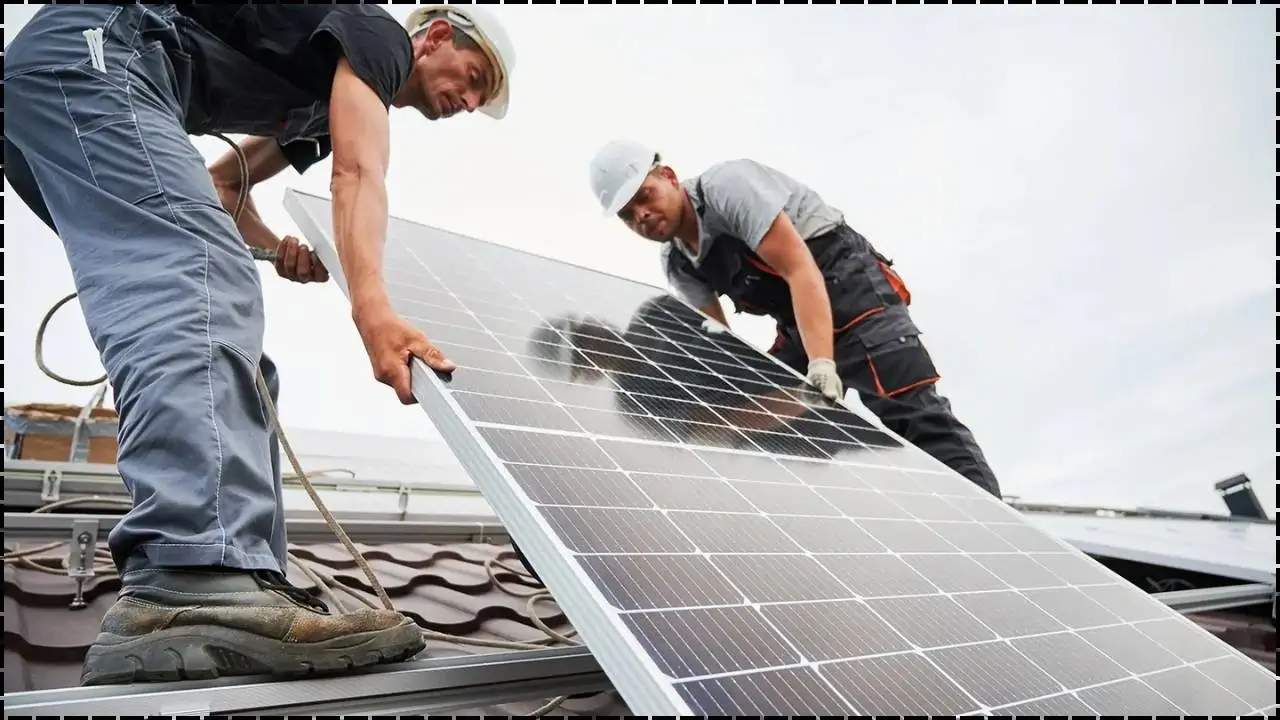
Farmers participating in pilot projects report mixed but generally positive outcomes. “In the hottest months, crops under panels needed less water and stayed healthier,” said one farmer involved in an agrivoltaic trial. However, others highlight challenges in adapting machinery and irrigation systems to new layouts.
Global Adoption Trends
Europe
Countries like France and Germany are leading adoption, supported by government incentives.
United States
Pilot programs focus on community solar and sustainable agriculture integration.
Asia
Japan and China have implemented large-scale projects, while India is exploring agrivoltaics under renewable energy initiatives.
Policy and Government Support
Governments are increasingly recognizing agrivoltaics as a strategic solution. Policy measures include:
- Subsidies for solar installations on farmland.
- Research funding for crop optimization.
- Integration into renewable energy targets.
In India, agrivoltaics aligns with national goals of expanding solar capacity while supporting farmers.
Challenges and Criticism
Despite its promise, agrivoltaics faces skepticism.
High Initial Costs
Critics argue that upfront investment remains a barrier for small farmers.
Complexity
System design requires technical expertise, making implementation challenging.
Land Use Concerns
Some stakeholders question whether energy production could eventually take priority over food production.
Limited Long-Term Data
While early results are promising, long-term performance data remains limited.
Expert Perspectives
“Agrivoltaics offers a compelling solution to multiple challenges, but it must be implemented carefully,” said an agricultural systems researcher. Energy analysts agree that scaling will depend on policy support and cost reductions.
Related Links
U.S. Slaps Steep Tariffs on Southeast Asian Solar Imports: What This Means for the Solar Industry
10 Breakthrough Technologies That Could End America’s Fossil Fuel Dependence
Future Outlook
The Crop-Shield effect is likely to play an increasing role in climate-resilient agriculture. Key drivers for growth include:
- Rising water scarcity.
- Increasing energy demand.
- Advancements in solar technology.
As systems improve and costs decline, agrivoltaics could become a mainstream farming practice in water-stressed regions.
FAQs
What is the Crop-Shield effect?
It is the shading effect of solar panels that reduces evaporation and protects crops.
How much water can be saved?
Typically 20–40%, depending on climate and system design.
Does agrivoltaics increase crop yields?
It can for certain crops, especially in hot climates.
Is it suitable for all farms?
No, suitability depends on crop type, climate, and resources.